Why rabbit pellets and guinea pig mix are not interchangeable
Rabbits and guinea pigs share a need for hay and fresh water, but their packaged foods are built around different species. Rabbit pellets are formulated for rabbits, while guinea pig mixes are designed for guinea pigs and often include added vitamin C, which guinea pigs need in their diet. Feeding a rabbit food to a guinea pig, or the reverse, is not a simple swap.
The practical decision starts with the animal in front of you, then the bag size and feeding guidance that fits your routine. The products below show how the two categories differ in practice.
Allen & Page Natural Rabbit Pellets 20kg: a rabbit-specific bulk option
-
Allen & Page Natural Rabbit Pellets 20kg: Made from natural, wholesome ingredients – including alfalfa, grass, linseed, oat fibre and mint – these pellets are completely balanced, with all the vitamins and minerals your rabbit needs. The formula is described as complete for rabbits, so it is positioned as a core feed rather than a treat or supplement.
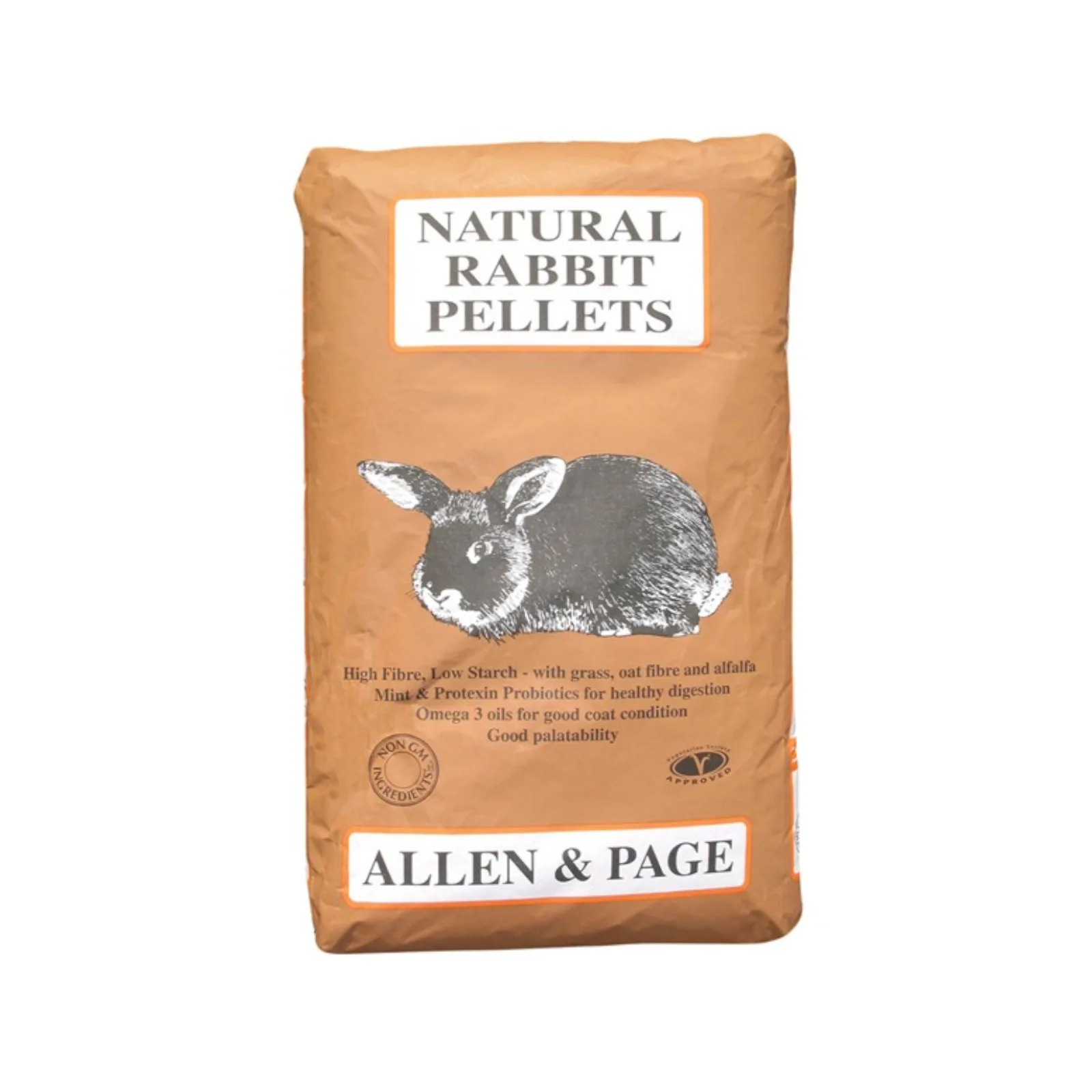
Allen & Page Natural Rabbit Pellets 20kg
-
Allen & Page Natural Rabbit Pellets 20kg: Feed about 50-150gms per day depending on age, size and condition. This gives you a starting reference for portioning a 20kg bag, though you will need to adjust to your individual rabbit.
-
Allen & Page Natural Rabbit Pellets 20kg: Introduce a new feed gradually over 7 to 10 days to help a smooth change over. A slow transition matters when switching foods, especially with a bulk bag that will last a while.
Guinea pig mixes with vitamin C: what the labels say
-
Allen & Page Guinea Pig Mix + Vit C 20kg: This mix is balanced with all the vitamins and minerals your guinea pig needs. This indicates the mix is intended as a complete feed for guinea pigs, not just a supplement.
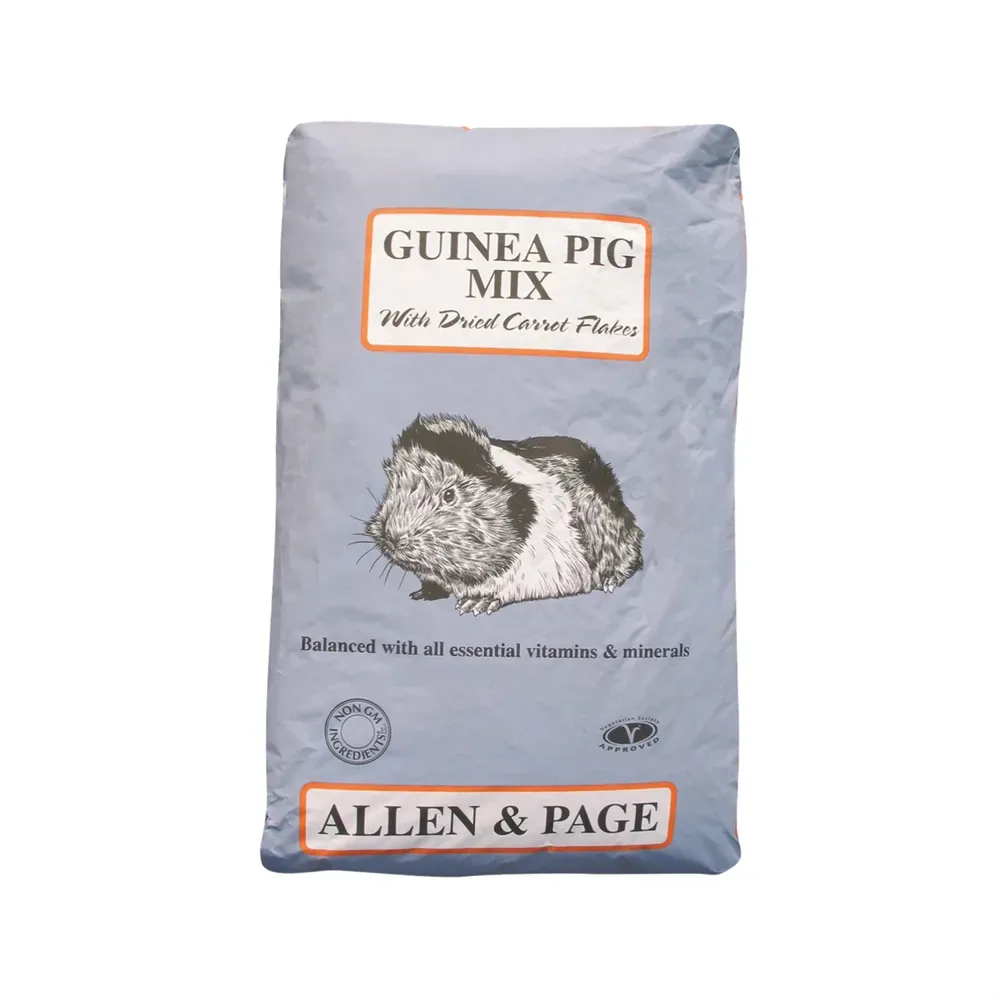
Allen & Page Guinea Pig Mix + Vit C 20kg
-
Allen & Page Guinea Pig Mix + Vit C 20kg: Feed about 30-50gms per day depending on age, size and condition. A daily feeding range helps you estimate how long a 20kg bag will last and how to portion it.
-
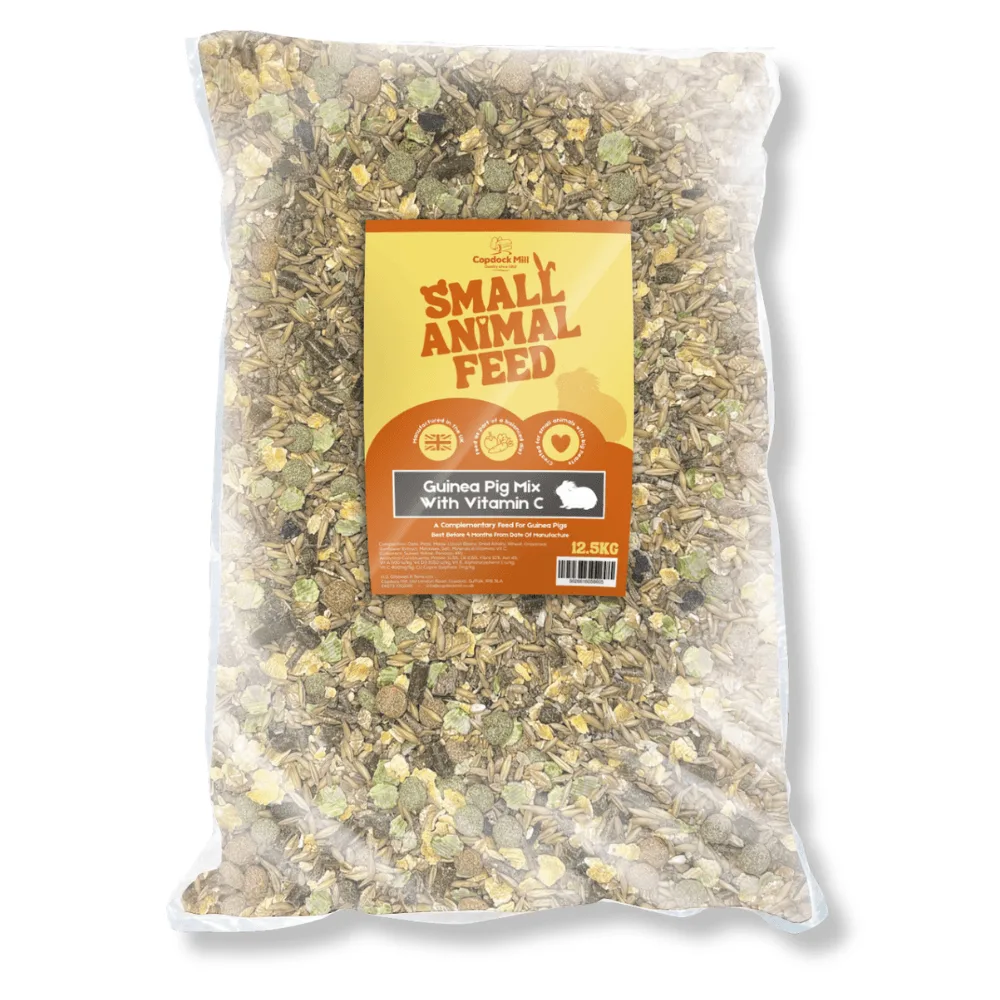
Copdock Mill Guinea Pig Mix with Vitamin C 12.5kg: A coarse mix with added vitamin c, essential for guinea pigs. Added vitamin C is a key difference from rabbit pellets and is specifically relevant to guinea pig feeding.
Bag size and storage: 20kg vs 12.5kg
Allen & Page Natural Rabbit Pellets come in a 20kg bag, which suits rabbit owners who have the storage space and want to buy in bulk. Allen & Page Guinea Pig Mix + Vit C also comes in 20kg, while Copdock Mill Guinea Pig Mix with Vitamin C comes in 12.5kg. A smaller bag may be easier to store and use up if you have one guinea pig or a small group.
Neither the rabbit pellets nor the guinea pig mixes have supplied storage instructions beyond keeping the bag closed and dry. Use your own judgment based on the packaging and your home conditions.
Side by side: rabbit pellets vs guinea pig mix
- Species suitability: Allen & Page Natural Rabbit Pellets are designed for pet rabbits. Guinea pig mixes are formulated for guinea pigs, with some including added vitamin C.
- Vitamin C: The guinea pig mixes highlight vitamin C, which is essential for guinea pigs. The rabbit pellets do not list added vitamin C, as rabbits do not have the same dietary requirement.
- Feeding amount: Rabbit pellets: about 50-150g per day. Guinea pig mix: about 30-50g per day. These are starting points; adjust to your pet’s age, size and condition.
- Bag size: Rabbit pellets and one guinea pig mix come in 20kg; the Copdock Mill guinea pig mix comes in 12.5kg.
Hay and water are non-negotiable for both species
Every product record here stresses hay and constant access to clean, fresh water. The rabbit pellets should be fed with plenty of hay and constant access to clean, fresh water. The guinea pig mixes should be fed with plenty of hay and fresh water. This is the foundation of a healthy diet for both animals, regardless of which packaged food you choose.
If you are switching foods, introduce the new feed gradually over 7 to 10 days. This guidance appears on the Allen & Page rabbit pellets and guinea pig mix; the Copdock Mill mix does not include transition instructions in the supplied information, so use the same cautious approach if you change.
What the labels do not tell you
The supplied information does not give a full ingredient breakdown for the Copdock Mill guinea pig mix beyond “fresh from the farm ingredients” and added vitamin C. It also does not state a feeding amount for that mix. If you need precise portioning, the Allen & Page guinea pig mix provides a daily range, while the Copdock Mill mix leaves you to judge based on your guinea pig’s needs.
None of the products list a complete nutritional analysis in the supplied details. For specific dietary concerns, such as a guinea pig that needs extra vitamin C or a rabbit with sensitive digestion, consult your vet rather than relying on the bag alone.
How to choose for your pet
- For a rabbit: Choose Allen & Page Natural Rabbit Pellets 20kg. It is formulated for rabbits, comes in a bulk bag, and includes feeding guidance and a gradual transition plan.
- For a guinea pig: Choose a guinea pig mix with vitamin C. Allen & Page Guinea Pig Mix + Vit C 20kg offers a complete mix with a daily feeding range; Copdock Mill Guinea Pig Mix with Vitamin C 12.5kg is a smaller bag with added vitamin C.
- If you have both species: Keep their foods separate. Rabbit pellets are not a substitute for guinea pig mix, and guinea pig mix is not a substitute for rabbit pellets.