Quick answer
Hay is the main food; pellets are a supplement. For adult rabbits, offer unlimited grass hay and roughly 1/4 cup of plain Timothy-based pellets per 5 lb of body weight daily, adjusting for age and activity. Adult guinea pigs need unlimited grass hay plus about 1/8 cup of plain pellets daily. If your pet is under 7 months, pregnant, or nursing, pellets can be free-fed.
Why hay leads and pellets follow
Grass hay does two jobs pellets cannot replace: it wears down continuously growing teeth and keeps the gut moving. Pellets are concentrated nutrition, which is useful for young, pregnant, or underweight animals, but easy to overfeed in healthy adults. When pellets crowd out hay, you lose the chewing time and long-strand fiber that keep a small pet healthy.
That is why the ratio matters more than the brand. Unlimited hay is the baseline; pellets are the measured top-up.
How to set portions by life stage
Portions are not one-size-fits-all. Use body condition, not just the bowl, as your guide: you should be able to feel ribs easily without seeing them, and droppings should stay round and plentiful.
- Rabbits under 7 months: unlimited alfalfa or grass hay and free-fed plain pellets while they grow.
- Adult rabbits (7 months+): unlimited grass hay plus about 1/4 cup plain pellets per 5 lb body weight daily.
- Adult guinea pigs: unlimited grass hay plus about 1/8 cup plain pellets daily, with daily vitamin C from vegetables.
- Pregnant, nursing, or underweight pets: free-feed pellets until condition recovers, then taper back.
What to look for on a pellet label
A good pellet is boring on purpose. Look for a grass-hay base, a named hay like Timothy, and a short ingredient list without colorful mix-ins, seeds, nuts, or dried fruit. Those extras add sugar and starch, encourage selective eating, and teach your pet to ignore hay.
Fortification matters for guinea pigs, who cannot make their own vitamin C, but it does not replace fresh vegetables or hay. If a pellet claims to be a complete diet, treat that as marketing, not a feeding plan.
Switching pellets without upsetting the gut
Sudden diet changes can cause loose droppings or a refusal to eat. Transition over 7 to 10 days by mixing a small amount of the new pellet into the old, increasing the new share daily. If your pet stops eating hay or pellets entirely, that is a reason to check with a vet rather than push through.
Keep the hay source consistent during the switch. A pet already stressed by a new food does not need a new hay variety at the same time.
When pellets are the right call
Pellets are not the enemy; overfeeding them is. They are the practical way to deliver vitamins and minerals in a consistent amount, and they are essential for growing, pregnant, or recovering animals. For a healthy adult on good hay and fresh greens, pellets are a small, predictable part of the day, not the main event.
Decision rules for pellets vs hay
- If your pet is a healthy adult: Unlimited grass hay plus a measured pellet portion (about 1/4 cup per 5 lb for rabbits, about 1/8 cup for guinea pigs). Hay should disappear faster than pellets.
- If your pet is under 7 months, pregnant, or nursing: Free-feed plain pellets and offer unlimited hay, then taper portions once growth or nursing ends. Recheck body condition monthly.
- If your pet leaves hay and waits by the bowl: Cut the pellet portion by about a quarter and hold it there for a week before judging the result. Do not add mix-ins to tempt hay eating.
- If you are choosing a pellet: Pick a grass-hay-based, plain pellet with a short ingredient list and no seeds, nuts, or dried fruit. Named hay first on the label is a good sign.
- If you are switching pellets: Transition over 7 to 10 days, mixing old and new, and keep hay consistent during the change. Stop and seek vet advice if eating stops.
Products that fit this feeding plan
- Rabbit Food Pellets: Timothy-based rabbit pellets fortified with essential vitamins and minerals, made in small batches. A plain, hay-based pellet is the right supplement to measure out alongside unlimited hay.
- Hay Cubes - Timothy: Timothy hay cubes sized smaller than many on the market, suited to rabbits, guinea pigs, chinchillas, gerbils, hamsters, and mice. A convenient chew that adds variety and chewing time without replacing loose hay.
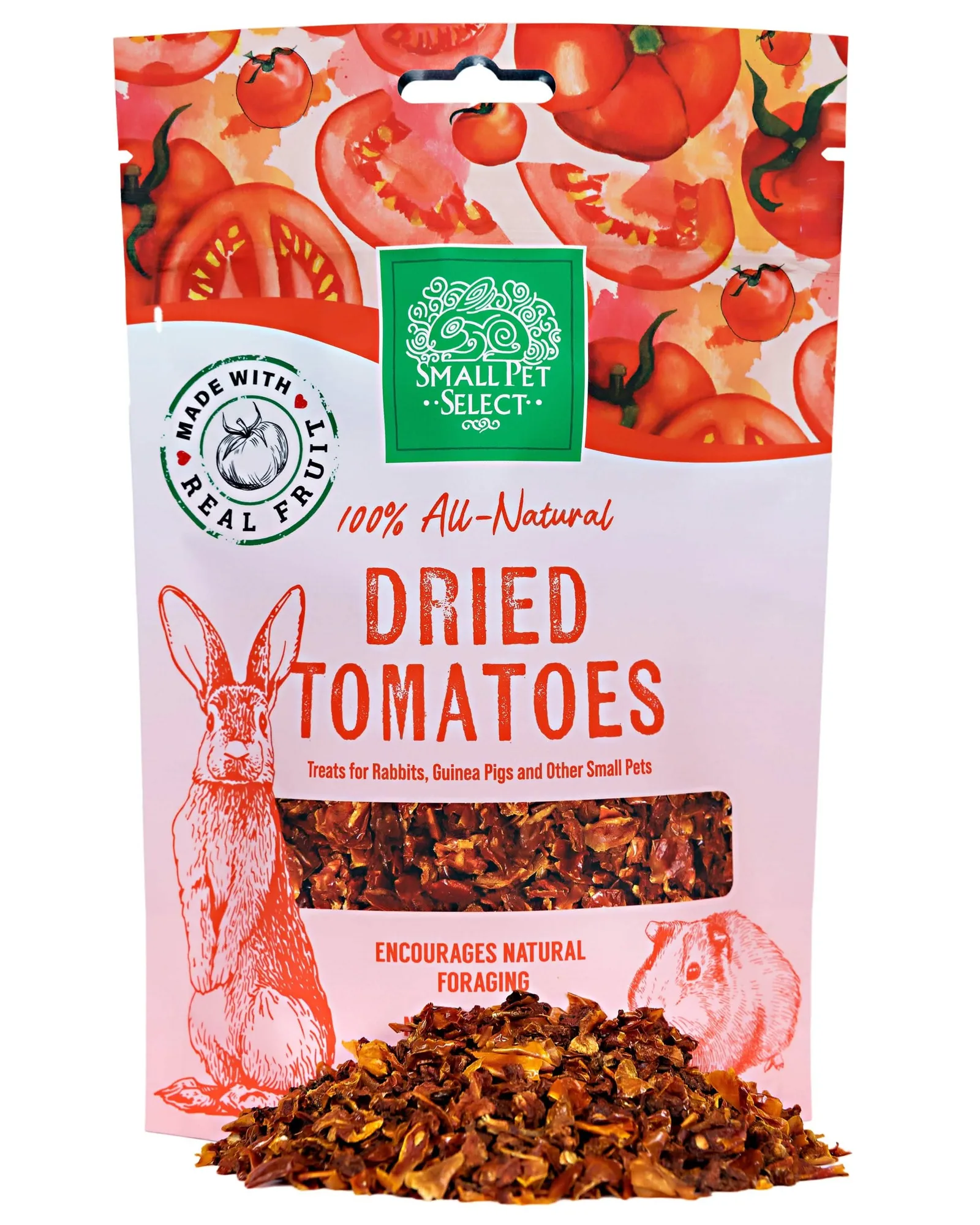
- Dried Tomato Flakes: Unsweetened dried tomato flakes that can be scattered for foraging. A low-sugar way to add enrichment without turning treats into a second meal.
Who this feeding approach fits
Best for
- Owners of healthy adult rabbits or guinea pigs who want a clear daily portion to follow
- New owners setting up a first feeding routine and unsure how much pellet to scoop
- Households already feeding unlimited hay but unsure whether pellets are being overfed
Not for
- Pets with diagnosed dental, urinary, or digestive conditions that need a vet-prescribed diet
- Young, pregnant, or underweight animals that need free-fed pellets rather than a restricted portion
- Owners looking for a pellet-only feeding plan without hay