Quick answer
For a rainy day, choose a puzzle that matches the puzzler's age and patience: young kids thrive with large-piece floor puzzles, while older kids and adults enjoy detailed, shaped puzzles. Consider the group size and available table space to ensure a fun, frustration-free experience.
Rainy days often mean staying indoors, and a good puzzle can turn a gloomy afternoon into a memorable family activity. But with so many options, how do you pick the right one? The key is to match the puzzle to the puzzler's age, interest, and the setting.
This guide breaks down what to consider—piece count, theme, and group dynamics—so you can confidently choose a puzzle that will be enjoyed, not abandoned.
Match the Puzzle to the Puzzler's Age and Skill
For young children, large-piece floor puzzles are ideal. They're easy to grip and less frustrating for small hands. Look for puzzles with 100 pieces or fewer and vibrant, engaging themes. The Triceratops Dinosaur Jigsaw Puzzle - 4FT Double Sided Glow in the Dark Floor Puzzle is a great example: it's a 100-piece floor puzzle that's double-sided and glows in the dark, adding an extra layer of fun.
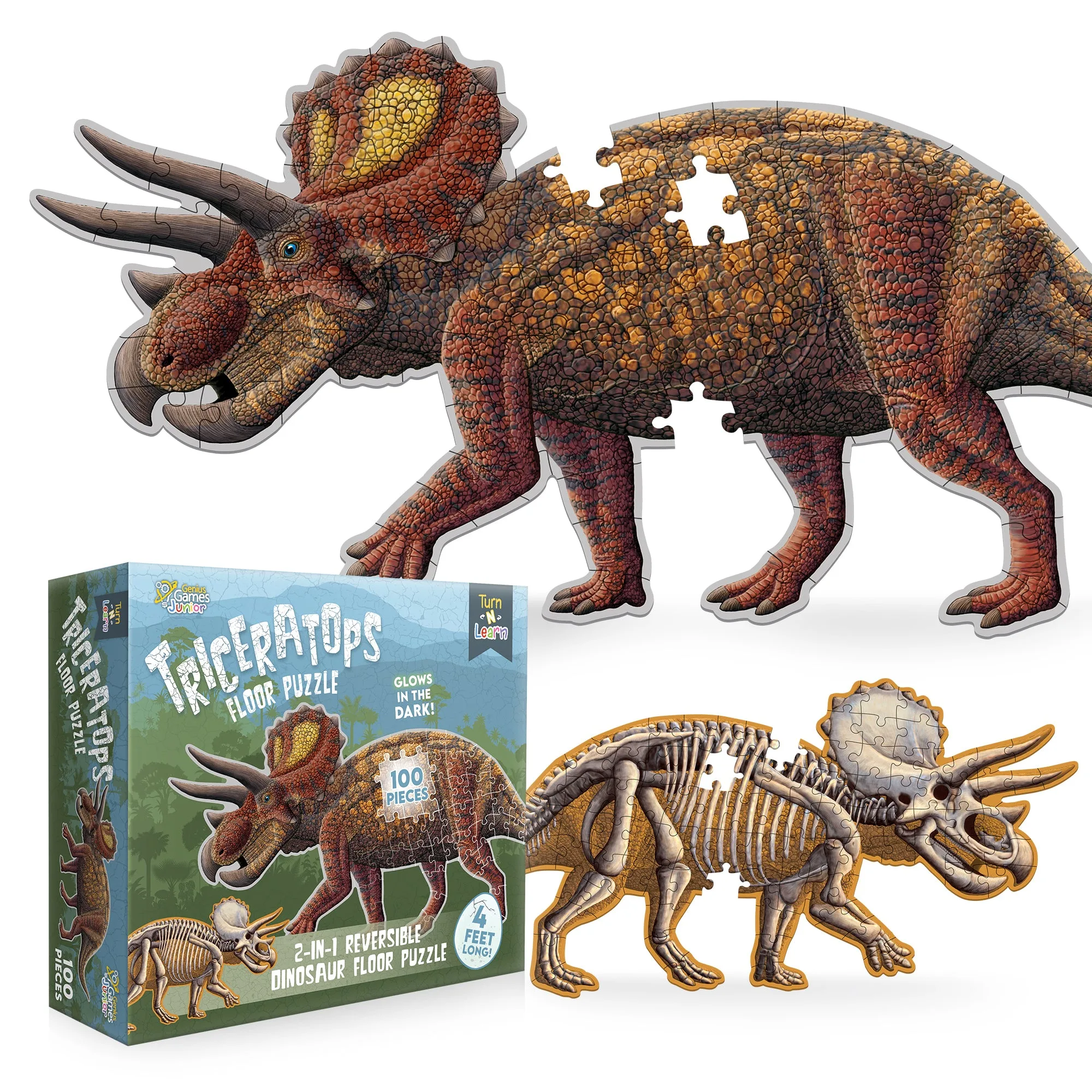
Triceratops Dinosaur Jigsaw Puzzle - 4FT Double Sided Glow in the Dark Floor Puzzle
Older kids and teens might prefer more challenging puzzles that test their patience and attention to detail. A puzzle with 500 to 700 pieces, like the Human Eye Anatomy Jigsaw Puzzle with 544 pieces, offers a satisfying challenge without being overwhelming. For adults, consider puzzles with intricate details or educational value, such as the Human Brain Anatomy Jigsaw Puzzle with 662 pieces.
- Ages 4-7: Look for puzzles with 50-100 large pieces.
- Ages 8-12: Consider 200-500 piece puzzles with engaging themes.
- Teens and adults: 500+ piece puzzles provide a longer, more immersive activity.
Consider the Group Size and Social Setting
Are you puzzling alone, with a partner, or as a family? For solo puzzling, a puzzle that matches your personal interest is key—whether that's anatomy, nature, or art. For couples or small groups, a puzzle with moderate complexity allows for conversation and collaboration.
For families with kids of different ages, a floor puzzle can be a communal activity where older kids help younger ones. The Bundle - Kid's Anatomy Puzzles - Brain, Heart, and Full-Body Floor Puzzles includes three 100-piece puzzles that can be done together or separately, making it versatile for family time. Alternatively, a large, detailed puzzle like the Human Thorax Anatomy Jigsaw Puzzle can be a weekend project for the whole family.
- For a large family gathering, choose a puzzle with a high piece count to keep everyone engaged.
- For a quick afternoon activity, a 100-piece puzzle is perfect.
- For solo puzzlers, pick a theme you love; the process is as important as the result.
Think About the Space and Table Size
Before you buy, consider where you'll assemble the puzzle. A 4-foot floor puzzle needs open floor space, while a standard table puzzle requires a clear, flat surface. For small apartments, a puzzle that can be worked on in sections might be better.
Shaped puzzles, like the Human Feet Anatomy Jigsaw Puzzle, have unique outlines that can be assembled on a smaller area. If you plan to work on a puzzle over several days, you'll need a space that can be left undisturbed. Some puzzlers use puzzle mats or boards to roll up and store their work-in-progress.
- Measure your table or floor space before choosing a puzzle size.
- Consider a puzzle mat if you need to clear the table between sessions.
- Shaped puzzles often have a smaller footprint than rectangular ones.
Decision Rules for Rainy Day Puzzle Selection
- Age and skill level: Choose a puzzle with an appropriate piece count: 100 pieces for ages 4-7, 200-500 for ages 8-12, and 500+ for teens and adults. The goal is to challenge without frustrating. If you're buying for a child, check the recommended age on the box.
- Group size and social setting: For solo puzzling, pick a theme you love. For families, consider puzzles that can be worked on together, like floor puzzles or bundles with multiple puzzles. If you have kids of different ages, choose a puzzle that allows everyone to participate.
- Space and table size: Measure your available space. Floor puzzles need open area; table puzzles need a flat surface. Shaped puzzles may fit smaller areas. If space is limited, opt for a puzzle that can be assembled on a tray or board that can be moved.
Products That Fit the Rainy Day Bill
- Triceratops Dinosaur Jigsaw Puzzle - 4FT Double Sided Glow in the Dark Floor Puzzle: 100-piece floor puzzle that is double-sided and glows in the dark, includes an Anatomy Reference Guide. The glow-in-the-dark feature adds a fun twist for kids, making it a memorable rainy day activity. The large floor pieces are easy for young children to handle.
- Bundle - Kid's Anatomy Puzzles - Brain, Heart, and Full-Body Floor Puzzles | Great Science Gift Ideas for Kids: Bundle of three 100-piece puzzles: full body, brain, and heart, all medically accurate. This bundle offers variety, so kids can switch puzzles when they finish one. It's perfect for families with multiple children or for keeping a curious mind engaged for hours.
- Human Eye Anatomy Jigsaw Puzzle | Dr. Livingston's Unique Shaped Science Puzzles: 544-piece shaped puzzle illustrating the human eye, die-cut to highlight real anatomy. For older kids and adults interested in science, this puzzle offers a challenging and educational experience. The unique shape adds an extra layer of interest.
Who Should Choose What
Best for
- Families with young kids who want a fun, interactive floor puzzle activity.
- Older children and adults who enjoy educational challenges with detailed illustrations.
Not for
- Those seeking a quick, simple activity with minimal setup—consider a card game instead.
- Puzzlers who prefer traditional rectangular puzzles with no educational theme.
Choosing the right puzzle for a rainy day comes down to understanding the puzzler's age, the group setting, and your available space. With these decision rules, you can pick a puzzle that will keep everyone entertained and maybe even teach something new. So next time the weather turns gloomy, you'll be ready with the perfect indoor activity.