Quick Answer
Resin dice color shifts come from layered pigments and how light interacts with the translucent material — not from temperature, pressure, or magic. We'll separate fact from fiction so you know what to expect from your dice.
Why Color Shifts Happen in Resin Dice
Resin is naturally translucent, which means light passes through it and reflects off internal layers and pigments. When you see a color shift — for example, a die that looks purple from one angle and silver from another — you're seeing light bounce off different pigment layers suspended in the resin. This is not a chemical change in the dye; it's a physical effect of the material's transparency and the arrangement of colored particles.
The effect is most pronounced in multifaceted dice because the many faces create multiple angles for light to enter and exit. A die with a simple two-tone pour may shift gradually, while a set with multiple pigment layers can show dramatic transitions. The Dimension Door Multifaceted Resin Dice Set, for instance, uses rifts of purple and silver throughout the resin to achieve that shifting look.
Common Myths About Dice Color Change
Myth: Resin dice change color when they get warm or cold. Fact: Resin is not thermochromic unless specifically formulated that way. Standard resin dice do not change color with temperature. What you may notice is that the resin becomes slightly more or less translucent at extreme temperatures, which can make the internal layers appear more or less vivid, but the actual pigment color does not change.
Myth: Color shifts mean the dice are defective or fading. Fact: A color shift is a design feature, not a flaw. It's caused by the same light-scattering properties that make opals and other gemstones appear to change color. If your dice look different under different lighting, that's the resin doing exactly what it was made to do.
Myths vs. Facts: Resin Dice Color Shifts
- Myth: Color shifts mean the dice are changing color over time.: Fact: The color you see is a result of light interacting with layered pigments. The pigment itself does not change. The shift is an optical illusion, not a chemical transformation. If your dice look different under a new light, that's expected — not a sign of fading.
- Myth: Heat or cold makes resin dice change color.: Fact: Standard resin dice are not thermochromic. Temperature can slightly affect resin's translucency, but the actual pigment color stays the same. The shift you see is from light, not temperature. Don't worry if your dice look different on a hot or cold day — the color is stable.
- Myth: Color shifts are a sign of poor quality or uneven mixing.: Fact: Intentional color shifts are a hallmark of high-quality resin dice design. They require careful layering of pigments, which is a skilled technique. A well-made set like the Dimension Door set uses this effect deliberately for visual impact. Look for dice with layered pigment descriptions — they're designed to shift, not flawed.
Product Facts
-
Dimension Door Multifaceted Resin Dice Set: The Dimension Door Multifaceted Resin Dice Set uses rifts of purple and silver throughout the resin to create a shifting, dynamic appearance. This layered design is a real-world example of how pigment placement and resin translucency produce color shifts — not a defect or a gimmick.
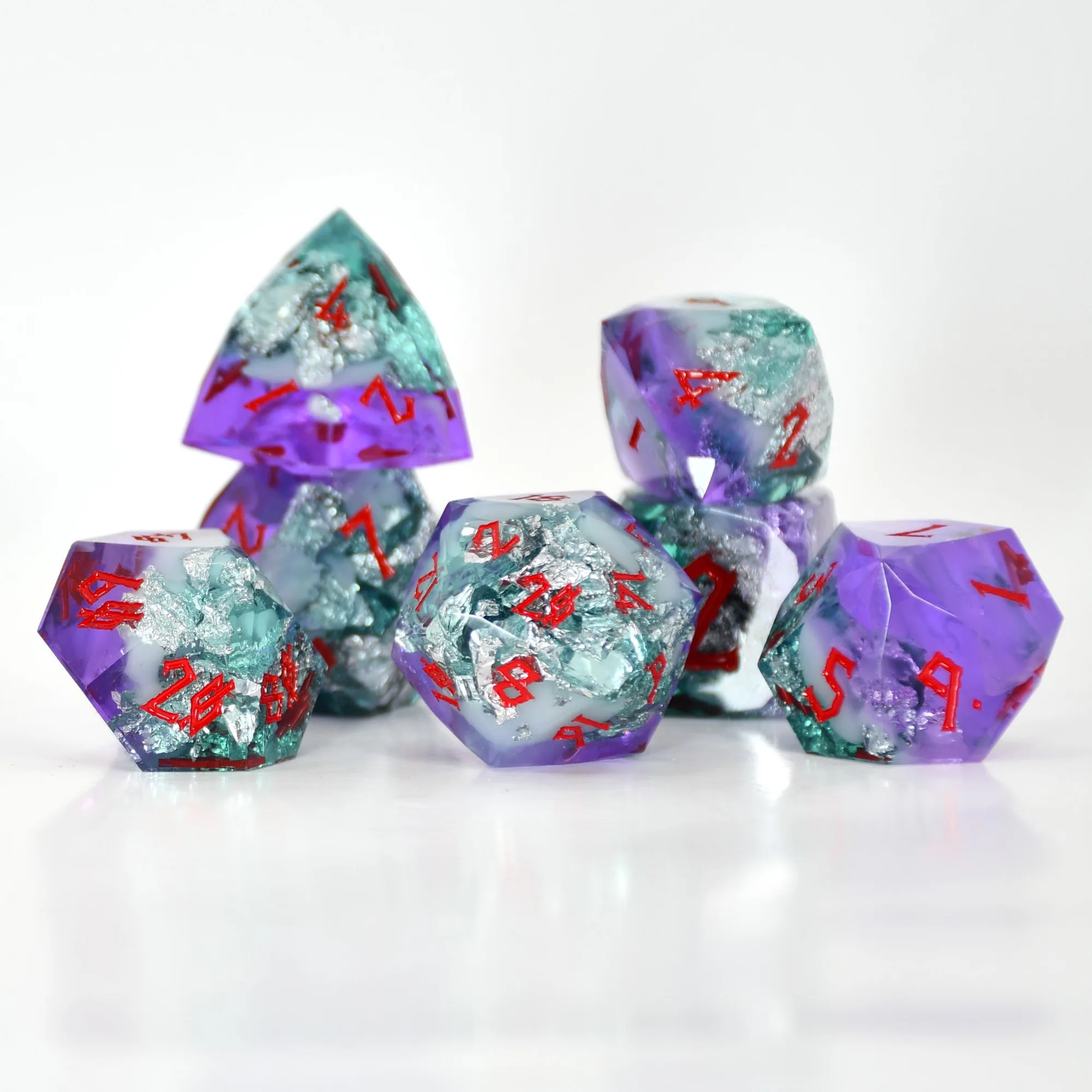
Dimension Door Multifaceted Resin Dice Set