Quick answer
Add resin terrain pieces when you want maximum detail for a display or a centerpiece encounter, and you are willing to store and handle them carefully. If you build, tear down, and travel with terrain often, Dwarvenite sets are the more practical core. Treat resin as a targeted accent, not the foundation of a working collection.
Resin terrain pieces sit at the detail-first end of the hobby. They capture crisp stonework, organic shapes, and fine texture that molded Dwarvenite pieces often simplify for durability. That difference matters most when a piece is meant to be looked at closely: a boss chamber, a diorama shelf, or a convention display.
The trade-off is real. Resin is heavier and more brittle than Dwarvenite, so it rewards gentle handling and dedicated storage. This guide gives you decision rules for when a resin piece earns its place in a collection that already leans on modular Dwarvenite, and when you should spend that budget on more table coverage instead.
What resin actually changes at the table
Resin's advantage is surface fidelity. Fine cracks, layered rock, and small sculpted details hold their shape because the material captures a sharper mold. That is why resin terrain pieces often read as more dramatic in photographs and on a display shelf. The same sharpness can also mean thinner edges and more fragile protrusions, so a resin piece is not the one you toss into a bin at the end of the night.
Dwarvenite, by contrast, is built for repeated assembly and transport. It flexes instead of shattering, which is why it anchors most modular dungeon builds. The practical question is not which material is better in the abstract, but which one your table actually needs for a given encounter. Resin earns its place when the piece is the scene, not just the floor under it.
- Reserve resin for pieces that will be seen up close or photographed.
- Keep the structural, high-traffic parts of a build in Dwarvenite.
- Store resin pieces separately with padding, not loose in a mixed bin.
Cost, storage, and the honest trade-offs
Resin pieces typically cost more per square inch of table coverage than Dwarvenite sets, and they usually arrive painted or as limited runs. That makes them a poor way to buy bulk floor. If your goal is to fill a 4x6 table, a Dwarvenite set will almost always stretch further. If your goal is one unforgettable room, resin can justify its price in a way bulk coverage cannot.
Storage is the hidden cost. Resin wants a shelf or a foam-lined case, which takes space that a stack of modular tiles would not. Before buying, measure where the piece will live when it is not on the table. A resin piece with no safe home tends to stay in the box, and terrain in a box is not terrain you are using.
- Price resin against the experience it creates, not against floor coverage.
- Plan a padded storage spot before the piece arrives.
- If you host often, buy resin accents slowly and Dwarvenite broadly.
How resin fits into a Dwarvenite collection
The cleanest approach is to use Dwarvenite for the modular shell and resin for the moment inside it. A resin centerpiece can sit on a Dwarvenite floor without any compatibility issue, because the two are not competing for the same role. This keeps your build flexible while still giving the table a focal point.
If you are expanding a collection that already has core sets, the question becomes sequencing. Add the modular coverage first so you can build at all, then layer in resin accents as your budget and storage allow. Buying resin before you have enough floor to surround it usually produces a beautiful piece with nowhere to stand.
- Build the modular floor first, then add resin accents.
- Use resin as a focal point, not as the load-bearing structure.
- Rebalance toward Dwarvenite if your builds keep outgrowing your resin.
Decision rules for buying resin
- Buy resin if the piece is the scene: Choose resin when the terrain itself is the encounter's focal point and will be viewed up close or photographed. Detail is the reason to pay the premium. One strong centerpiece beats three mediocre ones.
- Skip resin if you need table coverage: If your table is still short on floor, walls, or scatter, spend there first. Resin is a poor value per square inch compared with modular Dwarvenite sets. Coverage first, accents second.
- Skip resin if you transport terrain weekly: Frequent packing, travel, and rough handling favor Dwarvenite's flex and durability. Resin rewards a stable shelf or a padded case. Match material to how often the piece moves.
- Buy resin if you have safe storage ready: Confirm a padded shelf or case exists before purchase. A resin piece with no home stays boxed and stops earning its cost. No storage plan, no purchase.
Product facts that inform the decision
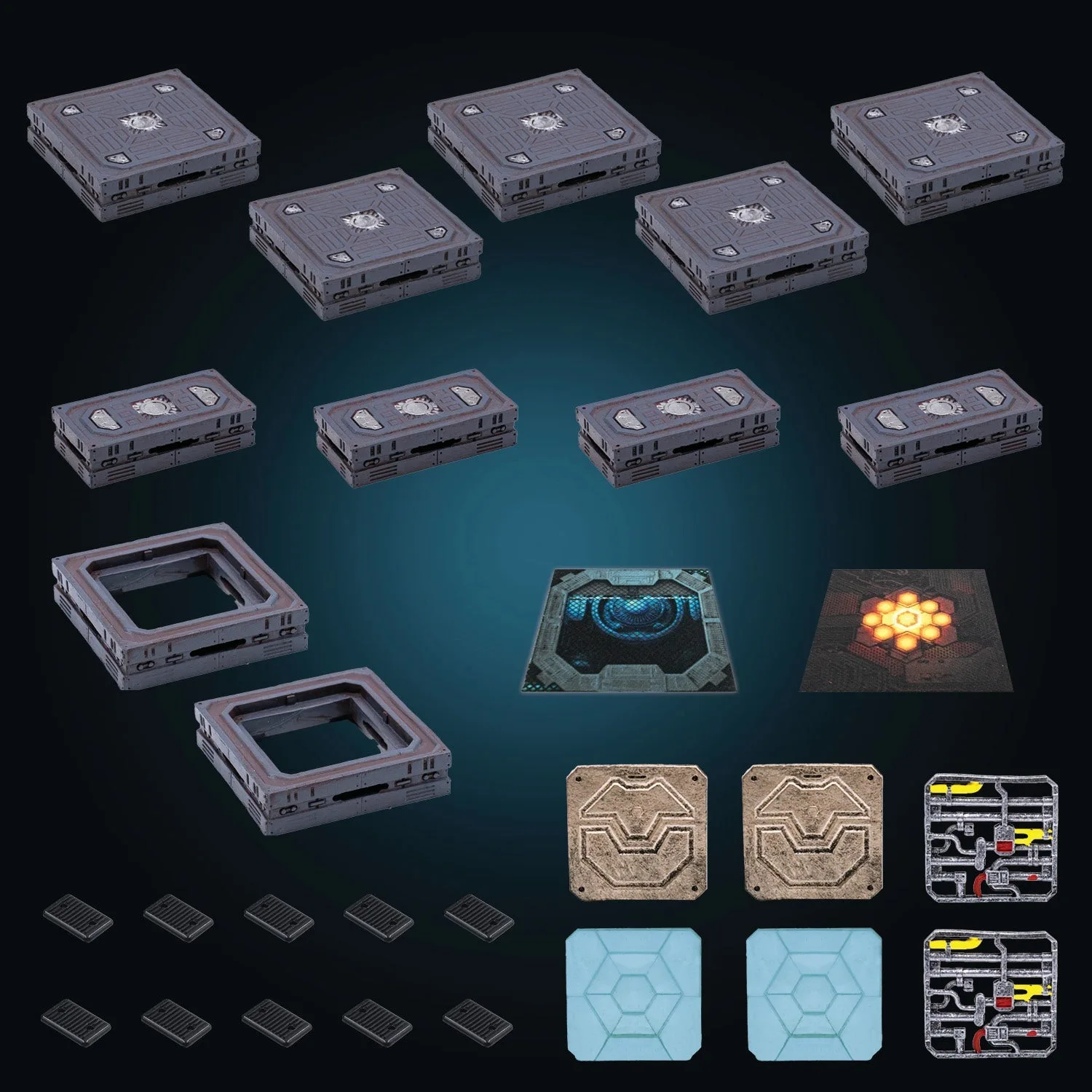
- Alpha Floors Set (Unpainted): Bulk up your floor coverage with this simple addition; the set pairs well with any other Core set and contains biscuits. This is the kind of Dwarvenite purchase that makes a table playable. If your budget is deciding between a resin accent and enough floor to build on, floor coverage usually wins first.
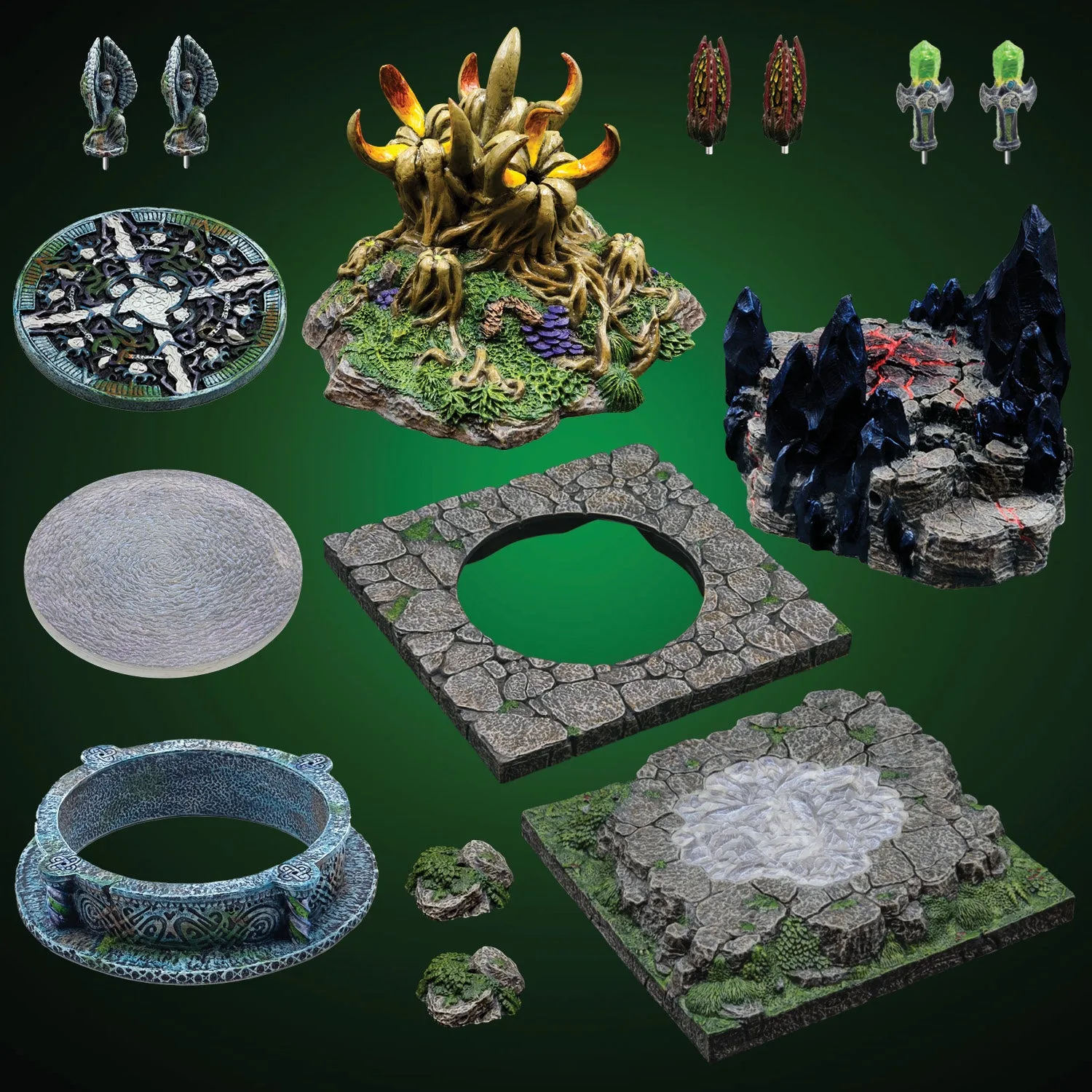
- Wildlands SFX Topper Bundle (Unpainted): The bundle rounds up Wildlands pieces designed for use with the Dwarven Light Puck and DF Fogger, and all pieces also work as setpieces on their own. It shows the accent role resin-style pieces can play: a focal effect layered onto a modular base rather than a whole table's worth of terrain.
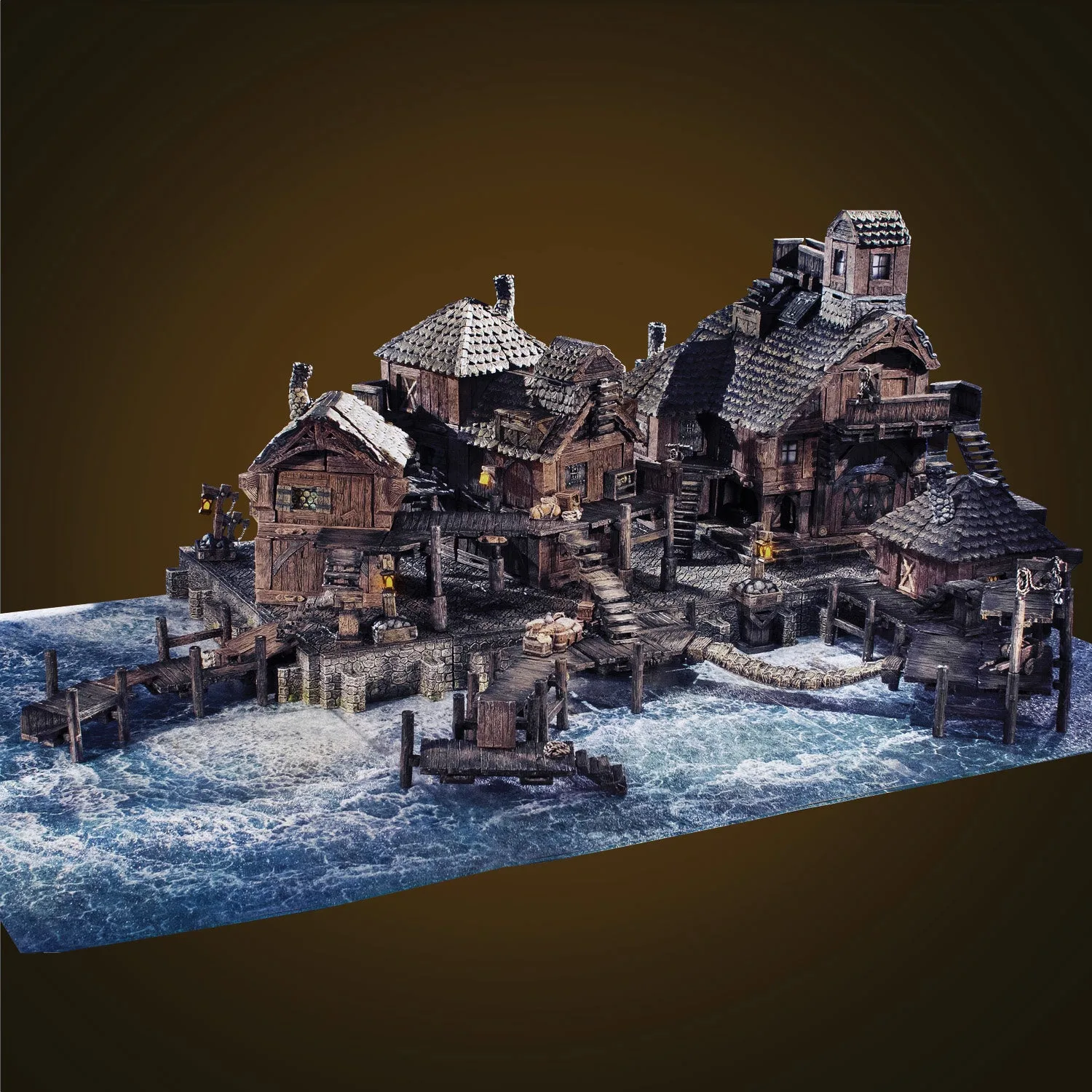
- District - Downtown Dockside Bundle (Unpainted): A scatter-built seaport exterior with a massive 2' x 3' footprint, including biscuits and pegs. Large modular bundles like this are how you cover serious table area. Compare that footprint against a single resin centerpiece before deciding where the next dollar goes.
Who should add resin pieces
Best for
- Collectors who display terrain and value fine sculpted detail.
- Game masters building a single dramatic centerpiece encounter.
- Hobbyists with dedicated padded storage and a stable play space.
Not for
- Players who still need basic floor and wall coverage for a full table.
- Groups that pack and transport terrain every session.
- Buyers who want the lowest cost per square inch of playable area.
Resin pieces are worth adding when a single, detailed focal point will do more for your table than another stack of modular tiles. Build your Dwarvenite foundation first, protect the resin you buy, and let each material do the job it does best.