Quick answer
Most small cracks in resin statues can be repaired at home using epoxy putty, fine sandpaper, and matching paint. Larger structural breaks or cracks near thin parts like limbs or hair strands often require professional restoration. Always assess the crack type and your skill level before starting any repair.
Identifying the Crack Type
Not all cracks are the same. Hairline surface cracks often appear from temperature changes or minor impacts and can be filled with a thin cyanoacrylate glue. Deeper structural cracks, especially those that run through a joint or thin section, may indicate a weak point in the original casting. If the crack is accompanied by a loose piece or a gap that moves, stop and consider professional help. Trying to force a structural crack closed with glue alone can cause further breakage.
Step-by-Step Repair for Small Surface Cracks
For a small, non-structural crack, start by cleaning the area with a soft brush and isopropyl alcohol to remove dust and oils. Apply a thin layer of cyanoacrylate glue (super glue) along the crack, using a toothpick to work it in. Hold the crack closed for 30-60 seconds. Once dry, sand the area gently with 1000-grit wet sandpaper to level the surface. If the statue has a painted finish, you may need to touch up the color with acrylic paint matched to the original. This method works well for cracks on flat or gently curved surfaces.
Repairing a Broken Piece or Structural Crack
If a piece has broken off completely, use two-part epoxy putty (like Apoxie Sculpt) to reattach it. Mix a small amount of putty, apply it to both surfaces, and press the piece into place. Use painter's tape to hold it steady while it cures (usually 24 hours). After curing, sand the seam smooth and repaint. For a structural crack that hasn't separated, you can reinforce the inside with a small brass rod or wire if you can access the hollow interior. This is an advanced technique; if you are unsure, it is safer to leave the crack as-is or consult a restorer.
When to Stop and Choose Another Option
Stop repairing if the crack is near a delicate feature like a finger, hair strand, or thin wing, as the repair may be weaker than the original material. Also stop if the crack extends into a painted area with complex gradients or decals that you cannot match. In these cases, consider displaying the statue with the crack visible as a battle scar, or contact a professional resin statue restoration service. Attempting a repair that fails can make the damage worse and reduce the statue's value.
Diagnosis Guide for Resin Statue Cracks
- Symptom: A thin, hairline crack on a flat or curved surface, no loose pieces. Likely a surface stress crack. Can be fixed with glue and sanding.
- Likely Cause: Temperature fluctuation during shipping or display, or a minor drop. Prevent future cracks by keeping statues away from direct sunlight and heat sources.
- Corrective Action: Clean, apply cyanoacrylate glue, sand, and touch up paint if needed. If the crack disappears after sanding, you are done. If not, stop and consider professional help.
- Stop Point: If the crack runs through a thin or delicate part, or if you cannot match the paint. Do not attempt repair. Display as-is or seek a restorer.
Products Mentioned
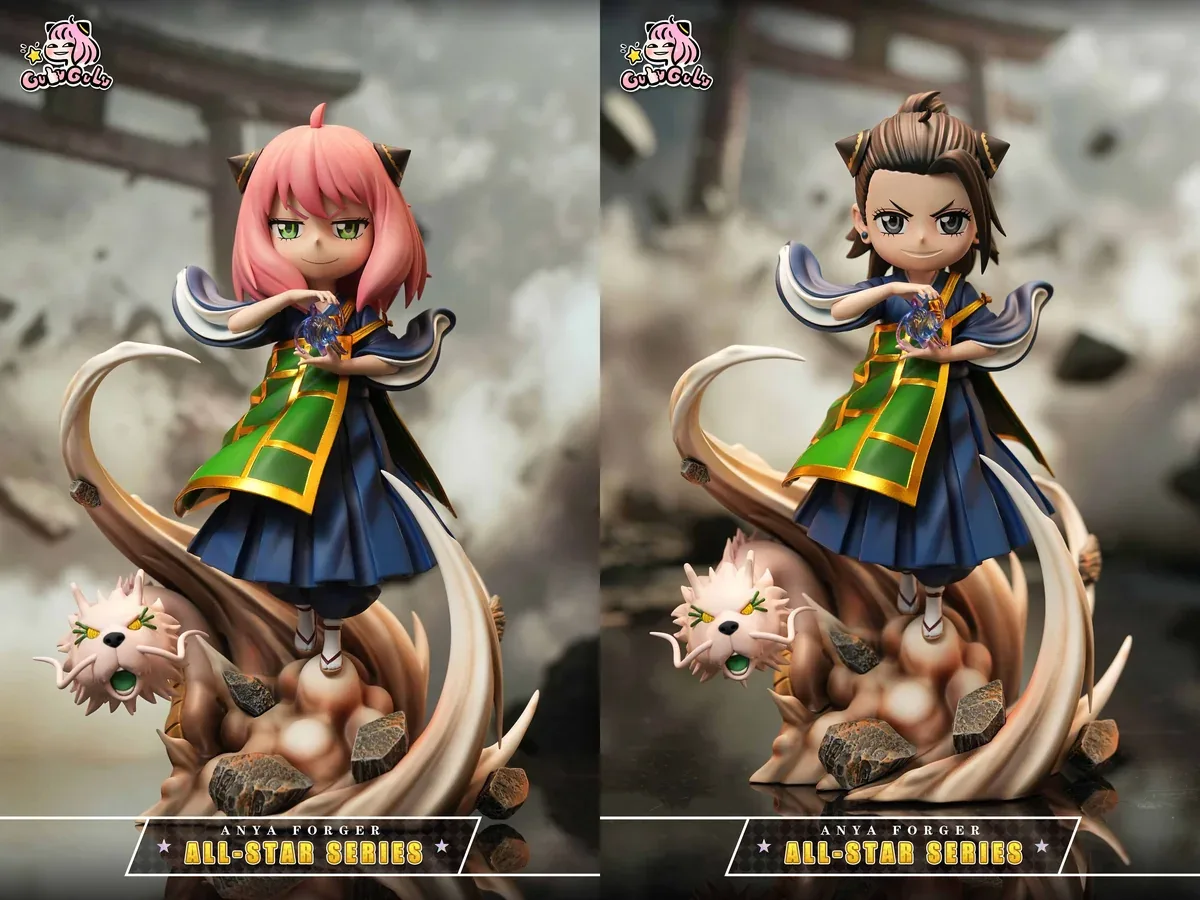
- Suguru Geto Cosplay Anya Forger - Jujutsu Kaisen SPY X FAMILY Resin Statue - GULUGULU Studio: Suguru Geto Cosplay Anya Forger - Jujutsu Kaisen SPY X FAMILY Resin Statue - GULUGULU Studio, made of PU + Resin, 22cm tall. This statue uses a mixed material (PU + resin) which can be more prone to surface cracks if handled roughly. Knowing the material helps you choose the right repair adhesive.
- Natural Scene Series Ampharos Family - Pokemon Resin Statue - Moon Shadow Studios: Natural Scene Series Ampharos Family - Pokemon Resin Statue - Moon Shadow Studios, made of Resin + PU, 11cm tall. Smaller statues like this one have thinner parts that require extra care during repair. The compact size also makes it easier to practice crack-filling techniques.