Quick Answer
Retinol and Vitamin C serve different anti-aging purposes: retinol boosts collagen and smooths wrinkles, while Vitamin C brightens skin and fights free radicals. If you need both, layer them—Vitamin C in the morning and retinol at night—but introduce them gradually to avoid irritation.
When it comes to anti-aging serums, retinol and Vitamin C are two of the most researched and recommended ingredients. But they work in different ways, and choosing between them can be confusing. This guide breaks down their unique benefits, trade-offs, and how to use them together for a complete anti-aging routine.
Whether you're targeting fine lines, dullness, or uneven tone, understanding the strengths and limitations of each ingredient will help you make an informed choice. We'll also highlight some products from our store that can complement your regimen.
Retinol Serum Benefits: The Gold Standard for Wrinkles
Retinol, a form of Vitamin A, is celebrated for its ability to accelerate cell turnover and stimulate collagen production. This makes it highly effective at reducing the appearance of fine lines and wrinkles, improving skin texture, and unclogging pores. Many dermatologists recommend retinol as a first-line treatment for photoaging.
However, retinol can cause dryness, redness, and peeling, especially when you first start using it. It also makes your skin more sensitive to the sun, so nightly use and diligent sunscreen application are essential. If you have sensitive skin or are new to retinol, start with a low concentration and use it only a few times a week.
- Start with a pea-sized amount and apply only at night.
- Use a moisturizer to buffer if irritation occurs.
- Always wear SPF during the day.
Vitamin C Serum Benefits: Brightening and Antioxidant Protection
Vitamin C is a powerful antioxidant that neutralizes free radicals from UV exposure and pollution, preventing premature aging. It also inhibits melanin production, which helps fade dark spots and even out skin tone. Additionally, Vitamin C boosts collagen synthesis, contributing to firmer, more radiant skin.
Unlike retinol, Vitamin C is generally well-tolerated and can be used every morning. It enhances the effectiveness of sunscreen and provides a healthy glow. The main drawback is that Vitamin C is unstable and can degrade quickly when exposed to light and air, so proper packaging and storage are crucial.
- Use Vitamin C in the morning under your sunscreen.
- Look for serums with stable forms like L-ascorbic acid or derivatives.
- Store in a cool, dark place to preserve potency.
How to Layer Retinol and Vitamin C: Morning vs. Night
You don't have to choose between retinol and Vitamin C—they complement each other perfectly. The most effective strategy is to use Vitamin C in the morning to protect against environmental damage, and retinol at night to repair and regenerate while you sleep. This way, you get the benefits of both without overwhelming your skin.
If you have sensitive skin, you can alternate nights or use a lower concentration of retinol. Always introduce new products gradually and patch test first. And remember, consistency is key—results take time, typically 8-12 weeks for noticeable improvement.
- Morning: Cleanse, apply Vitamin C serum, moisturize, and finish with SPF.
- Evening: Cleanse, apply retinol, and follow with a moisturizer.
- If irritation occurs, reduce frequency or buffer with moisturizer.
Choosing the Right Product: What to Look For
When selecting a Vitamin C serum, look for a concentration between 10% and 20% and a stable form like L-ascorbic acid. For retinol, start with 0.25% to 0.5% if you're a beginner, and always choose a product that is paraben-free and cruelty-free to align with your skincare values.
Our store offers a range of cruelty-free and paraben-free products that can support your anti-aging routine. For instance, the Super C-Boost is a pure Vitamin C powder that you can mix into your favorite serum or moisturizer for a customized boost. It's an excellent way to incorporate Vitamin C without committing to a full serum.
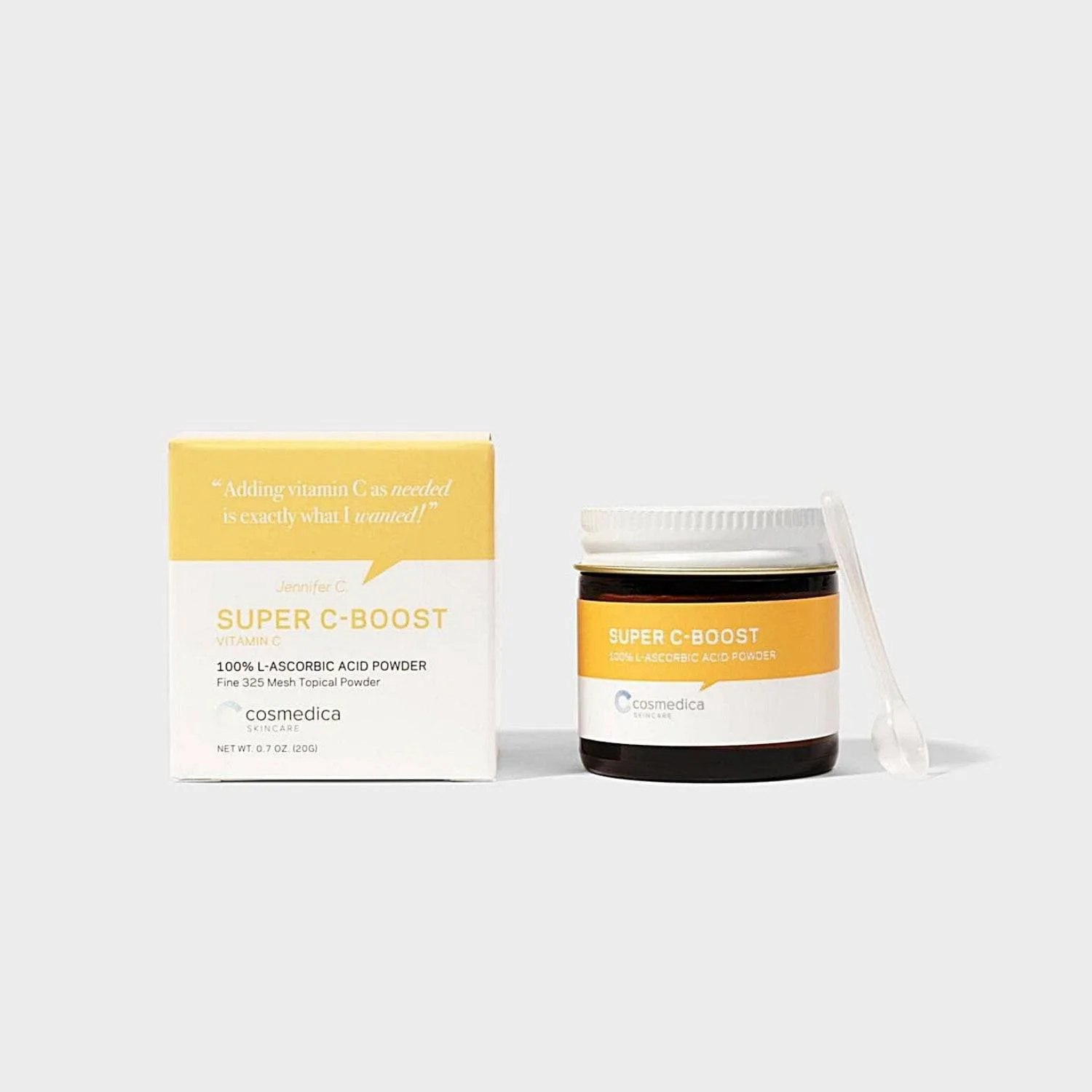
Super C-Boost
- Check the ingredient list for the active form and concentration.
- Opt for opaque, airtight packaging to protect Vitamin C.
- Consider your skin type: dry skin may benefit from a hydrating formula.
The Trade-Offs at a Glance
- Retinol: Anti-Aging Powerhouse: Highly effective for wrinkles and texture, but can cause irritation and sun sensitivity. Best for nighttime use and those willing to build tolerance.
- Vitamin C: Brightening Antioxidant: Excellent for fading dark spots and protecting against environmental damage, but less effective for deep wrinkles. Ideal for morning use and all skin types, especially dull or uneven skin.
- Layering Both: Combining them gives you comprehensive anti-aging benefits, but requires a consistent routine and patience. Use Vitamin C in the morning and retinol at night for best results.
Products to Enhance Your Anti-Aging Routine
- Super C-Boost: Cosmedica Skincare’s Super C-Boost is a topical multi-functional Vitamin C powder. Instantly, customize your serum, toner or moisturizer with a supercharged dose of Vitamin C! The Super C Boost is great for targeting signs of discoloration, sun damage, and dull complexions. This allows you to add a potent Vitamin C boost to any product you already use, making it easy to incorporate antioxidant protection without changing your routine.
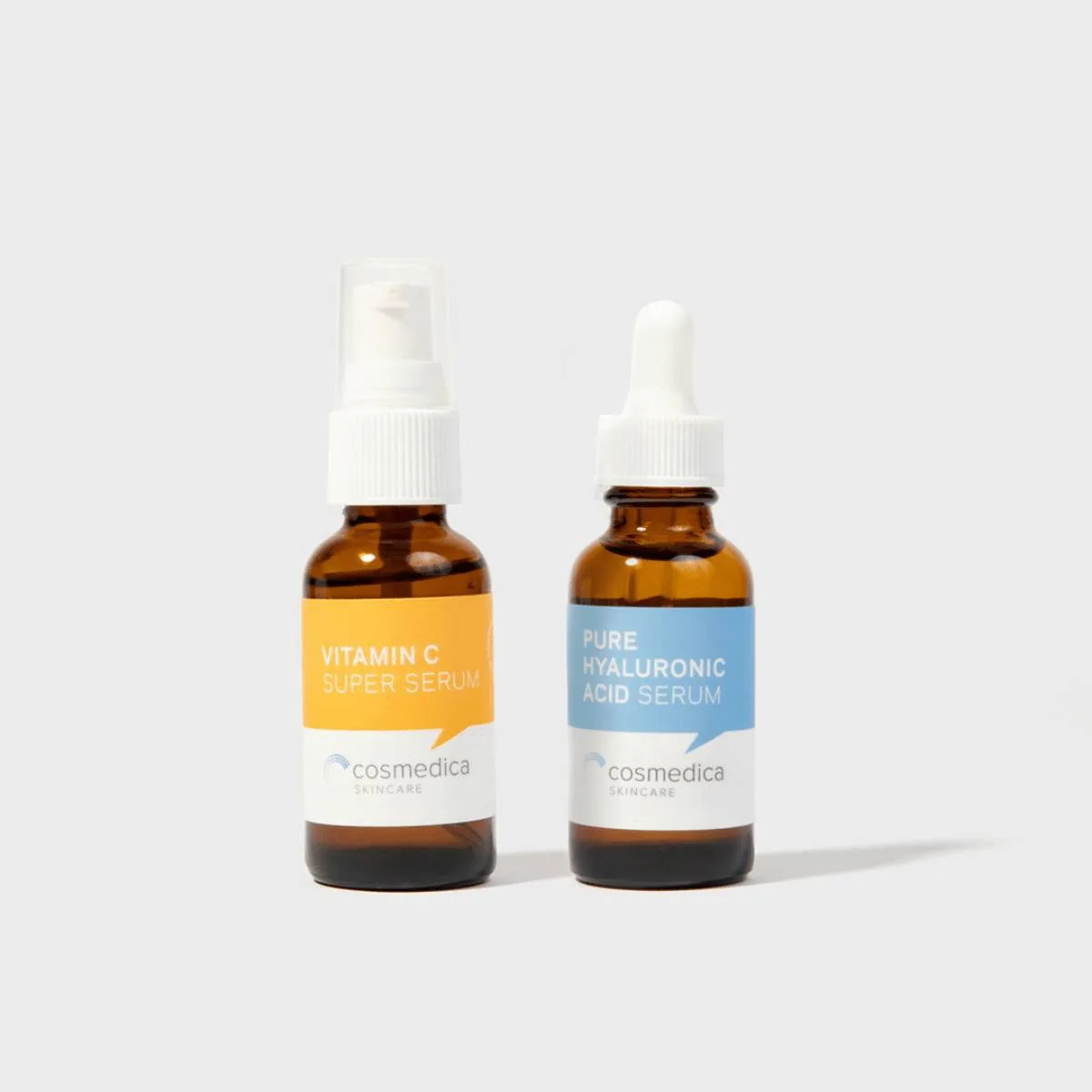
- Hyaluronic + Vitamin C Serum Set: Get all of the benefits of Hyaluronic Acid and Vitamin C in this anti-aging one-two punch! Great for AM or PM together or separate this serum duo will combat the aging effects of environmental free radicals while restoring essential hydration beneath the skin’s surface. This set combines hydration and antioxidant protection, addressing both dryness and free radical damage, which is ideal for a comprehensive anti-aging approach.
Which One Should You Choose?
Best For
- Retinol: Those primarily concerned with fine lines, wrinkles, and rough texture.
- Vitamin C: Those looking to brighten dull skin, fade dark spots, and protect against environmental stressors.
Not For
- Retinol: Sensitive skin or those who cannot commit to daily sunscreen use.
- Vitamin C: Those seeking dramatic wrinkle reduction without other anti-aging ingredients.
Both retinol and Vitamin C are essential for a well-rounded anti-aging routine. By understanding their unique benefits and trade-offs, you can make an informed decision or even use them together for optimal results. Explore our selection of cruelty-free and paraben-free products, like the Super C-Boost, to enhance your regimen and achieve a radiant, youthful complexion.