Quick answer
Classic toys and games still matter because they ask kids to do something physical or social: pull, aim, draw, trace, or race to spot a pattern. The best retro pick is the one that matches your child's age and attention span, not the one with the most nostalgic packaging. For most families, start with one active toy and one tabletop game, then add more only if both get repeat play.
Retro toys and games keep returning to store shelves because they solve a modern problem: they give kids something to do with their hands and with other people. A magnetic tracing board, a spiral art set, or a fast card game does not need a battery, a screen, or a subscription. It needs a kid, a surface, and a few minutes.
That does not mean every classic toy deserves a spot in your closet. Some retro games are too abstract for young children, and some toys are better for solo play than for a family game night. This guide gives you decision rules for choosing retro toys and games by age, play style, and how often your family will actually use them.
Why retro toys are popular again
Parents rediscover classic toys for kids for practical reasons. A toy that works without Wi-Fi is easy to pack, easy to share, and easy to hand down. Retro games for families also tend to have simple rules, so a younger child can join without a long explanation. The appeal is not only nostalgia; it is lower setup and fewer things to charge.
There is also a skill story. Tracing letters with a magnetic stylus builds fine motor control. Racing to find matching cards exercises visual discrimination. Pulling back a launcher and aiming builds hand-eye coordination. These are not new ideas, which is exactly why they keep working across generations.
- Pick toys that ask for a physical action: pull, trace, draw, or grab.
- Choose games with one clear rule so younger players can start fast.
- Favor sets that store in one box or tin to survive real family life.
Match the retro toy to your child's age and stage
Age ratings on classic toys for kids are a starting point, not a guarantee. A preschooler who still mouths objects needs different pieces than a seven-year-old who can follow multi-step directions. For ages three and up, look for large, easy-grip parts and guided play, such as a tracing board with arrows. For ages six and up, pattern-recognition games and creative drawing sets hold attention longer.
Attention span matters as much as age. A child who loses interest in five minutes will do better with a fast, turn-free game than with a long creative project. A child who likes to settle in and focus will get more from a spiral art set or a fashion drawing set than from a race-style card game. Watch how your child already plays, then choose the retro format that matches it.
- Ages 3-5: guided, large-piece toys with a clear next step.
- Ages 6-8: games with a simple rule and a quick round.
- Ages 8+: creative sets and strategy games that reward repeat play.
Active retro toys vs tabletop retro games
Active retro toys get kids moving and are easy to take outside. They work well for short bursts, birthday gifts, and days when the house feels too small. Tabletop retro games keep everyone in one spot and build turn taking, patience, and social skills. Most families do best with one of each rather than three of the same type.
If you are buying for a group, lean toward a game that supports different skill levels. If you are buying for one child, lean toward a toy that can be used alone without an adult referee. The trade-off is real: active toys can be harder to store, and tabletop games can fall flat if the rules are too complex for the youngest player at the table.
- Outdoor or active toy: best for movement, short play, and gifts.
- Tabletop game: best for family time and turn taking.
- Buy one of each before adding duplicates.
How to judge quality and staying power
A retro toy earns its place if it survives being used, not just displayed. Check whether the pieces store together, whether the play pattern is repeatable, and whether the set works for more than one child. A game that only plays well with exactly four players is harder to use than one that scales up or down.
Also check what the toy asks the child to do. Toys that do the work for the child get boring fast. Toys that leave the drawing, aiming, or spotting to the child stay interesting because the result changes each time. That is the difference between a nostalgic purchase and a toy that gets pulled out again next month.
- Look for a storage solution included with the set.
- Prefer play patterns that produce a different result each time.
- Skip sets with many small pieces if your child is still mouthing toys.
Decision rules for buying retro toys and games
- If your child is 3-5 years old: Choose guided, large-piece toys over rule-heavy games. A tracing board with a big stylus and arrow prompts lets a preschooler succeed without adult hand-over-hand help. Prioritize fine motor practice and easy cleanup.
- If you want a family game night: Pick a game where everyone plays at once and the rule fits in one sentence. Turn-free spotting games keep younger players in the round instead of waiting. Check the player count and round length before buying.
- If you want outdoor or active play: Choose a toy with a clear physical action, such as pull, aim, and launch. These work best in short bursts and need open space. Confirm you have a safe area before you buy.
- If you are buying a gift: Favor a set that stores in one box and does not require batteries or a screen. It is easier for the receiving family to use right away. Classic formats travel well across ages and occasions.
- If your child prefers solo play: Skip competitive games and choose a creative or tracing set instead. Solo-friendly retro toys let one child work at their own pace. Match the toy to how your child already plays.
Retro picks that show the play pattern
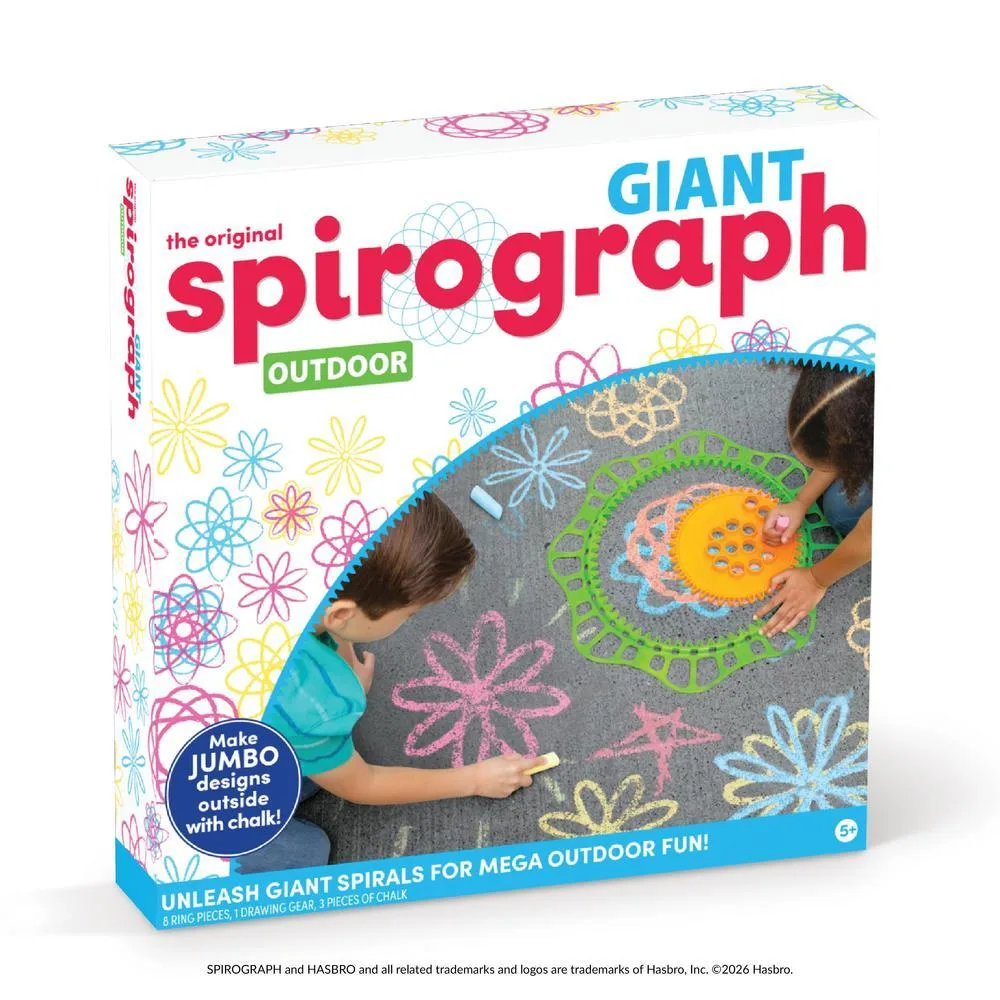
- THE ORIGINAL SPRIOGRAPH: GIANT OUTDOOR: This Spirograph set is designed for creating giant spirals outdoors and works as a craft kit or drawing kit for kids. It is a strong fit when you want a classic creative toy that gets kids outside and produces a new design every time.
- MAGNATAB UPPER CASE LETTERS: Designed for kids ages 3 and up, this magnetic tracing board uses a large, easy-grip stylus so kids pull beads to the surface while following guided arrows to form each letter. It turns letter practice into a hands-on task, which suits preschoolers who need a physical action rather than a worksheet.
- SET GIANT CARDS CARD GAME: Players race to find as many SETs as they can, where a SET is three cards on which each feature is either all the same or all different, with no turns and no luck. It is a fast tabletop option for mixed ages because everyone plays at once and the rule is easy to state.
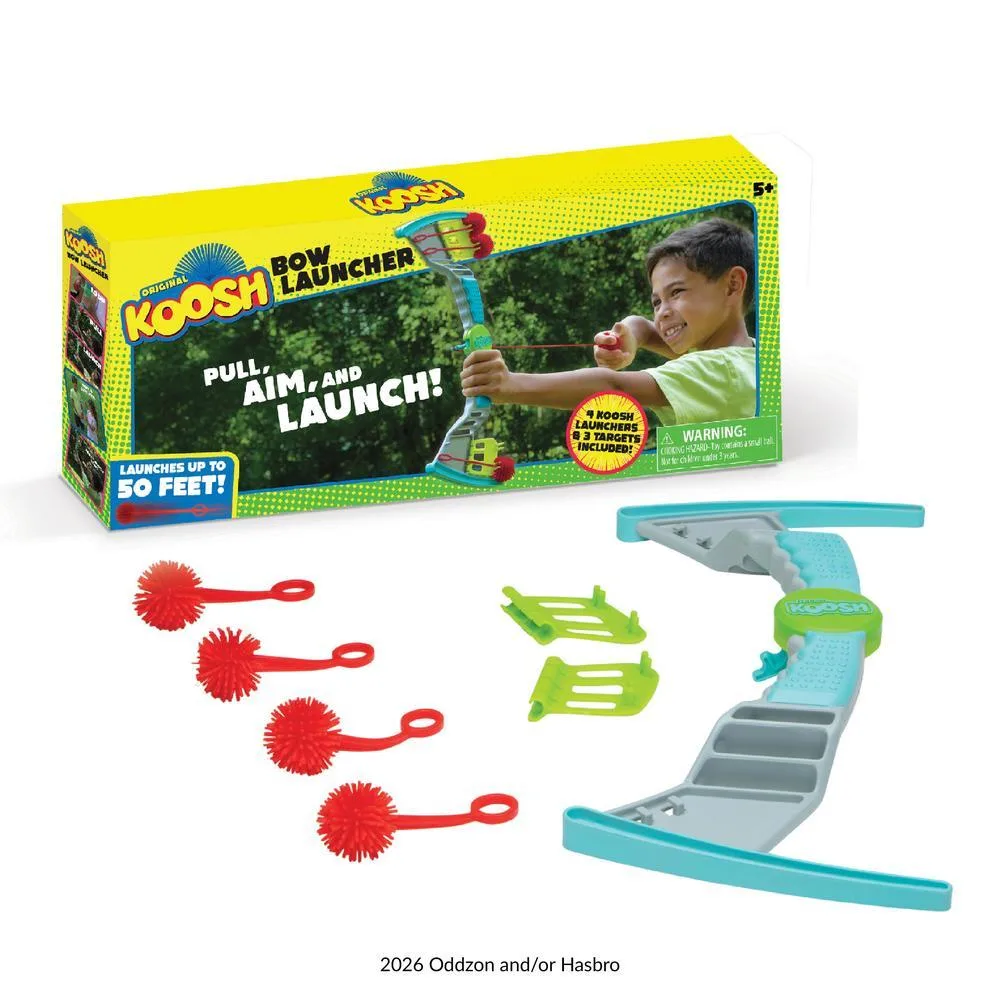
- Koosh Bow Launcher: This is a pull, aim, and launch toy built for outdoor play, active play, and screen-free game sessions. It fits the active retro category and works as a birthday gift, Easter basket stuffer, or holiday present.
Who these retro picks fit
Best for
- Families who want screen-free play that needs no charging or setup
- Gift buyers looking for classic toys for kids ages 3 and up
- Parents who want one active toy and one tabletop game to cover different moods
Not for
- Children who only engage with app-based or digital play
- Families who need a single toy to occupy a wide age range for long stretches
- Buyers who want a complex strategy game with deep rule systems
Retro toys and games last because they hand the action back to the child. Start with one active toy and one tabletop game, check the age and play style fit, and let repeat play tell you what to add next.