Quick answer
If you want a lightweight telephoto zoom for daytime travel and wildlife, the RF75-300mm f/4-5.6 is a practical choice. It trades maximum reach and aperture for portability and price.
Why size matters for travel and wildlife
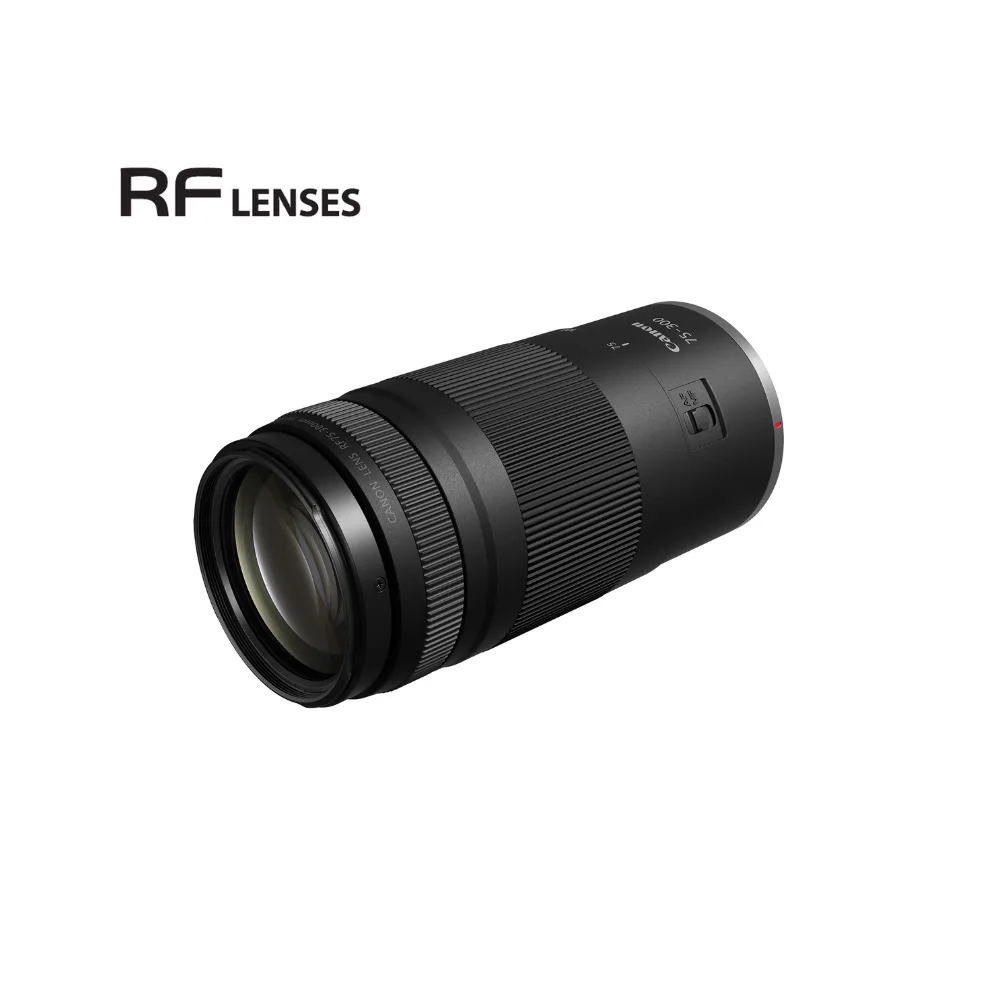
The RF75-300mm f/4-5.6 is only about 146mm long and weighs 507g — roughly the size of a 500ml drink bottle. That makes it easy to pack in a day bag or carry on long hikes without fatigue.
For wildlife, you often need to move quickly or wait for hours. A lighter lens reduces strain and lets you keep the camera ready. The compact build also draws less attention in crowded travel settings.
Reach trade-off: 300mm vs longer zooms
At 300mm, this lens covers distant subjects like birds, sports, or landscapes, but it cannot match the reach of longer telephoto zooms such as the RF200-800mm. For small or very shy wildlife, you may need to crop heavily or get closer.
If you pair it with an APS-C EOS R body like the EOS R50, the crop factor effectively extends the reach to 480mm (35mm equivalent). That helps close the gap without adding weight.
Aperture and low-light limitations
The f/4-5.6 maximum aperture means the lens lets in less light than f/2.8 or f/4 constant-aperture zooms. In early morning, late evening, or under a forest canopy, you may need higher ISO or slower shutter speeds.
If you shoot mostly in good daylight, the aperture is rarely a problem. For indoor sports or dim wildlife, consider a faster lens or one with image stabilization.
Decision rules
- Do you prioritize portability?: If you want a telephoto zoom that fits in a small bag and won't weigh you down on a hike or city trip, the RF75-300mm f/4-5.6 is a strong candidate.
- Do you need more than 300mm reach?: For small or distant wildlife, consider a longer lens such as the RF200-800mm. If you already own an APS-C EOS R camera, the crop factor gives you 480mm equivalent, which may be enough. Check your camera body: APS-C users get extra reach for free.
- Do you shoot in low light often?: The f/4-5.6 aperture works best in daylight. If you frequently shoot at dawn, dusk, or indoors, look for a constant f/2.8 or f/4 lens, or one with image stabilization. Higher ISO is usable but not always ideal; test your camera's high-ISO performance.
Product details
-
RF75-300mm f/4-5.6: The RF75-300mm f/4-5.6 weighs 507g and measures about 146mm, comparable to a 500ml drink bottle. This makes it one of the most travel-friendly supertele zooms, easy to carry all day without a strap or bag.
RF75-300mm f/4-5.6
Who should buy this lens
Best for
- Travelers who want a compact telephoto zoom for landscapes, architecture, and occasional wildlife
- Daytime wildlife photographers using APS-C EOS R bodies for extra reach
Not for
- Wildlife photographers who need 400mm+ reach for small or shy animals
- Low-light shooters who require f/2.8 or constant f/4 aperture