Quick answer
An RFID-blocking leather wallet uses a thin metallic lining inside the leather to create a Faraday cage that blocks radio waves from scanners, preventing unauthorized reading of your contactless cards.
Why RFID blocking matters for your wallet
RFID (Radio Frequency Identification) is the technology behind contactless payments and many modern credit cards. Scanners can read your card number and expiration date from a few inches away without touching the card. An RFID-blocking wallet adds a layer of defense by interrupting those radio signals.
Not every leather wallet offers this protection. Standard leather alone does not block RFID signals. You need a wallet with an integrated shielding layer, such as a metal mesh or foil lining, to actually stop the scan. The Luna RFID Genuine Leather Wallet from BOSTANTEN is one example that combines genuine leather with built-in RFID blocking.
Trade-off: RFID protection vs. wallet bulk
Adding a shielding layer can make a wallet slightly thicker or stiffer than a non-RFID model. However, many modern designs like the Luna wallet use a slim lining that does not add noticeable bulk. The two-button closure keeps the wallet flat even when stuffed, so you get protection without a bulky look.
How to use your RFID leather wallet for maximum protection
- 1. Place cards in the RFID-blocking slot: Most RFID wallets have a designated inner pocket or slot lined with shielding material. Insert your contactless cards there. If the wallet has multiple card slots, only the shielded ones block signals. Check the product description to confirm which slots are protected. Using the wrong slot leaves your cards exposed.
- 2. Keep the wallet closed when not in use: RFID blocking works best when the wallet is fully closed. The shielding layer is typically only on the inner lining, so an open flap or gap can let signals reach your cards. Always snap or zip the wallet shut before putting it in your pocket or bag. An open wallet can still be scanned.
- 3. Test your wallet's RFID blocking at home: Hold a contactless card against the closed wallet and try to tap it on a payment terminal. If the terminal does not read the card, the blocking is working. Alternatively, use an RFID card reader app on your phone to scan the wallet. No signal means it is effective. A quick test confirms your wallet is actually blocking.
Featured product
-
Luna RFID Genuine Leather Wallet: Made of high quality cowhide genuine wax oil leather with a durable vegan leather option. Compact size fits in a coat pocket or crossbody bag. Two-button closure keeps the wallet flat. This means you get RFID protection in a slim, everyday wallet that does not add bulk and develops a nicer patina over time.
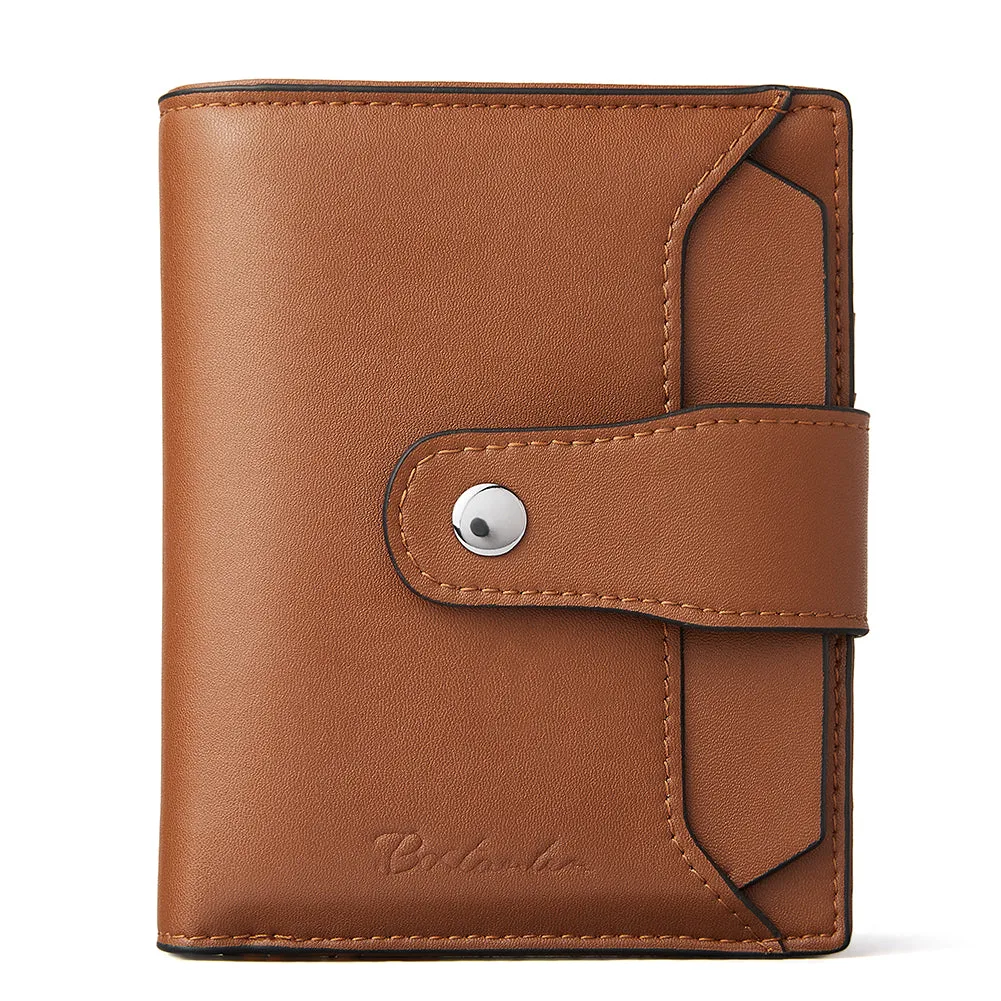
Luna RFID Genuine Leather Wallet