Quick Answer
Choose a riding crop for pinpoint, stingy accuracy and fast, quiet feedback in close-range play. Choose a leather flogger when you want broad, thuddy impact spread across many falls and a heavier, more rhythmic feel. Beginners often find a crop easier to aim, while a flogger rewards practice with a wider range of sensation.
How the Two Tools Deliver Force
A riding crop concentrates force into a small tip at the end of a stiff shaft, so the sensation is sharp and localized. A leather flogger distributes force across multiple falls, which spreads the impact over a wider area and produces a heavier, more diffuse feel. The material and construction matter as much as the shape: a full-grain cowhide flogger with many falls behaves very differently from a light synthetic toy.
Control, Accuracy, and Feedback
Crops are easier to aim because the tip travels in a predictable line, which makes them useful for precise placement on small target areas. Floggers require more wrist control and space to swing; the falls can tangle if you rush, and the wider spread means less precision. In return, a flogger lets you build rhythm and vary intensity by changing the number of falls that land.
Sensation: Stingy vs. Thuddy
If you already know you prefer a sharp, electric sting, a crop or a stingy flogger will feel more satisfying than a broad thuddy toy. If you want a deep, warm, massaging impact, a heavier flogger with wider falls is the better match. The same category can produce both sensations depending on fall count, weight, and technique, so test gently before committing to a full session.
Beginner Fit and Safety Basics
Start with light, slow strokes on a padded area like the upper back or thighs, and avoid bony spots such as the tailbone, spine, and kidneys. A crop is often the simpler first tool because its short range limits accidental wrap-around. A flogger needs clearance behind and beside you; check that the falls cannot reach the face, neck, or joints. Agree on a safeword and check in regularly, especially when switching between stingy and thuddy tools.
Trade-Offs at a Glance
- Accuracy vs. Coverage: A crop places force on a single small point; a flogger spreads it across many falls. Pick the crop for precise targeting, the flogger for broad warmth.
- Sting vs. Thud: Crops and stingy floggers like the 50-fall steel-handle model emphasize sharp sensation; heavier nine-fall floggers lean thuddy. Match the tool to the sensation you already enjoy.
- Learning Curve: Crops are easier to aim and control at close range; floggers need space, wrist technique, and practice to avoid tangling. Beginners can start with a crop, then add a flogger as skills grow.
Two Floggers That Show the Range
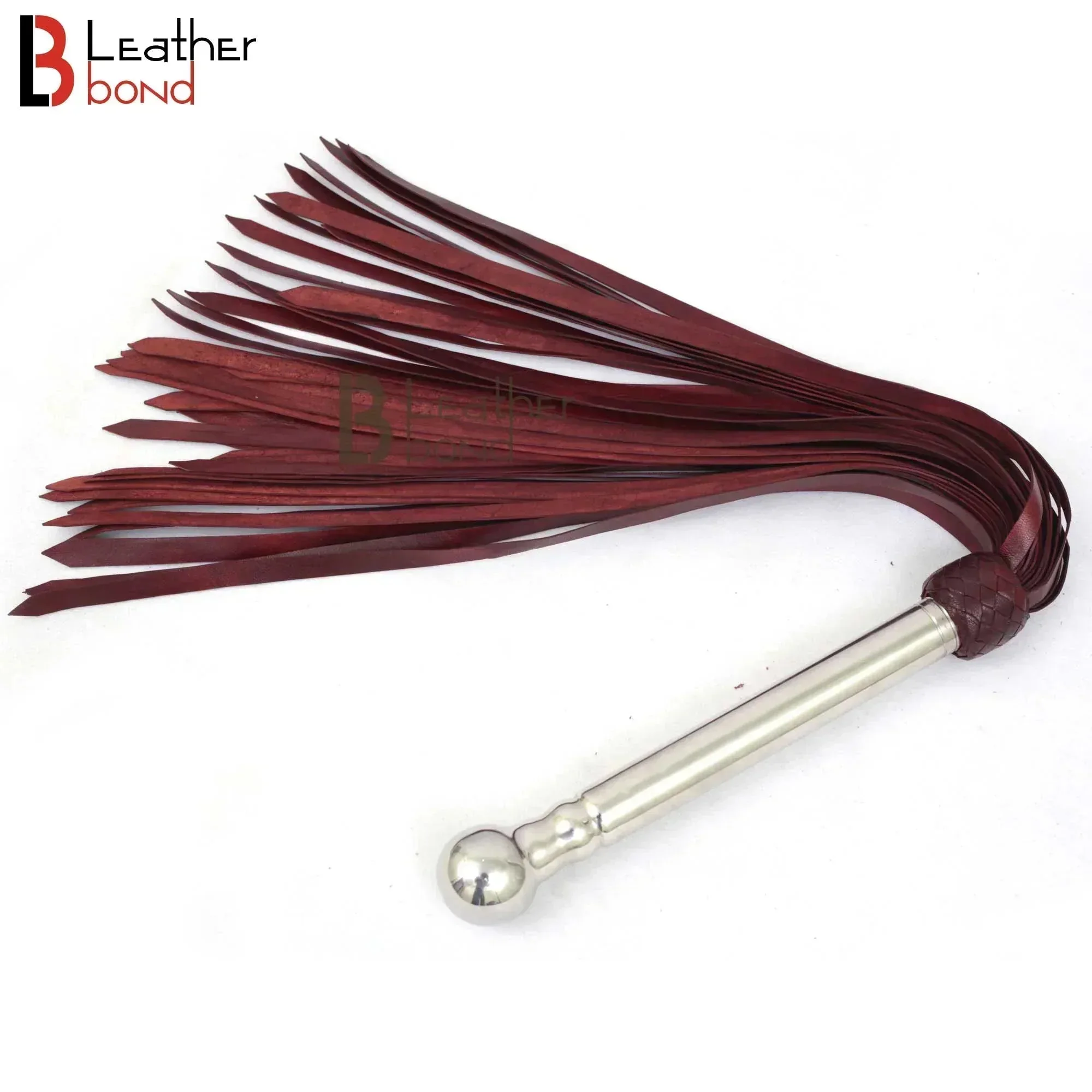
- Real Cowhide Leather Flogger 50 Stingy Falls & Steel Handle | Fully Handmade Heavy Duty BDSM Whip: Real Cowhide Leather Flogger with 50 stingy falls and a cold weighted steel handle, fully handmade and heavy duty. The steel handle gives authoritative control and the 50 falls create a focused sting, making this a strong pick if you want a flogger that behaves more like a crop in intensity.
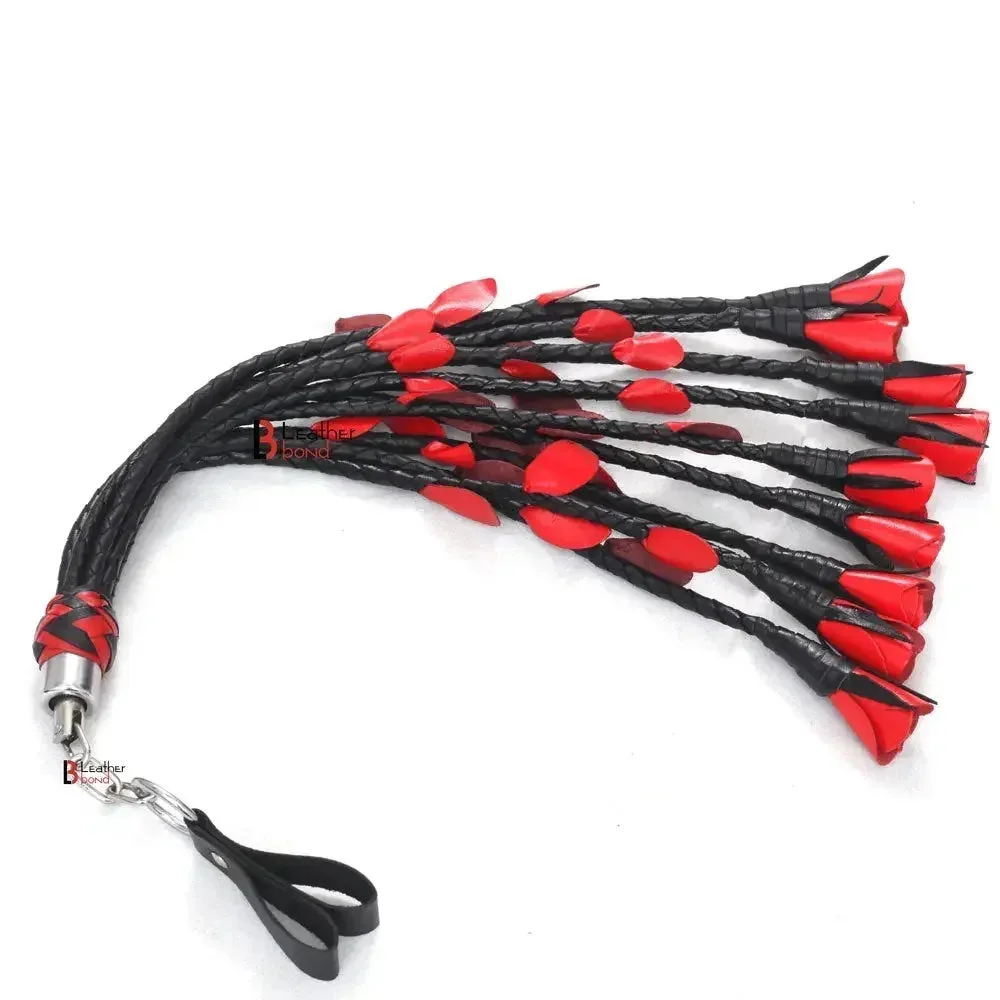
- Real Genuine Cow Hide Leather Finger Flogger Cat 0 Nine Falls Black Heavy Duty Thuddy Flog whip Rose Flogger: Real Genuine Cow Hide Leather Finger Flogger Cat O Nine with nine braided falls, each 18 inches long, weighing approximately 400 grams, fully handmade with a bearing for better revolving. Fewer, longer falls and a heavier weight produce a broader, thuddier impact than a 50-fall stingy flogger, so it suits players who prefer deep pressure over sharp sting.
Which Should You Choose?
Best for
- Players who want pinpoint, stingy accuracy and quick feedback
- Beginners who want a short-range tool that is easy to aim
- Sessions in tight spaces where a full flogger swing is impractical
Not for
- Players seeking broad, thuddy impact across a wide area
- Those who prefer the rhythmic, multi-fall feel of a flogger
- Anyone who wants to vary sensation mainly by changing fall count