Quick answer
Rimless glasses are the lightest and most minimal option, ideal if you barely want to feel your frames. Semi-rimless frames add a top bar for extra structure while keeping a sleek look. Choose rimless for maximum invisibility and weight savings; choose semi-rimless if you need more durability and lens support.
What makes rimless and semi-rimless different?
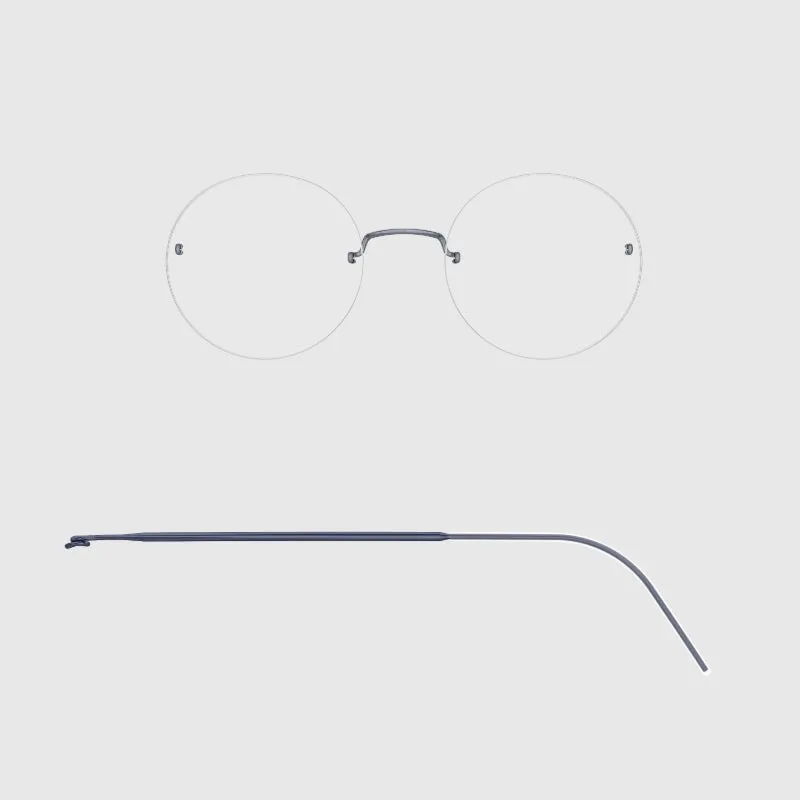
Rimless glasses have no frame around the lenses—the lenses attach directly to the bridge and temples via small screws or nylon threads. This design removes nearly all weight and bulk, making them the lightest eyeglasses available. Semi-rimless glasses (also called half-rim) have a top bar that holds the upper edge of the lens, while the lower edge remains exposed. This gives them a bit more structure without the full frame of traditional acetate or metal glasses.
The trade-off is durability. Rimless frames rely entirely on the lens material for rigidity—if the lens cracks or the mounting screws loosen, the frame loses its shape. Semi-rimless frames distribute stress better because the top bar absorbs some impact. For everyday wear, semi-rimless often holds up longer if you handle your glasses roughly.
Key tradeoffs at a glance
- Weight: Rimless is the lightest option because there is no frame around the lens. Semi-rimless adds a thin top bar, which increases weight slightly but still feels lighter than full-rim frames. If weight is your top priority, go rimless.
- Durability: Rimless frames rely entirely on the lens for strength—drops or pressure can crack the lens or loosen mounts. Semi-rimless frames are more durable because the top bar absorbs some force and protects the lens edge. For daily wear with some rough handling, semi-rimless is safer.
- Style and visibility: Rimless frames are nearly invisible, giving a clean, minimalist look that doesn't compete with your face. Semi-rimless frames have a visible top line that adds a subtle design element, often favored for a modern but not invisible aesthetic. Choose rimless for invisibility; semi-rimless for a subtle frame accent.
Real-world examples
- SPIRIT TITANIUM RIMLESS WITH 615 TEMPLE: Danish Titanium | Handmade in Denmark. Customizable lens shape, temple colors, and bridge color. A rimless titanium frame like this is nearly weightless and can be tailored to your face shape and preferred color scheme. The customization means you get a truly personal fit, but the rimless design requires careful handling to avoid lens stress.
- FRANCOISE: Handcrafted wooden glasses made in Madrid from responsibly sourced birch wood using multi-layer lamination. Customizable color, nosepad, and temple. This semi-rimless wooden frame offers a unique look with the top bar providing extra stability. The wood adds warmth and character, but the semi-rimless structure means the lens is partially exposed—still lighter than full frames but more robust than a rimless design.
Which should you choose?
Best for
- People who want the lightest possible glasses and don't mind extra care when handling
- Those who prefer a nearly invisible frame that doesn't distract from their face
Not for
- Active users or those who often drop or sit on their glasses—rimless frames are more fragile
- People who need maximum lens protection (semi-rimless or full-rim would be better)