Quick answer
The most reliable Rivian R1S camping setup starts with a mattress designed for the R1S footprint, then layers in bedding and soft gear that compress into the frunk and subfloor. Load the mattress first, add bedding, then fill gaps with soft items. If you sleep two, link a second mattress or choose the Rivian R1S Pack to cover the full sleeping area.
Map your R1S storage zones before you pack
The R1S gives you three distinct camping storage zones: the rear cargo area, the frunk, and the subfloor compartment. Treat each zone as a category, not a junk drawer. The cargo area is for the sleeping platform and anything you need at camp. The frunk holds bulky soft goods that you will not touch until you stop. The subfloor swallows flat, heavy items like tools, chargers, and camp kitchen pieces.
A common mistake is packing by item type instead of by zone. That forces you to unload half the vehicle to reach a headlamp. Instead, assign one zone to sleep, one to camp, and one to emergency or recovery gear, then stick to it for the whole trip.
Choose a mattress that matches the R1S cabin
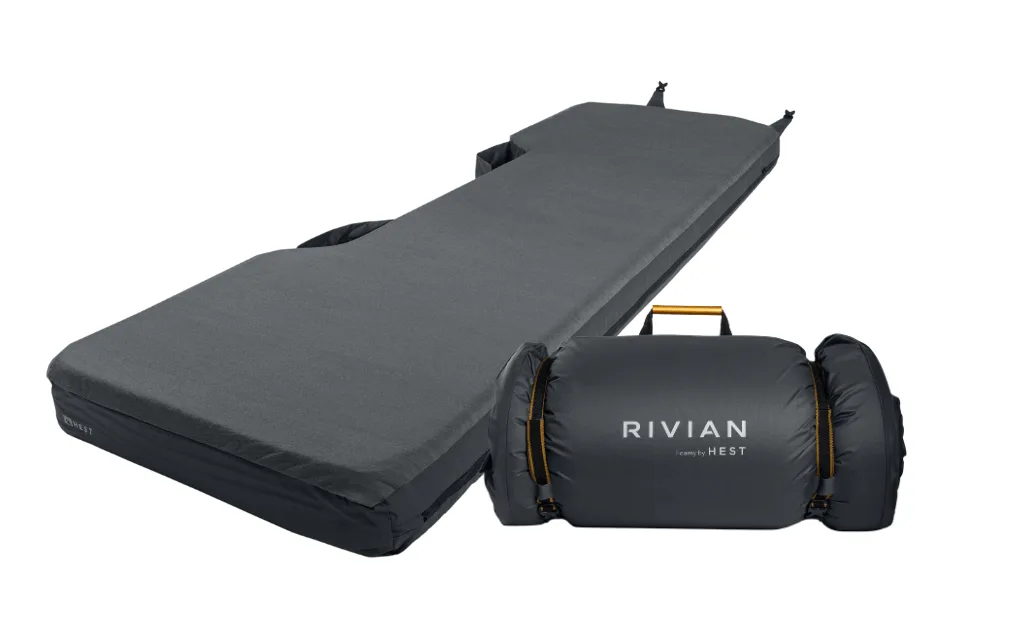
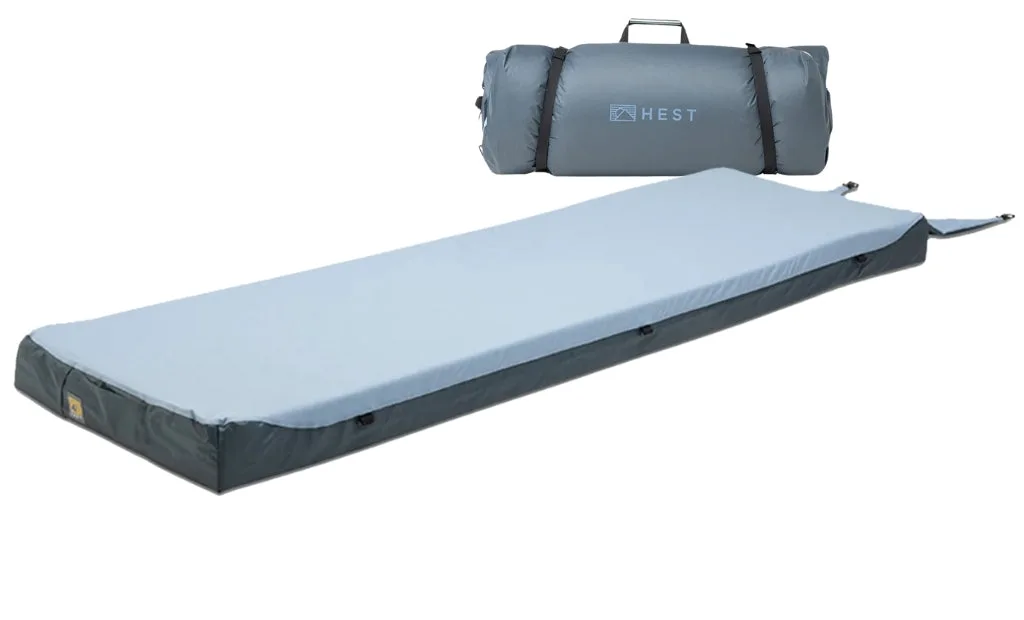
A generic SUV air mattress leaves gaps along the wheel wells and seat edges, which is where you feel the cold and the hard points. The Foamy for R1S by HEST was designed specifically with the Rivian R1S in mind, mimicking the curvature of the vehicle so it stores in the frunk and deploys into a bed in the back. That shape matters because it reduces the need for extra padding at the edges.
Foamy
If you regularly sleep two, note that the Foamy for R1S is a single mattress and HEST states that expanding comfort means linking a second mattress to create a double bed. To cover the full sleeping area, plan for two mattresses or a bundle that includes the right coverage.
Layer bedding for temperature and packability
Camping bedding has to do two jobs: keep you comfortable and compress into leftover space. A fitted sheet keeps the mattress surface clean and stops your sleeping bag from sliding. HEST offers a Fitted Sheet Cooling in multiple sizes, including a 25-inch Short that fits the Foamy Short, so check the size chart against your specific mattress before you buy.
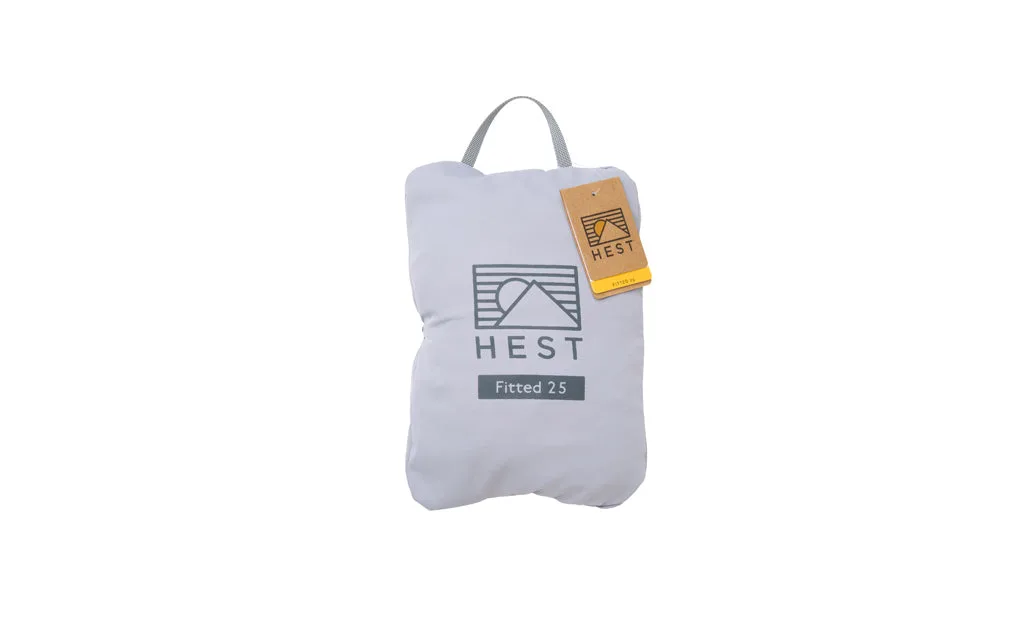
fitted sheet
The jade-infused fabric is designed to dissipate heat, which helps in warm conditions. If you camp in cold weather, that same cooling property is not what you want against your skin, so bring an insulated layer or a warmer bag on top.
Pack the frunk and subfloor with soft, compressible gear
The frunk is ideal for soft goods because they conform to the space and do not rattle. Duffels, pillows, and extra blankets belong here. The subfloor is for flat, dense items: charging cables, a small stove, tools, and recovery gear. Keep heavy items low and centered to protect handling.
Do not put the mattress in the frunk if you plan to sleep immediately on arrival. You will just move it twice. Deploy the mattress first, then use the frunk for the gear you will not need until morning.
Step-by-step R1S camping load order
- 1. Clear and flatten the rear cargo area: Fold the second and third rows as needed to create the sleeping platform. Remove cargo covers or organizers that block the mattress footprint. Checkpoint: the floor should be flat and free of hard points before you unroll anything.
- 2. Deploy the mattress first: Unroll the Foamy for R1S in the back and let it expand. If you sleep two, link a second mattress now rather than after you are tired. Common mistake: waiting until dark to inflate or unroll, then discovering the fit is off.
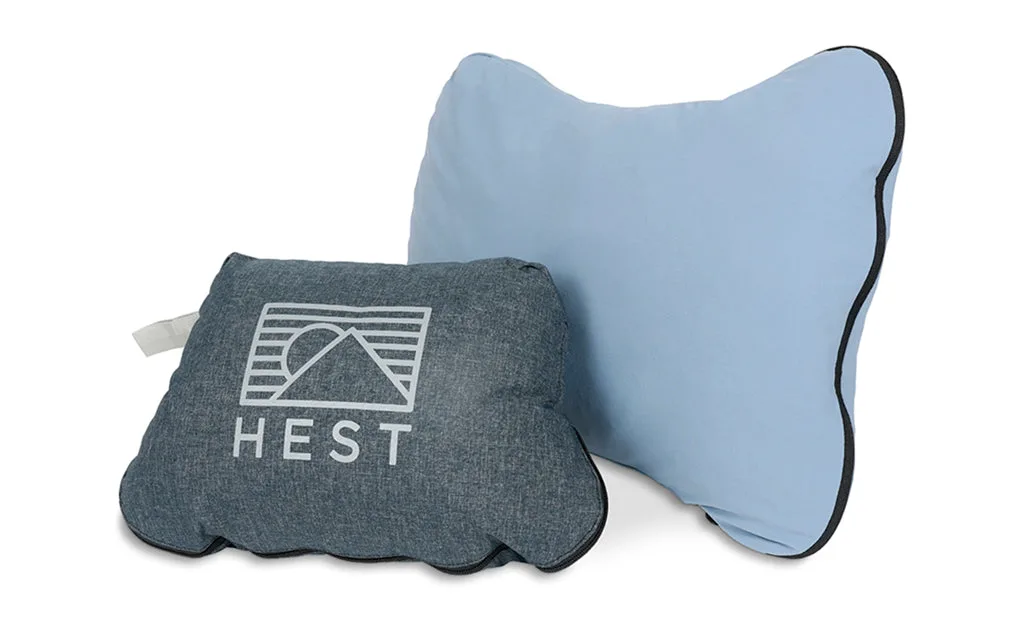
- 3. Add the fitted sheet and pillow: Put the fitted sheet on the mattress and place your pillow at the head end. Confirm the sheet size matches your mattress, such as the 25-inch Short for the Foamy Short. Checkpoint: the sheet should be snug with no loose fabric that bunches under you.
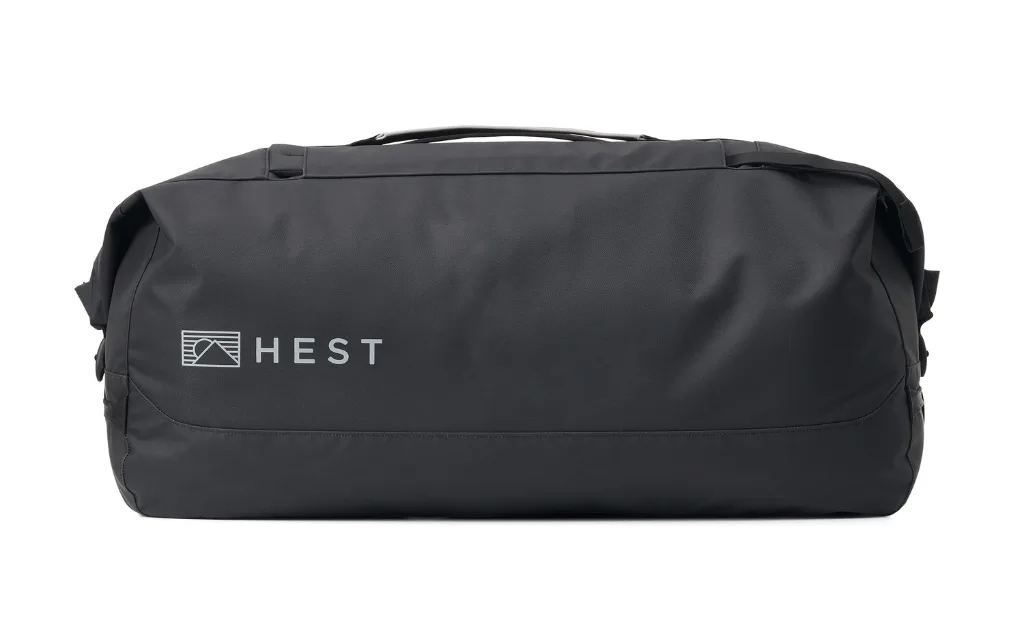
- 4. Load the frunk with soft camp gear: Put duffels, extra blankets, and the Foamy Duffel in the frunk. Keep items you need at camp in the cargo area, not the frunk. Common mistake: putting the mattress in the frunk and then having to move it again at camp.
- 5. Fill the subfloor with flat, heavy items: Store chargers, tools, recovery gear, and camp kitchen pieces in the subfloor compartment. Keep weight low and centered. Checkpoint: nothing in the subfloor should rattle or shift when you close the lid.
- 6. Do a final walk-around: Open and close every compartment you used. Make sure the mattress is not pinched by a seat or hatch, and that you can reach your pillow and headlamp without unloading. Next step: keep this load order as a checklist on your phone for the next trip.
Gear facts that affect your R1S setup
- Foamy For R1S: The Foamy for R1S by HEST was designed specifically with the Rivian R1S in mind. It mimics the curvature of the vehicle and stores in the frunk, deploying into a bed in the back. It is a single mattress, and linking a second mattress creates a double bed. You get a mattress shaped for the R1S instead of a generic pad, but you need to plan for two if you sleep two people or want full sleeping-area coverage.
- Fitted Sheet Cooling: HEST's jade-infused cooling fabric uses jade's thermal conductivity to dissipate heat and manage airflow. A Fitted 25-inch Short size fits the Foamy Short. A fitted sheet keeps the mattress clean and adds cooling in warm weather, but you must match the size to your mattress, and it is not a cold-weather insulator.
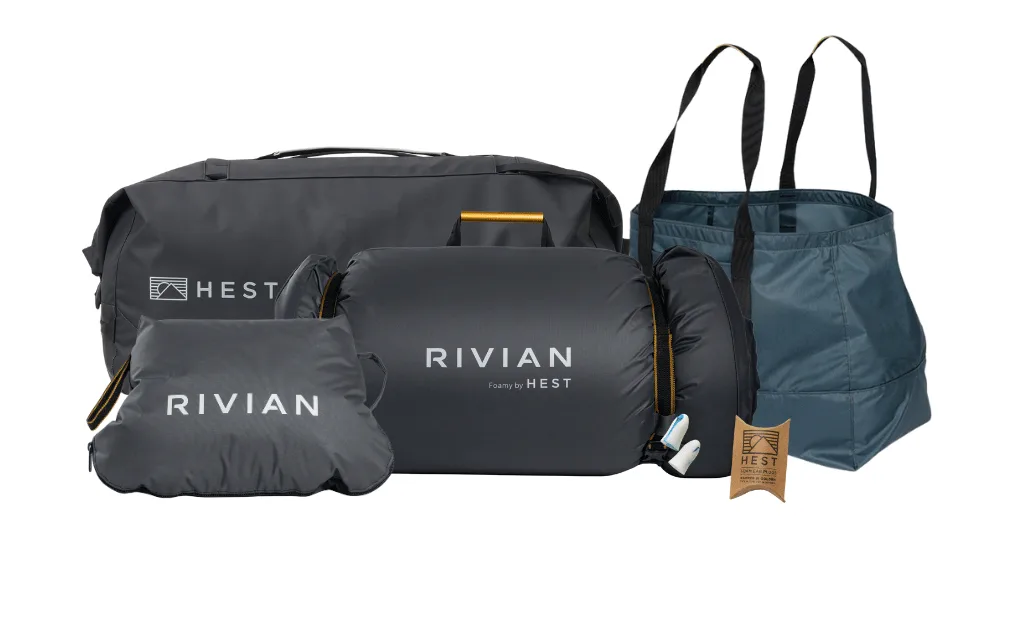
- Rivian R1S Pack: The Rivian R1S Pack bundles 1 Foamy for R1S, 1 Rivian Camp Pillow, 1 Foamy Duffel 120L, and 1 Tote. The Foamy Duffel was built to carry and store a Foamy for R1S mattress plus a Rivian Camp Pillow. The bundle covers mattress, pillow, and storage in one purchase, which simplifies packing and protects the mattress when it is not deployed.