Quick answer
RMSc is the slim, subcompact standard: it keeps a low profile on narrow carry slides but uses shorter screws and less recoil-boss area than RMR. RMR is the full-size, rugged standard with a larger footprint and more mounting hardware. Shield is a similar slim pattern to RMSc but with its own screw spacing and recoil lug geometry. Match the footprint to your slide cut first; adapters add height and can affect co-witness.
What actually differs between RMSc, RMR, and Shield
Footprint is the physical interface: the sight's base dimensions, screw hole spacing, and recoil lug or boss geometry. RMSc is a slim, subcompact pattern used on many micro pistols. RMR is a larger, full-size pattern with wider screw spacing and a more substantial recoil shoulder. Shield is a separate slim pattern that looks similar to RMSc but does not share the same screw positions or lug cut on every slide. Because of these differences, an RMSc sight will not drop into an RMR cut without an adapter, and a Shield-cut slide may not accept an RMSc sight directly. Always confirm the slide cut name, not just the pistol model.
Screw length, torque, and thread engagement
The most common mounting failure is not the footprint itself but the screws. RMSc cuts sit closer to the slide's interior, so long screws can protrude into the extractor or firing pin channel and bind the action. RMR cuts generally allow longer screws and more thread engagement. Use the screw length recommended for your specific slide and sight combination, and check function by cycling the slide with the optic installed before tightening to final torque. If you are unsure of the correct length, start short and confirm the slide moves freely.
Adapters, plates, and what they cost you
Adapter plates let you run an RMSc sight on an RMR cut or vice versa, but they add stack height. That extra height can push the optic above your iron sights, change your co-witness, and create a new torque interface that must be checked periodically. If your slide is already cut for the footprint you want, direct mount is simpler and lower. If you are choosing a slide cut now, pick the footprint that matches the sights you are most likely to buy, and consider whether you want the option to move the optic to another pistol later.
How reticle and window size interact with footprint
Footprint does not dictate window size, but slim footprints usually pair with smaller windows. A 3 MOA dot on a compact window is fast to acquire at carry distances; a larger window with a changeable reticle can be easier to track during rapid strings. Closed-emitter designs add an enclosed rear window that can improve reliability in rain or dust, but they still mount on the same footprint families. Decide whether you prioritize a low-profile slim sight or a larger, more forgiving window, then confirm the footprint matches your slide.
Footprint trade-offs at a glance
- RMSc footprint: Slim and low-profile, ideal for subcompact carry slides. Uses shorter screws and less recoil-boss area than RMR, so thread engagement and torque matter more. Best when your slide is already RMSc-cut and you want the lowest possible profile.
- RMR footprint: Larger and more robust mounting interface with wider screw spacing and more room for thread engagement. Requires a larger slide cut or an adapter on slim pistols. Choose RMR if you prioritize a rugged, full-size mounting standard and your slide supports it.
- Shield footprint: Slim pattern similar in spirit to RMSc but with its own screw spacing and lug geometry. Not interchangeable with RMSc on every slide without an adapter. Verify the exact cut name before buying; 'slim' does not mean universal.
- Adapters and plates: Adapters bridge footprints but add height, can affect co-witness, and introduce another torque interface to maintain. Direct mount is simpler; use an adapter only when you need cross-footprint flexibility.
Footprint examples from the current lineup
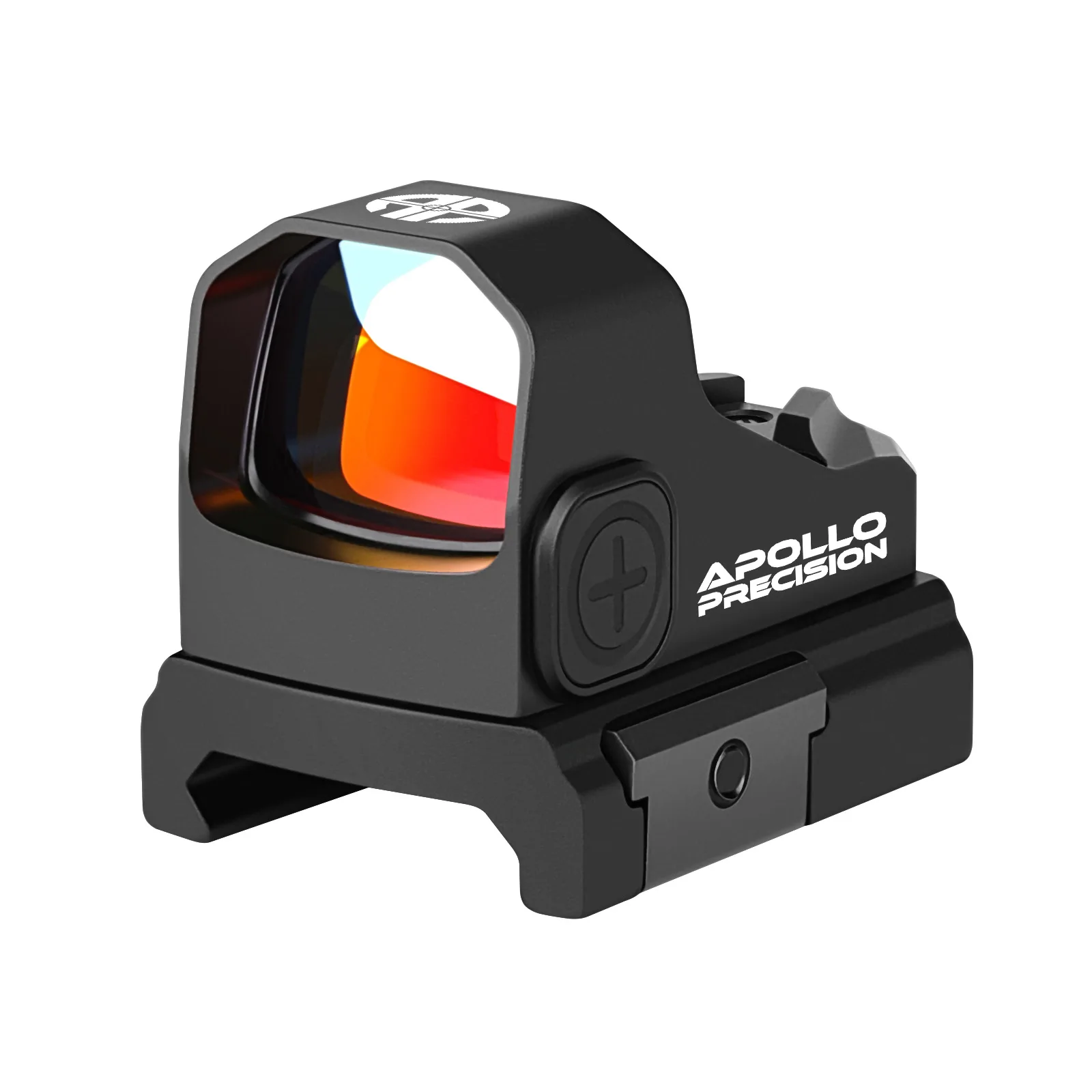
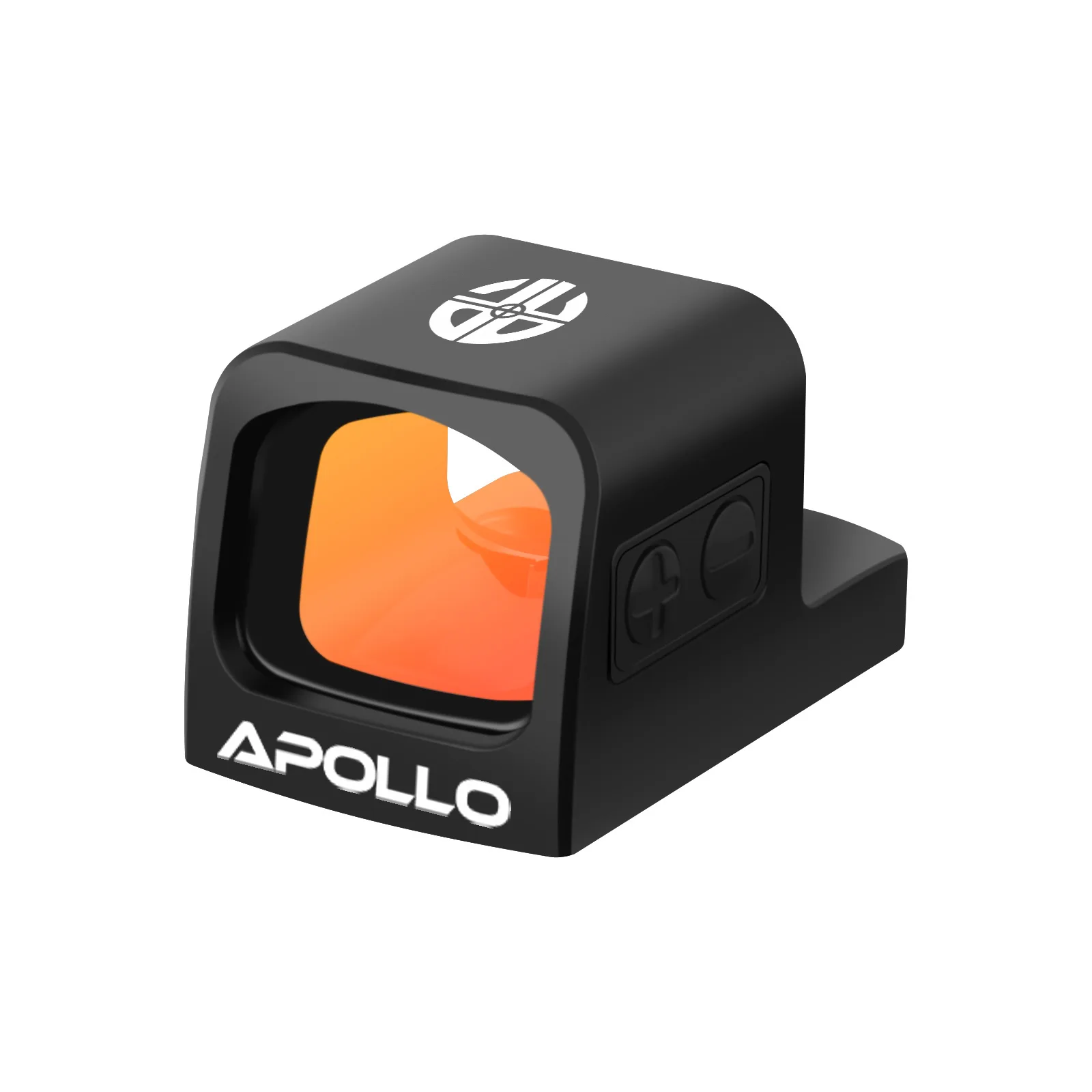
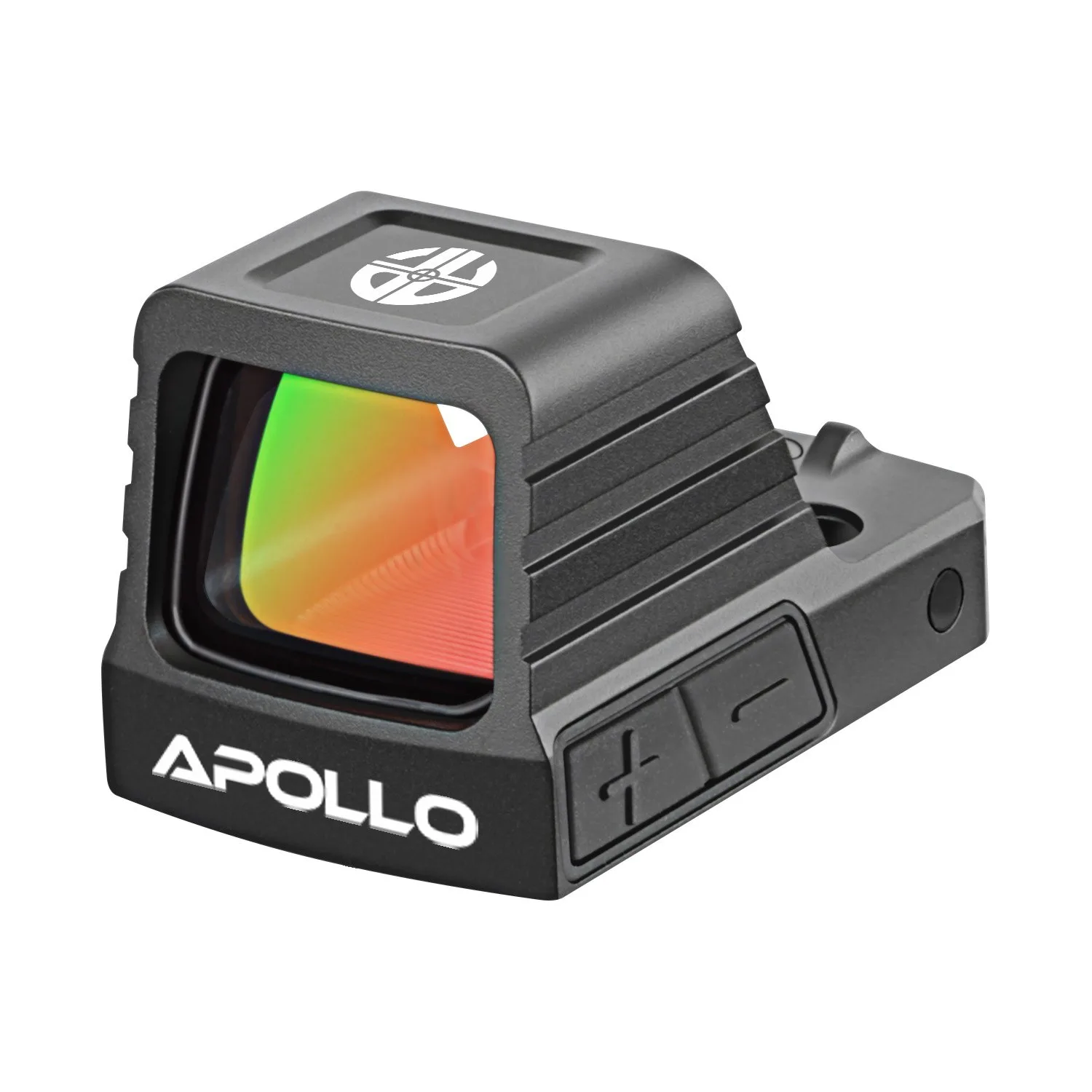
- Apollo Eclipse: Apollo Eclipse is a slim RMSc-footprint micro red dot with a 3 MOA dot and an 18 × 14.3 mm window, built for conceal carry and subcompact pistols. If your slide is cut for RMSc, this is a direct-mount option that keeps a low profile and a simple aiming point.
- EPS Vela: Apollo EPS Vela is a closed-emitter RMSc-footprint optic with a 20×17 mm window, change-point reticle, and electronic brightness with memory recall. A closed emitter on an RMSc footprint gives you environmental sealing and a slightly larger window without changing your slide cut.
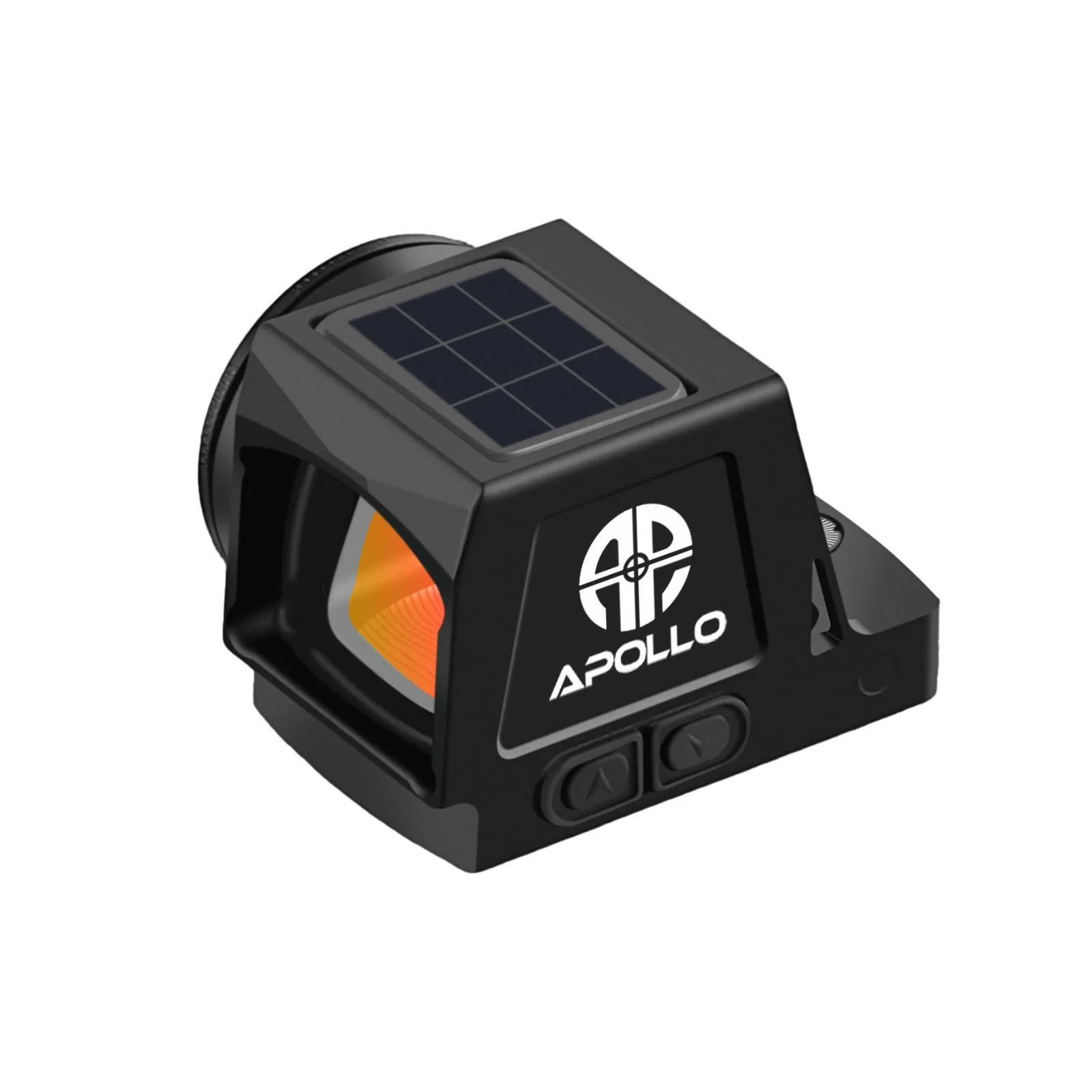
- Helios Solar: Apollo Helios Solar uses a standard RMSc footprint with solar assist, a side-mounted CR2032, and two switchable reticle styles with memory function. Solar assist and side battery access matter if you want to avoid removing the sight for battery changes; confirm your slide is RMSc-cut.
- Ember: Apollo Ember is an RMSc-footprint micro red dot with a larger protective hood, brighter emitter, 3 MOA point of aim, and a multi-reticle system. A larger hood and multi-reticle option can suit shooters who want more protection and reticle flexibility on an RMSc cut.
Which footprint should you choose?
Best for
- Subcompact and micro carry pistols with an RMSc-cut slide
- Shooters who want a low-profile sight and are willing to use the correct short screws
- Buyers who want closed-emitter or solar-assist options on a slim footprint
Not for
- Full-size pistols with an RMR-cut slide that need the larger mounting interface
- Shooters who want to swap sights between RMSc, RMR, and Shield cuts without adapters
- Anyone who has not confirmed the exact slide cut name and screw length for their pistol