Quick answer
A classic robe offers warmth and coverage, while a kimono-style robe provides a lightweight, versatile layer. Your choice depends on whether you prioritize cozy comfort or a breezy, fashion-forward look for home wear.
Why the difference matters for home wear
Both robes and kimonos serve as easy layers at home, but their construction and intended use differ. A traditional robe is often thicker, with a wrap closure and a belt, designed for warmth and modesty after a bath. A kimono-style robe is typically cut from lighter fabric, with wide sleeves and a looser fit, making it ideal for lounging on warmer days or as a stylish cover-up.
The trade-off is simple: a robe prioritizes function and coziness; a kimono prioritizes effortless style and breathability. Understanding this helps you choose the right piece for your daily routine.
How fabric and construction affect your decision
The material and make of each garment directly influence how you wear it. A robe made from thicker, absorbent fabric is perfect for stepping out of the shower. In contrast, a kimono crafted from lightweight, semi-sheer or decorative fabric transitions easily from bedroom to balcony or even a casual outing.
Consider your home environment: if you often feel chilly, a robe's coverage is better. If you live in a warmer climate or prefer a piece that doubles as a light jacket, a kimono is the smarter choice.
Trade-offs at a glance
- Warmth and coverage: If you want a robe primarily for after-bath comfort or cold mornings, choose a thicker, more absorbent robe. A kimono's lightweight fabric won't provide the same insulation. A classic robe wins for warmth; a kimono wins for breathability.
- Versatility in styling: A kimono-style robe can be worn open over a dress or closed as a garment itself, making it more adaptable for quick errands or hosting. A traditional robe is usually limited to private home wear. For a piece that works both inside and outside, a kimono is more flexible.
- Material and care: Robes made from natural fibers like cotton or bamboo require more care to maintain absorbency. Kimonos made from delicate or semi-sheer fabrics may need hand washing or gentle cycles. Check the care label; a simpler fabric often means easier maintenance.
Products to consider
-
Lavender Jacket: A versatile fusion between fashion and loungewear made from floral brocade. Loose fit with an optional waist belt. Made with sustainable materials under ethically responsible conditions in Poland. This kimono-style jacket adds a unique, dressy touch to loungewear, making it suitable for both home and outings without sacrificing ethical production.
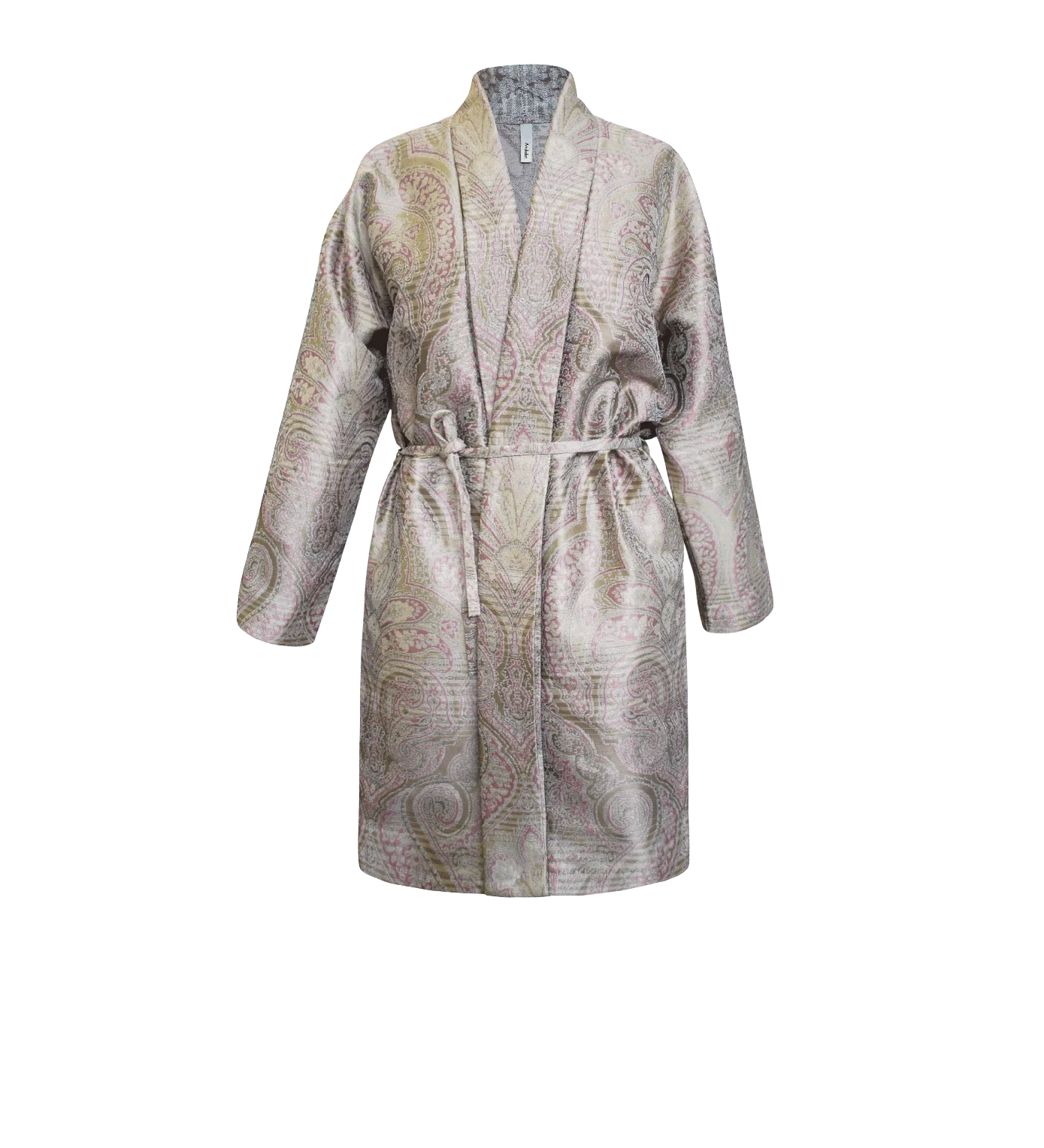
Lavender Jacket
-
Sheer Leaf Robe: A sheer lounge allure robe made from semi-transparent fabric sourced from high-quality production leftovers in Italy. Can be worn closed as a dress or open as a kimono. Lightweight and versatile for night or beach. Its dual wear as a dress or kimono offers maximum versatility, while the use of deadstock fabric supports sustainability—ideal for those who want a lightweight, multipurpose robe.
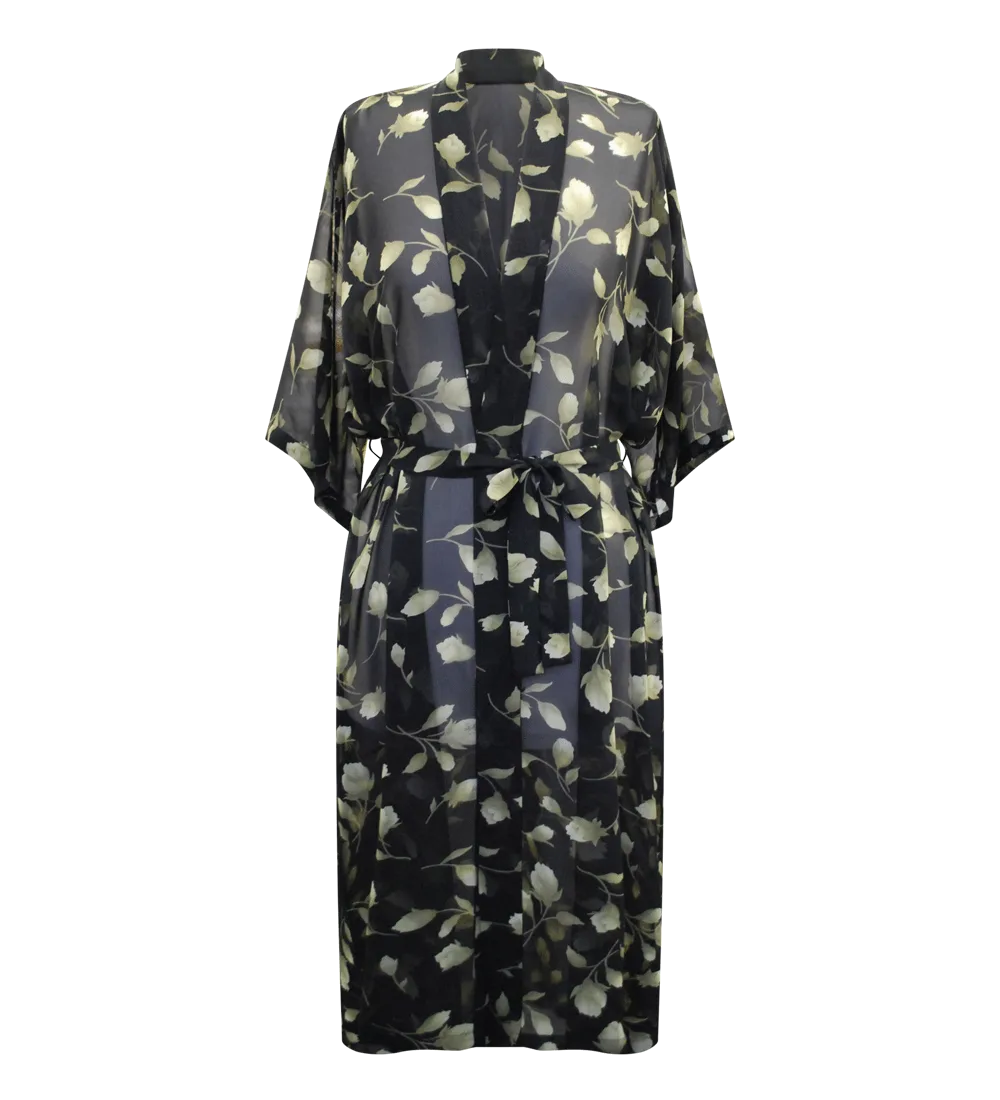
Sheer Leaf Robe
Which one is right for you?
Best for
- Those who prioritize warmth and post-bath comfort
- Anyone wanting a classic, cozy home layer
Not for
- Those who prefer a lightweight, breathable layer for warm weather or multi-use styling