Quick answer
Choose a room spray when you need scent in seconds, in a bathroom or entryway, or anywhere an open flame is impractical. Choose a candle when you want a slow, steady fragrance that becomes part of the room's atmosphere for an hour or more. If you want both speed and depth, use a spray to freshen the air immediately and light a candle for longer-lasting ambiance.
How the two formats actually differ
The core difference is delivery. A room spray disperses fragrance instantly into the air, so you smell it right away and it fades within minutes to an hour depending on the room. A candle releases scent gradually as the wax pool forms, building a consistent aroma that can last through an evening. That makes spray the better tool for quick resets and candles the better tool for sustained mood. Neither is universally stronger; performance depends on room size, airflow, and how much product you use.
Where each format wins
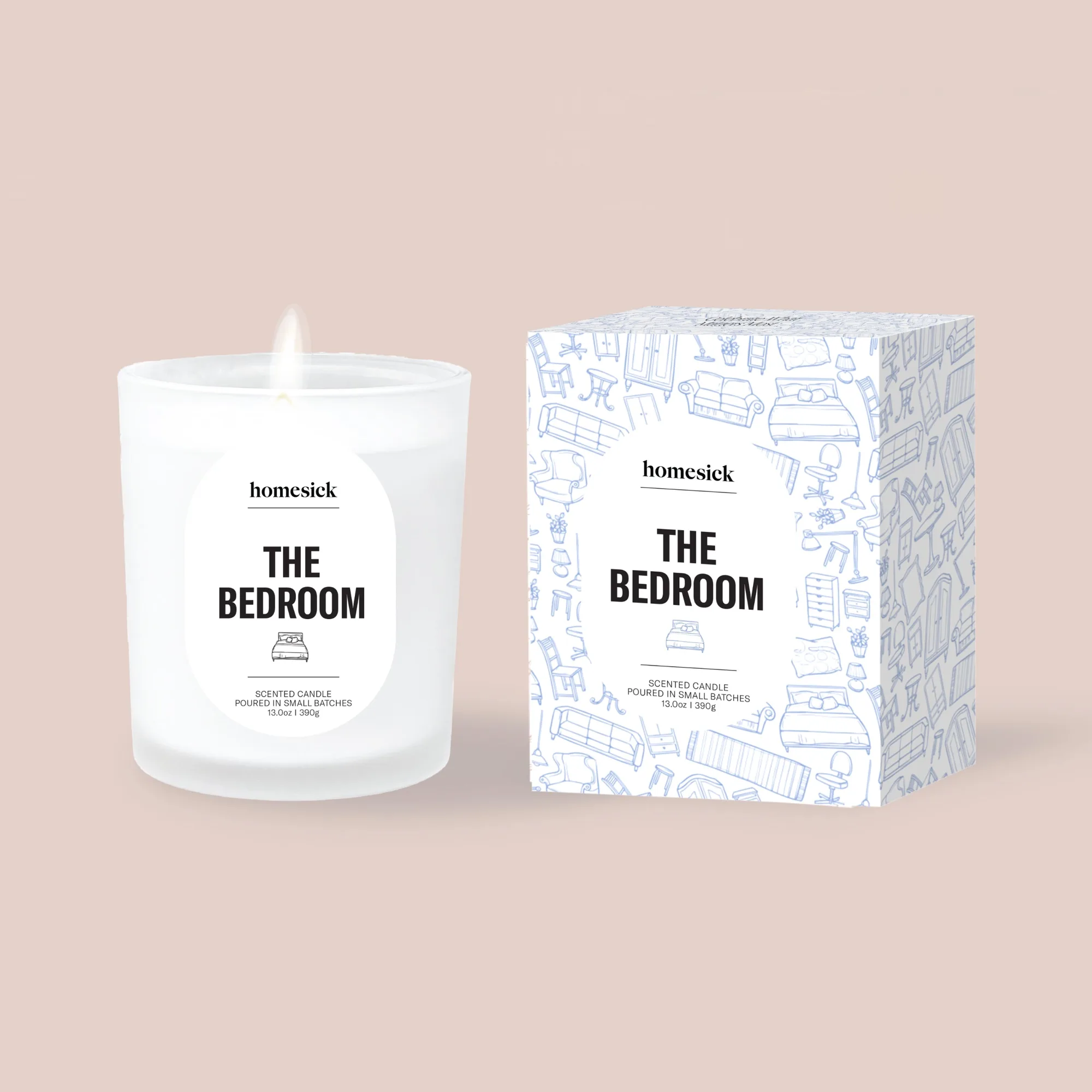
Room spray benefits show up in small, enclosed spaces: bathrooms, laundry rooms, entryways, and guest rooms. You can spritz and walk away, no waiting for a wax pool and no flame to monitor. Candles win in living rooms, bedrooms, and dining areas where you want a background scent that develops over time. For a bathroom, spray is usually the practical pick because it works between uses and doesn't need to stay lit. For a bedroom, a candle like The Bedroom Candle, designed as a signature bedroom scent with cashmere, vetiver, sandalwood, and amber, can anchor a wind-down routine in a way a quick spray cannot.
Safety, maintenance, and cost in real use
Candles require trimming the wick, monitoring the flame, and never leaving them unattended. Sprays require no flame but can leave surfaces slightly damp if you over-spray near fabric, so hold the bottle at least a foot away from upholstery and linens. In terms of cost per use, a candle often lasts many evenings while a spray bottle depletes faster with daily use, but spray gives you more control over intensity. If you have pets or small children, spray avoids an open flame but still needs ventilation and a patch test on fabrics.
How to layer spray and candle without clashing
Layering works best when the scents share a family or complement each other. Use the spray first to clear stale air, then light the candle for depth. For example, a Washington Candle with Earl Grey tea, forest, and soft downpour notes pairs well with a light, airy spray that won't compete. Avoid layering two heavy, sweet fragrances in a small room; the combination can become cloying. If you are unsure, test one spray burst and one candle for 20 minutes before committing to a full evening.
Trade-offs at a glance
- Speed vs. staying power: Room spray delivers scent immediately but fades within minutes to an hour. A candle takes longer to build but holds a steady scent for the length of its burn. Pick spray for instant resets; pick a candle for long evenings.
- Flame vs. no flame: Candles need wick trimming and supervision. Sprays need no flame but require a patch test on fabrics and should be used with ventilation. If you cannot monitor a flame, spray is the safer format.
- Small room vs. large room: Spray is easy to control in bathrooms and entryways. Candles perform better in living rooms and bedrooms where their scent can disperse gradually. Match the format to the room's size and airflow.
Product facts to compare
- Thank You, Mom Candle: Thank You, Mom Candle has top notes of bergamot, lavender, and sage; mid notes of jasmine and ylang ylang; and base notes of sandalwood, musk, and lily. The lavender and sage opening reads clean and herbal, which suits a guest room or a space where you want a calm, familiar scent rather than a heavy gourmand.
- Washington Candle: Washington Candle carries notes of Earl Grey tea, mild forest, maple, vanilla, and a bouquet of flowers, with top notes of bergamot, patchouli, and pine. The tea-and-forest profile is crisp rather than sweet, making it a good candidate for layering with a light room spray without the two scents fighting each other.
- Wyoming Candle: Wyoming Candle combines campfire, mint, and pine needles with cinnamon, clove, and sandalwood over amber, patchouli, and cedarwood. This is a warmer, spicier scent that can overpower a small bathroom, so it is better suited to a larger living area where the candle has room to breathe.
- The Bedroom Candle: The Bedroom Candle is part of the Home By Homesick collection and is designed as a signature bedroom scent with cashmere, vetiver, sandalwood, and amber. Its soft, woody profile is built for a room where you spend extended time, which is exactly where a candle's slow release beats a quick spray.
Which should you choose?
Best for
- Quickly freshening a bathroom, entryway, or laundry room
- Homes with pets or small children where an open flame is a concern
- Layering with a candle to add an immediate top note
Not for
- Creating a slow, evolving scent that lasts for hours
- Replacing a candle's warm ambiance during a dinner or bath
- Spaces where you want a single product to do all the work