Quick answer
Keep your routine short and predictable: a non-stripping cleanse, one barrier-supporting moisturizer, and daily sun protection. Introduce only one new product at a time and stop anything that stings, burns, or turns your skin hotter within minutes. The goal is calm, not a ten-step regimen.
Why less is more for reactive skin
Rosacea-prone skin has a lower tolerance for friction, heat, and aromatic ingredients. Every extra step adds another chance for a trigger, so the routine that works is usually the one you can repeat without thinking. Fragrance—whether synthetic or from essential oils—is a common culprit behind lingering redness, and it hides in toners, masks, and even some cleansers marketed as soothing.
Barrier care is the other half of the equation. When the skin barrier is compromised, water escapes and irritants get in more easily, which shows up as tightness, stinging, and flushing. A moisturizer that supports the barrier does more for long-term comfort than a drawer full of targeted treatments.
What to look for on a label
Scan for short ingredient lists and clear function words: glycerin, ceramides, peptides, and gentle emollients. Be skeptical of 'natural fragrance'—it is still fragrance. If a product lists several botanical oils or citrus extracts high on the list, patch-test it on your jawline for three nights before using it on your cheeks.
You do not need a dedicated 'rosacea' label. You need products that cleanse without squeaking, moisturize without occluding heavily, and avoid known irritants. That standard is easier to meet than most marketing suggests.
Your step-by-step calming routine
- Cleanse with lukewarm water and bare hands: Use a gentle, non-foaming cleanser and rinse with lukewarm—not hot—water. Hot water and cleansing brushes are two of the most common flare triggers. If your skin feels tight after cleansing, your cleanser is too strong. Checkpoint: no squeaky feeling, no immediate redness.
- Apply moisturizer to damp skin: Within a minute of patting dry, smooth on a barrier-supporting moisturizer while skin is still slightly damp. This locks in water and reduces the chance of stinging from a later product. Use a pea-sized amount for the face and press—don't rub—over redness-prone areas. Checkpoint: skin feels comfortable, not coated or greasy.
- Treat the eye area separately: Tap a small amount of a concentrated eye cream along the orbital bone with your ring finger. The eye contour is thinner and more reactive, so it deserves its own gentle product rather than leftover face cream. Avoid pulling the skin. Checkpoint: no watering or stinging within five minutes.
- Protect with mineral sunscreen every morning: UV exposure is a well-known rosacea trigger. Choose a fragrance-free mineral sunscreen with zinc oxide or titanium dioxide and reapply every two hours outdoors. If your skin flushes under chemical filters, mineral formulas are usually better tolerated. Checkpoint: no heat or tingling after application.
- During a flare, strip back to cleanse and moisturize only: Pause exfoliants, retinoids, vitamin C, and masks until the redness settles. Rinse with cool water, apply your moisturizer, and skip anything that tingles. Most flares calm faster with fewer products, not more. Checkpoint: if burning lasts more than a few minutes, rinse and stop.
Products that fit a calm routine
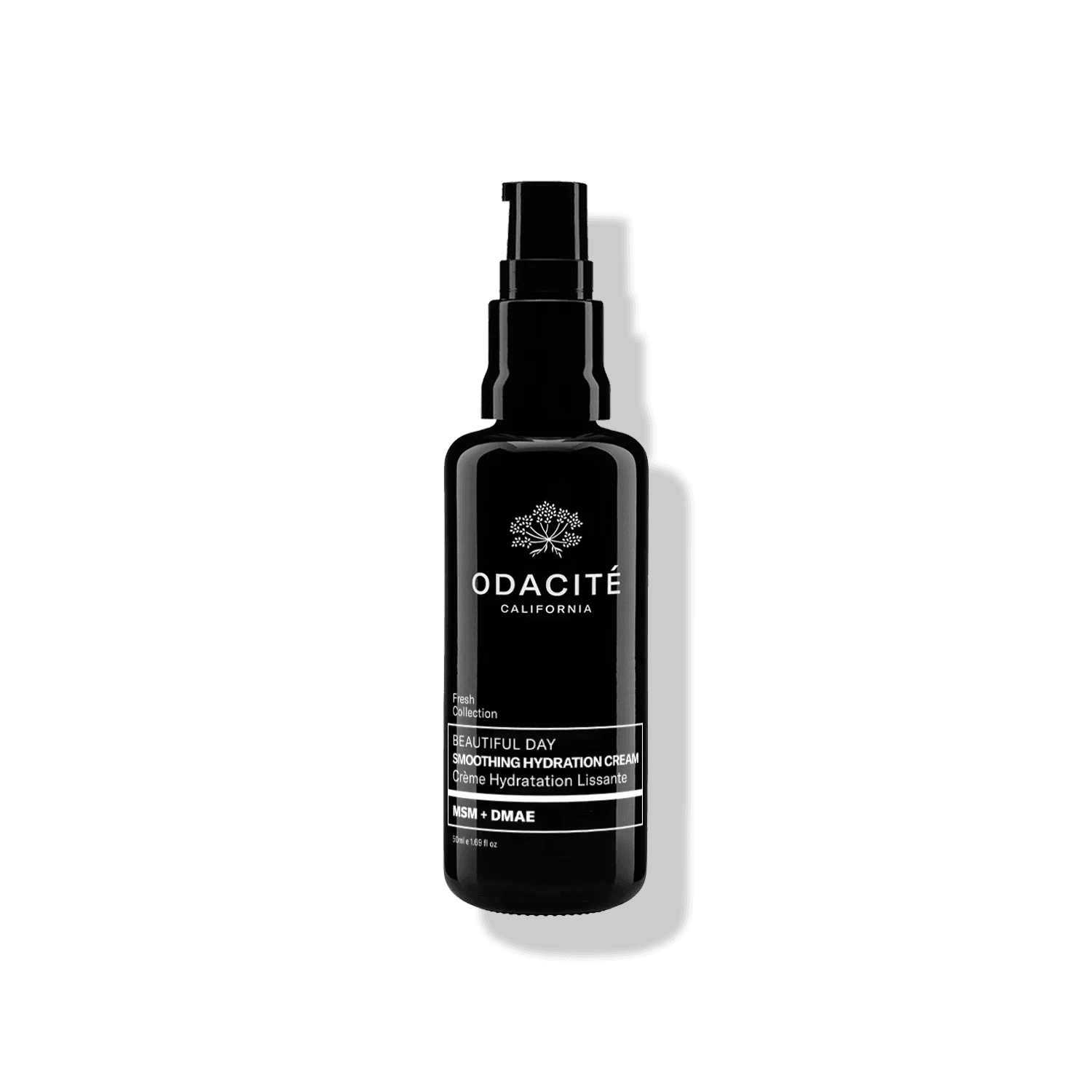
- Beautiful Day • Smoothing Hydration Cream • Crème MSM+ DMAE: Beautiful Day • Smoothing Hydration Cream • Crème MSM+ DMAE is an antioxidant-rich moisturizer that floods skin with fresh hydration and helps defend against environmental stressors. A single moisturizer that hydrates and supports environmental defense simplifies the routine and reduces the number of products touching reactive skin.
- Intense Repair Eye Cream • Edelweiss Extrême® • Peptides + Carnosine: Intense Repair Eye Cream • Edelweiss Extrême® • Peptides + Carnosine is a highly concentrated eye cream with dual-action soothing and anti-aging benefits for the delicate eye contour. The eye area is often the first place redness and sensitivity show; a concentrated, soothing eye cream lets you treat that zone without adding a full-face active.