Quick answer
For straight strips, squares, and rectangles, a rotary cutter gives cleaner, more consistent cuts because it slices through multiple layers in one pass against a ruler and mat. For curves, templates, and trimming small pieces, quilting scissors give you more control. Most quilters get the best results using both: a rotary cutter for the bulk of cutting and scissors for the details.
If you are cutting fabric for quilts, the tool you reach for first shapes how accurate your pieces turn out. A rotary cutter and a pair of quilting scissors cut in fundamentally different ways, and that difference shows up in your seam allowances, your fabric waste, and how tired your hands feel after an hour at the mat.
This comparison looks at what each tool does well, where each one struggles, and how to decide which to use for a given cut. The honest answer is that neither tool wins everywhere. The right choice depends on the shape you are cutting, how many layers you are working with, and how much control you need.
How a rotary cutter cuts
A rotary cutter uses a circular blade that rolls along a straight edge, typically an acrylic ruler, on top of a self-healing cutting mat. Because the blade slices rather than shears, it can cut through several layers of fabric at once with a single pass. That is why rotary cutting accuracy is so consistent for strips and squares: the ruler holds the line, and the blade follows it.
The trade-off is that a rotary cutter is built for straight lines. Curves require turning the mat or walking the cutter around a template, which is awkward and often leaves facets. You also need a mat and ruler, so the setup takes space. Blade changes add a small ongoing cost, and a dull blade starts skipping threads instead of cutting them cleanly.
- Always cut away from your body and keep your fingers behind the ruler edge.
- Replace the blade as soon as you feel drag or see frayed edges on the cut.
How quilting scissors cut
Quilting scissors shear fabric between two blades. You control the line by hand, which makes them excellent for curves, fussy cutting around a motif, and trimming seam allowances after piecing. There is no mat or ruler required, so they are portable and easy to use at a sewing machine or in a class.
The trade-off is speed and repeatability. Cutting many identical strips with scissors takes longer and introduces small variations, because your hand is the guide. Scissors also struggle with multiple layers; forcing them through too much fabric can push the layers out of alignment and give you mismatched pieces. Sharp, dedicated fabric scissors matter here, and they should never be used on paper.
- Use a small pair of scissors for clipping threads and trimming curves at the machine.
- Reserve one sharp pair for fabric only and store it away from paper and cardboard.
Cleaner cuts: what actually matters
Cleanliness of the cut comes down to three things: blade sharpness, fabric support, and how many layers you are cutting. A sharp rotary blade on a flat mat with the fabric fully supported gives the cleanest straight edge. Dull blades and unsupported fabric cause frayed edges and pulled threads, no matter which tool you use.
For curved seams, scissors usually win because you can pivot the fabric as you cut. For long straight strips, the rotary cutter wins because the ruler removes hand wobble. If you are cutting fabric for quilts that will be pieced into a grid, rotary cutting accuracy is the bigger factor. If you are cutting appliqué shapes or trimming, scissors give you the control you need.
- Change rotary blades at the first sign of skipping, not after the cut looks bad.
- Press fabric flat before cutting; wrinkles distort both rotary and scissor cuts.
Fabric choices that affect your cutting tool
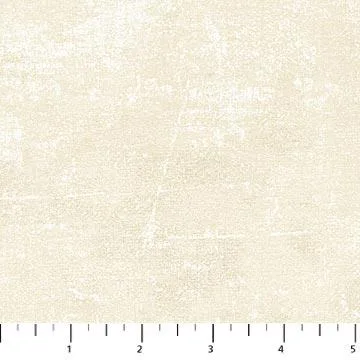
Some fabrics behave differently under a rotary blade than under scissors. A continuous three-yard cut of Canvas French Vanilla by Northcott is a stable 100% cotton that holds still for rotary cutting, which makes it a good candidate for long strips. A half-yard bundle with many different prints, like the Nordic Summer Buttermilk and Jam Half Yard Bundle 12 pc, gives you variety but requires more frequent repositioning, so scissors can be handy for trimming individual pieces.
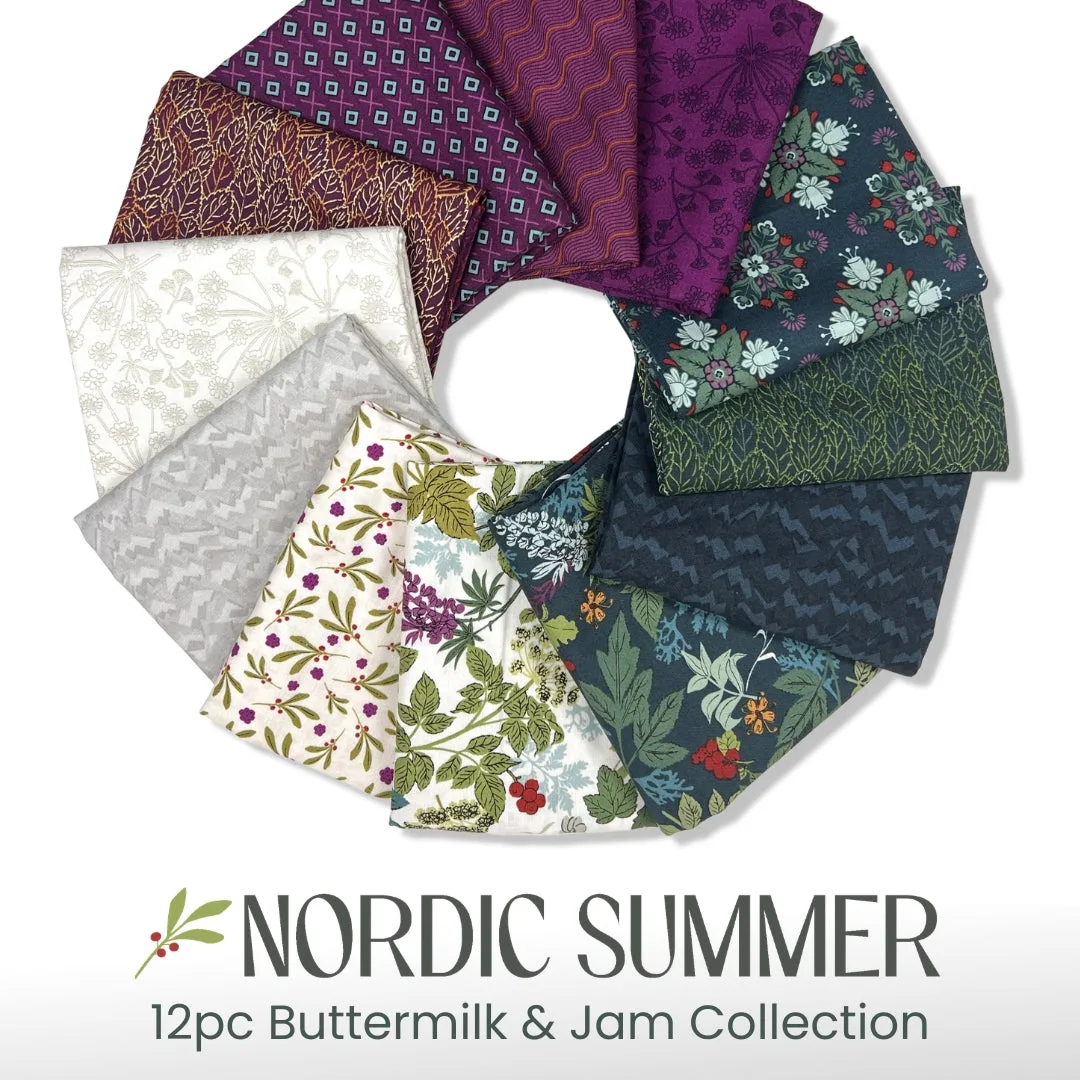
Nordic Summer Buttermilk and Jam Half Yard Bundle 12 pc
For large backing pieces, a wide fabric changes the math. The Hue Prismatic Polychrome 108" Wide is wide enough to back a quilt without piecing, and its width means you will likely trim the edges rather than cut many strips. A rotary cutter with a long ruler is the practical choice for squaring up a wide backing, while scissors handle the final thread trims.
- Test a new fabric with a small cut before committing to a full strip set.
- For directional prints, decide your cutting layout before you make the first cut.
Trade-offs at a glance
- Speed and repeatability: A rotary cutter with a ruler cuts multiple layers in one pass and produces identical strips. Scissors are slower and vary slightly from piece to piece. Choose rotary for strip sets and repeated shapes.
- Control on curves: Scissors let you pivot and follow a curved line by hand. A rotary cutter is awkward on curves and can leave facets. Choose scissors for appliqué, templates, and trimming.
- Setup and cost: Rotary cutting requires a mat and ruler, and blades wear out. Scissors need only a sharp pair and a little practice. If space or budget is tight, scissors are the simpler start.
- Layer capacity: A rotary cutter handles several layers cleanly. Scissors can push layers out of alignment if you force them through too much fabric. Cut fewer layers with scissors to keep pieces matched.
Fabric facts that inform your tool choice
- https://gequilt-designs.com/products/canvas-french-vanilla-9030-11-3yard-96a40b44b08a133e957df402-1312577Canvas French Vanilla 9030 11 - 3 YARD: A continuous three-yard cut of Canvas French Vanilla by Northcott, 100% cotton. A continuous length means you can rotary cut long strips without piecing, and the stable cotton weave holds a clean edge.
- Nordic Summer Buttermilk and Jam Half Yard Bundle 12 pc: A 12-piece half-yard bundle from the Nordic Summer collection by Gudrun Erla for Andover Fabrics. Many separate pieces mean more handling; scissors are useful for trimming individual half-yards, while a rotary cutter speeds up squaring them.
- Hue Prismatic Polychrome 108" Wide - QBGG002 - 3 YARD: A 108-inch wide backing fabric with a watercolor hexagon print on a chalky white ground. Wide backing reduces piecing, so you mostly trim edges; a rotary cutter and long ruler make that trimming accurate.
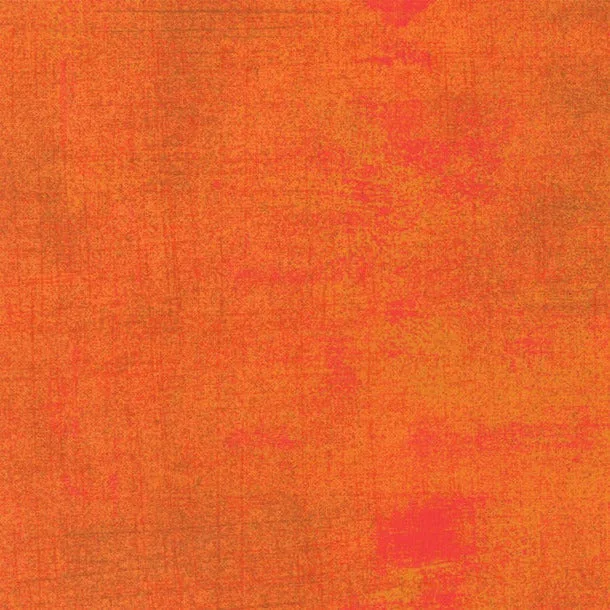
- Grunge Russet Orange 30150-322: Grunge Russet Orange by Basic Grey for Moda, 100% cotton, cut in 1-yard increments, not continuous. Because it is cut in 1-yard increments, plan your yardage before cutting; a rotary cutter helps you get the most from each yard.
Which tool fits your quilting?
Best for
- Quilters cutting many straight strips, squares, or rectangles from yardage
- Projects using precuts or bundles where consistent sizes matter
- Quilters with a mat and ruler who want speed and repeatability
Not for
- Cutting tight curves or appliqué shapes by hand
- Quilters without a mat or ruler who need to cut on the go
- Trimming at the sewing machine, where small scissors are faster
Use a rotary cutter for the straight, repeated cuts that make up most of a quilt, and keep a sharp pair of quilting scissors for curves, trimming, and detail work. Together they cover the full range of cutting fabric for quilts, and each one does its job better than the other could.