Quick answer
Use a rotary cutter for long straight cuts, multiple fabric layers, and strip or square cutting where speed and consistency matter. Use scissors for curves, tight corners, small detail work, and any time you need to lift the fabric off the table. Many sewists keep both within reach and switch between them as the project changes.
How each tool actually cuts fabric
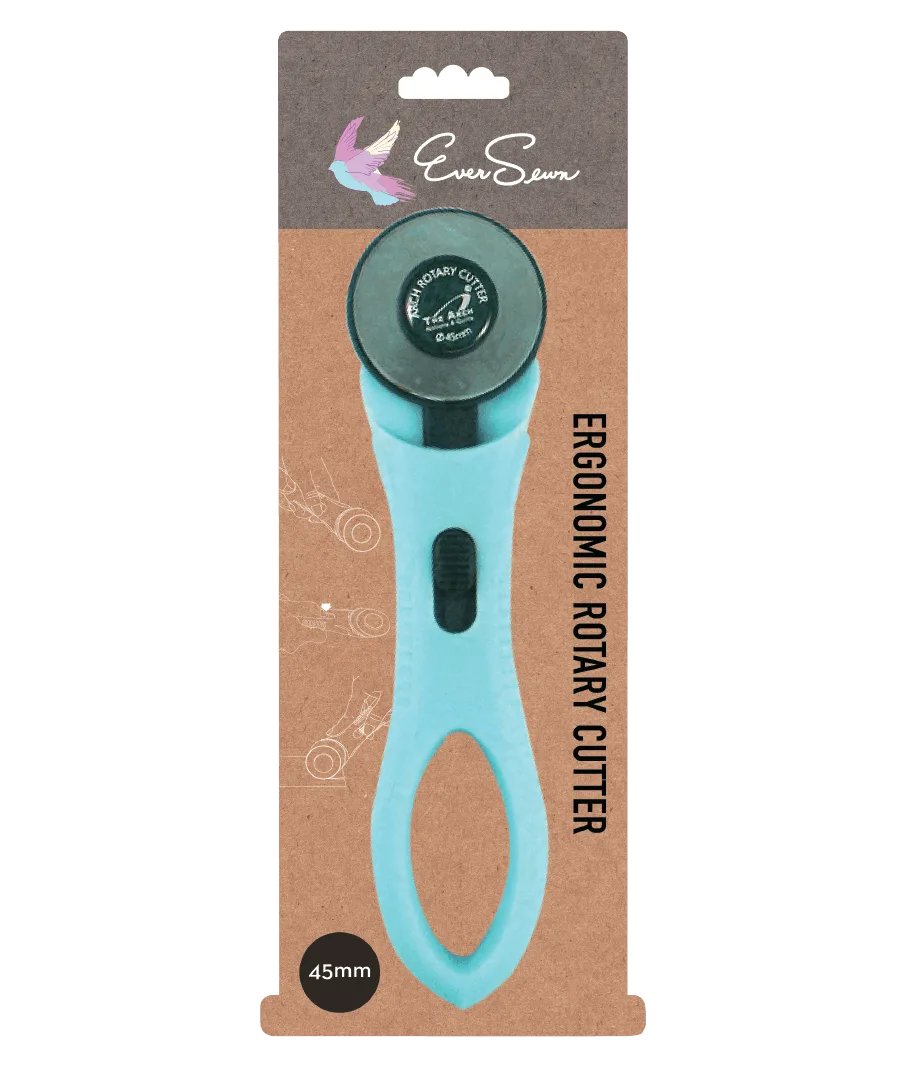
A rotary cutter rolls a circular blade across the fabric while the fabric stays flat on a mat. That rolling motion means you can cut several layers at once and keep edges straight without lifting or repositioning the fabric. An ergonomic rotary cutter such as the EverSewn 45mm Ergonomic Rotary Cutter adds a soft cushion handle, which helps maintain a secure grip during long cutting sessions.
Scissors cut by bringing two blades together in a shearing motion. You can lift the fabric, pivot around a curve, and snip into tight spaces. Scissors also work without a cutting mat, so they are the more portable option when you sew away from your usual table.
Where a rotary cutter saves time
Rotary cutters shine when you need repeatable shapes. If a pattern calls for eight identical strips or a stack of squares, a rotary cutter plus a ruler lets you measure once and cut many. The EverSewn 45mm Ergonomic Rotary Cutter is designed for right- and left-hand usage and includes a flexible safeguard, which matters when you are making many passes across the mat.
The trade-off is setup. You need a self-healing mat and a ruler to get the benefit, and the blade must stay sharp. Dull blades skip over fabric instead of slicing it, which can pull the weave and ruin an otherwise accurate cut.
Where scissors still win
Scissors handle anything a rotary cutter cannot roll through. Curved seams, necklines, armholes, and small notches are easier to control with a pair of sharp fabric scissors. You can also lift the fabric to check the cut line as you go, which is helpful on slippery or stretchy material.
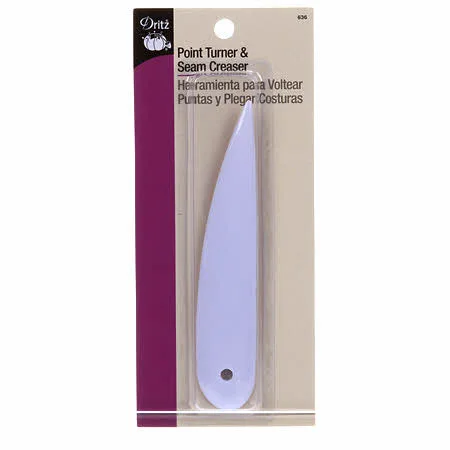
A pressing tool like the Dritz Point Turner and Presser is not a cutting tool, but it pairs well with scissors. After you trim and turn a collar or cuff, the point turner helps push out corners and press seams flat without stretching the fabric.
Fabric type changes the answer
Quilting cotton and other stable woven fabrics cut cleanly with either tool. The Pale Silver Painter's Palette Solid from Paintbrush Studio Fabrics is a 100% cotton, 150GSM lightweight fabric with a 44-inch width, which makes it a good candidate for rotary cutting long strips. Its 62x62 thread count and 3-5% shrinkage mean it behaves predictably after washing, so pre-washing before cutting helps keep your measurements accurate.
For fabrics with texture or drape, such as the Grasscloth Dark Teal by Heather Peterson for Riley Blake Designs, a rotary cutter still works on straight grain, but the dimensional woven look can make it harder to see exactly where the blade is tracking. In that case, scissors or a fresh blade and good lighting reduce the risk of a crooked cut.
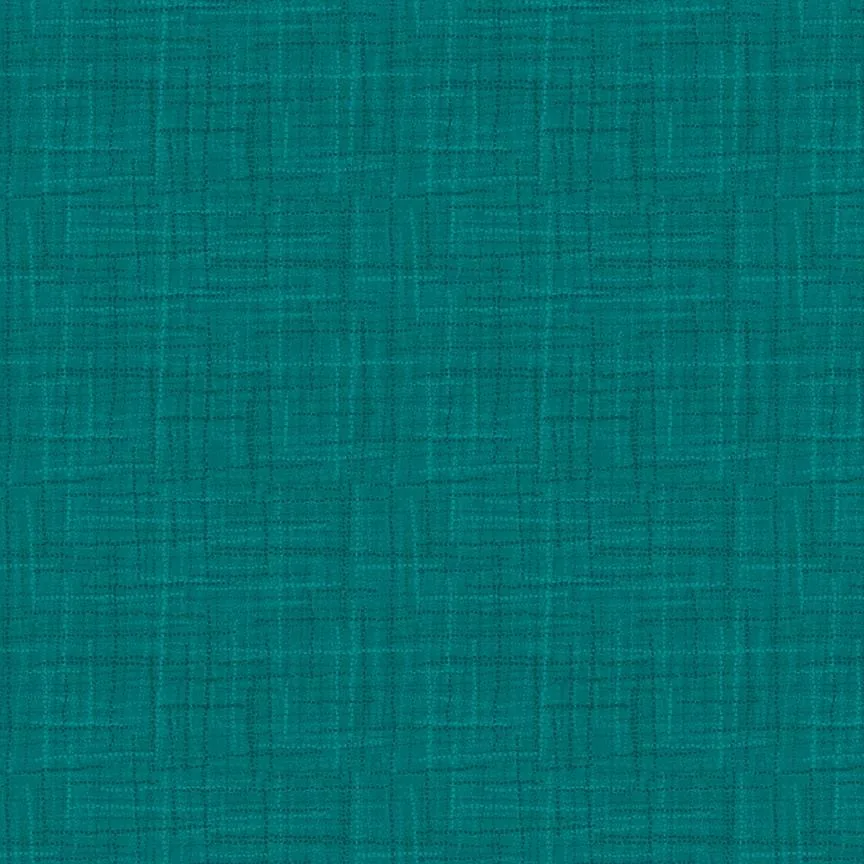
Grasscloth Dark Teal by Heather Peterson for Riley Blake Designs
A simple beginner setup
If you are just starting, you do not need every tool at once. A 45mm rotary cutter, a mat, a ruler, and one pair of sharp scissors cover most projects. Add a point turner when you begin sewing collars, cuffs, or bags that need crisp corners.
Keep your rotary cutter closed or retracted when not in use, and store scissors with a sheath or in a drawer. Both tools stay safer and last longer when they are not knocking against each other.
Trade-offs at a glance
- Speed and repetition: A rotary cutter cuts multiple layers and repeated strips faster than scissors, but only with a mat and ruler set up. Choose rotary when you need many identical pieces.
- Control and curves: Scissors let you pivot around curves and lift the fabric to check the cut, but they are slower for long straight lines. Choose scissors for curves, corners, and detail work.
- Setup and maintenance: Rotary cutters need a mat, ruler, and fresh blades. Scissors need sharpening or replacement when they start chewing fabric. Budget for blades or sharpening either way.
Tools mentioned in this comparison
- EverSewn 45mm Ergonomic Rotary Cutter: Ergonomic soft cushion handle for secure and comfortable grip; designed for right and left hand usage; flexible safeguard. A comfortable grip and ambidextrous design make long cutting sessions easier, and the safeguard adds a layer of safety for beginners.
- Dritz Point Turner and Presser: Turns points, creases seams, or removes basting stitches; useful for turning points on collars, cuffs, and corners. Pairs with scissors for finishing details that a rotary cutter cannot handle, like pushing out a turned collar corner.
- Pale Silver Painter's Palette Solid from Paintbrush Studio Fabrics: 100% cotton, 150GSM lightweight, 44-inch width, 62x62 thread count, 3-5% shrinkage. A stable lightweight cotton that rotary cuts cleanly for strips and squares; pre-wash to account for shrinkage before cutting.
Which should you reach for?
Best for
- Quilters cutting strips, squares, and multiple layers
- Sewists who need repeatable shapes and straight edges
- Beginners starting with stable woven cotton
Not for
- Cutting tight curves, necklines, and small notches
- Sewing away from a table or without a cutting mat
- Anyone who prefers to lift and pivot fabric while cutting