Quick answer
For straight cuts through multiple layers of fabric, reach for a rotary cutter. For tight curves, delicate fabrics, or cutting out pattern pieces, sewing scissors are the better choice. Most quilters keep both on hand: a rotary cutter for strip cutting and trimming, scissors for detail work and finishing.
Every quilter faces the same split-second decision at the cutting mat: grab the rotary cutter or reach for the sewing scissors? The answer depends on what you are cutting, how many layers, and how much control you need. Neither tool replaces the other, but each has a clear zone where it performs best.
This comparison breaks down the trade-offs between rotary cutters and sewing scissors using real product examples, so you can decide which tool to pick up for your next cut. We will look at speed, accuracy, fabric safety, and the specific tasks where one tool pulls ahead.
Rotary cutter strengths: speed and multiple layers
A rotary cutter shines when you need to cut long, straight lines or slice through several layers of fabric at once. The OLFA Rotary Cutter 60mm, for example, has a 60mm blade that slices through up to 8 layers of fabric with ease, making it ideal for cutting long, straight lines and large pieces. That capacity turns strip cutting and quilt block prep into a quick task.
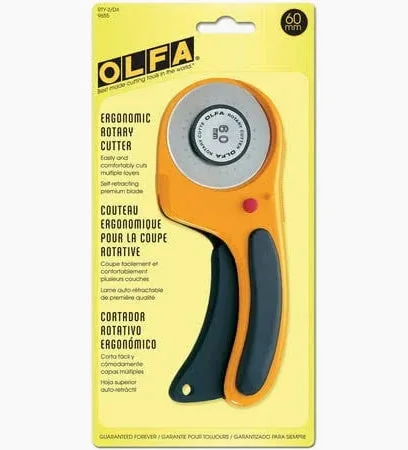
OLFA Rotary Cutter 60mm
The ergonomic handle on the OLFA 60mm is designed to reduce hand fatigue, which matters when you are cutting dozens of strips for a jelly roll quilt. The trade-off is that rotary cutters require a cutting mat and a ruler to guide the blade. Without a straight edge, you cannot cut accurate shapes. They also demand a sharp blade; a dull blade skips and chews fabric instead of slicing it.
- Always use a rotary cutter with a self-healing cutting mat and a quilting ruler.
- Replace the blade as soon as it starts skipping or requiring extra pressure.
Sewing scissors strengths: control and curves
Sewing scissors, especially dressmaker shears, give you unmatched control for cutting curves, notches, and detailed pattern pieces. You can lift the fabric, pivot precisely, and cut right up to a marked line without needing a mat or ruler. For garment sewing or appliqué, scissors are often the only tool that can follow a tight curve cleanly.
The trade-off is speed and layer capacity. Cutting multiple layers with scissors is slow and can lead to uneven edges because the bottom layers shift. Scissors also require regular sharpening, and using them on paper or synthetic materials dulls them quickly. For long, straight cuts, scissors are simply slower than a rotary cutter.
- Reserve one pair of scissors for fabric only; never cut paper with them.
- For curves, take small snips and rotate the fabric, not the scissors.
Accuracy and fabric safety: where each tool wins
Rotary cutters excel at accuracy on straight cuts when paired with a non-slip ruler. The Creative Grids Quilt Ruler 3-1/2in x 6-1/2in Rectangle – CGR36 has a non-slip surface that keeps fabric firmly in place while cutting, and clearly marked grid lines for fast, accurate measurements. That combination lets you trim small rectangles and units with repeatable precision.
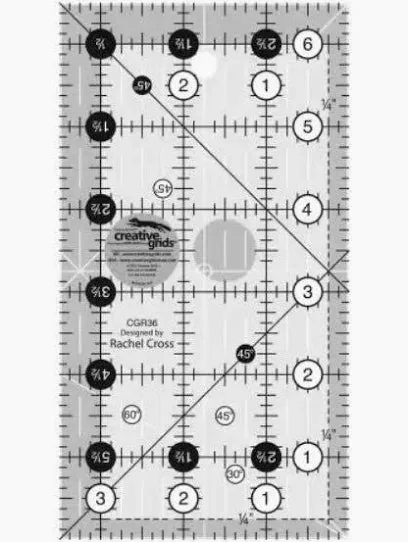
Creative Grids Quilt Ruler 3-1/2in x 6-1/2in Rectangle – CGR36
Scissors, by contrast, rely entirely on your hand-eye coordination. They can be very accurate on curves, but straight cuts are harder to keep perfectly aligned. For fabric safety, rotary cutters can fray edges slightly less because they slice cleanly, while scissors can push fabric if they are dull. However, rotary cutters pose a higher risk of cutting your finger if you are careless; always close the blade guard between cuts.
- Use a non-slip ruler with your rotary cutter to prevent fabric shifting.
- Keep your scissors sharp; a dull blade chews fabric and causes fraying.
Specialty tasks: when to switch tools
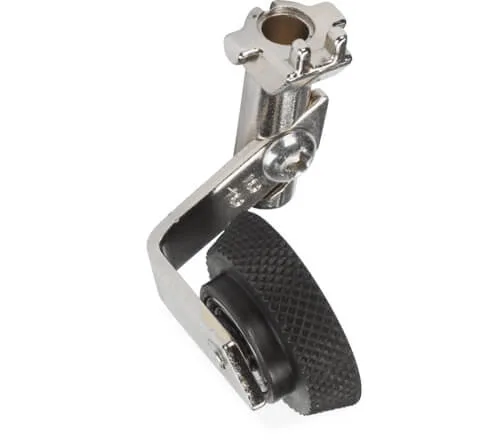
Some materials and tasks call for a specific tool. For example, the #55 BERNINA Leather Roller Foot is especially suitable for contour quilting, sewing tight curves, and working with multiple and quilted layers of fabric. It can also handle plastic, vinyl, leather materials, and quilted fabric layers. While this is a presser foot for your sewing machine, it highlights that some cutting and sewing tasks require specialized accessories beyond a basic cutter or scissors.
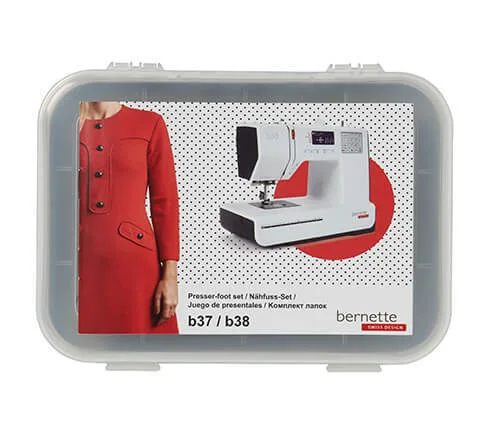
If you are working with leather or vinyl, a rotary cutter can struggle because these materials do not compress like cotton. Scissors or a craft knife may give better control. For quilting cotton, however, the rotary cutter remains the fastest option for strips and squares. The bernette Quilting feet kit (6 pcs) b37/b38 includes feet for decorative quilting and sewing smoothly on leather material, showing that your tool choice should match the material and technique.
- Test your tool on a scrap of the actual fabric before cutting your project.
- For delicate fabrics like silk or chiffon, use sharp scissors to avoid stretching.
Trade-offs at a glance
- Speed vs. control: Rotary cutters are faster for straight cuts and multiple layers, but scissors give you more control for curves and detail work. Choose based on whether speed or precision matters more for the task.
- Setup vs. portability: A rotary cutter needs a cutting mat and ruler, while scissors only need your hands. If you are sewing away from your cutting table, scissors are more convenient.
- Blade maintenance vs. sharpening: Rotary blades must be replaced regularly; scissors need periodic sharpening and should never cut paper. Factor in the ongoing cost and time for each tool's upkeep.
Product facts that matter for cutting
- OLFA Rotary Cutter 60mm: 60mm blade slices through up to 8 layers of fabric with ease; ergonomic handle designed to reduce hand fatigue. This makes it ideal for cutting long strips and multiple layers quickly, but it requires a mat and ruler for accuracy.
- Creative Grids Quilt Ruler 3-1/2in x 6-1/2in Rectangle – CGR36: Non-slip surface keeps fabric firmly in place while cutting; clearly marked grid lines for fast, accurate measurements. Paired with a rotary cutter, this ruler helps you cut small rectangles and trim units with repeatable precision, reducing fabric waste.
- #55 BERNINA Leather Roller Foot: Especially suitable for contour quilting, sewing tight curves, and working with multiple and quilted layers of fabric; for plastic, vinyl, leather materials and quilted fabric layers. Shows that some materials need specialized tools; for cutting similar materials, scissors or a craft knife may offer better control than a rotary cutter.
Which tool should you choose?
Best for
- Quilters cutting strips, squares, and multiple layers of fabric
- Sewists who need fast, repetitive straight cuts with a ruler
- Anyone working with precuts like jelly rolls or charm packs
Not for
- Cutting tight curves or intricate pattern pieces (use scissors)
- Working without a cutting mat or ruler (use scissors)
- Cutting leather, vinyl, or slippery fabrics where control is critical (use scissors or a craft knife)
The rotary cutter and sewing scissors are not rivals; they are teammates. Keep a rotary cutter like the OLFA 60mm for straight, multi-layer cuts, and a pair of sharp scissors for curves and detail. Match the tool to the task, and your cutting will be faster, cleaner, and more enjoyable.