Quick answer
Choose a sanding stick when you need to blend, deburr, or finish a surface and want fresh abrasive action without loading. Choose a needle file when you need to enlarge a hole, even out a square slot, or remove a burr from metal or hard material. Many tight-space jobs finish best with both: file first for shape, then sand for surface.
Tight-space finishing usually fails for one reason: the tool is too big, too flexible, or too slow. A sanding stick and a needle file solve different halves of that problem. One cuts with abrasive grit on a backing; the other cuts with hardened steel teeth.
This comparison looks at what each tool actually does well, where each one struggles, and how to pick based on the material and the shape you are trying to fix. The goal is not to crown a winner but to help you reach for the right tool first.
How each tool removes material
A sanding stick holds an abrasive belt on a rigid or semi-rigid backing. The Excel Blades Standing Stick With 1 Belt uses an aluminum oxide sanding belt and is designed for wood sanding, deburring, grinding, shaping, and finishing a wide array of materials. Because the abrasive is a belt, you can swap grits to change how aggressively it cuts. Fresh grit also exposes new cutting edges as it wears, which helps on softer materials like wood, plastic, and resin.
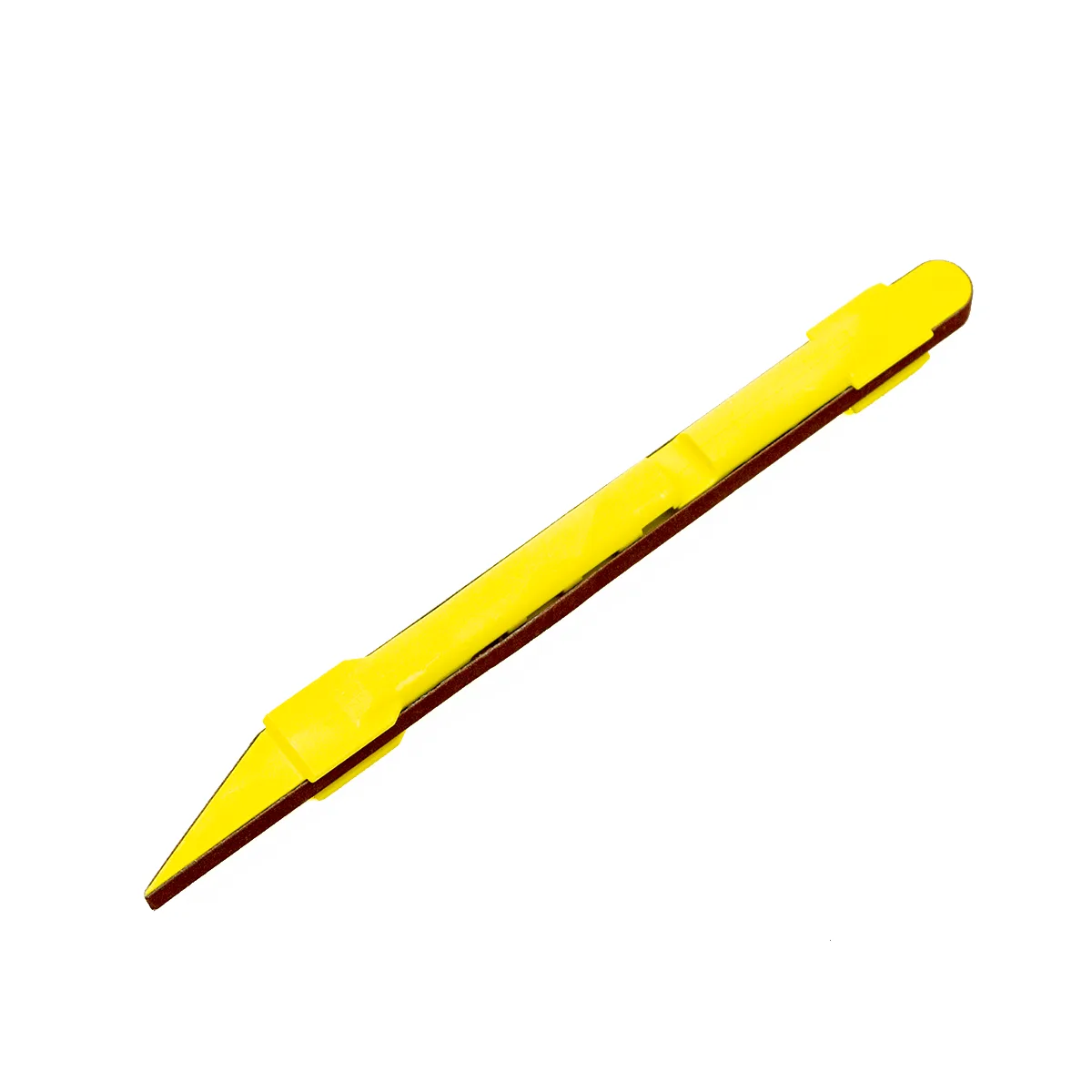
Standing Stick With 1 Belt
A needle file cuts with teeth cut into hardened steel. The Excel Blades Equaling Needle File uses an equivalent shape profile that can help sharpen trimmer blades to saws, even out rectangular or square slots, and remove burrs and inconsistencies. That makes it a shaping and correction tool rather than a surface-blending tool. It does not load up like sandpaper, and it keeps its shape even when you push it into a corner.
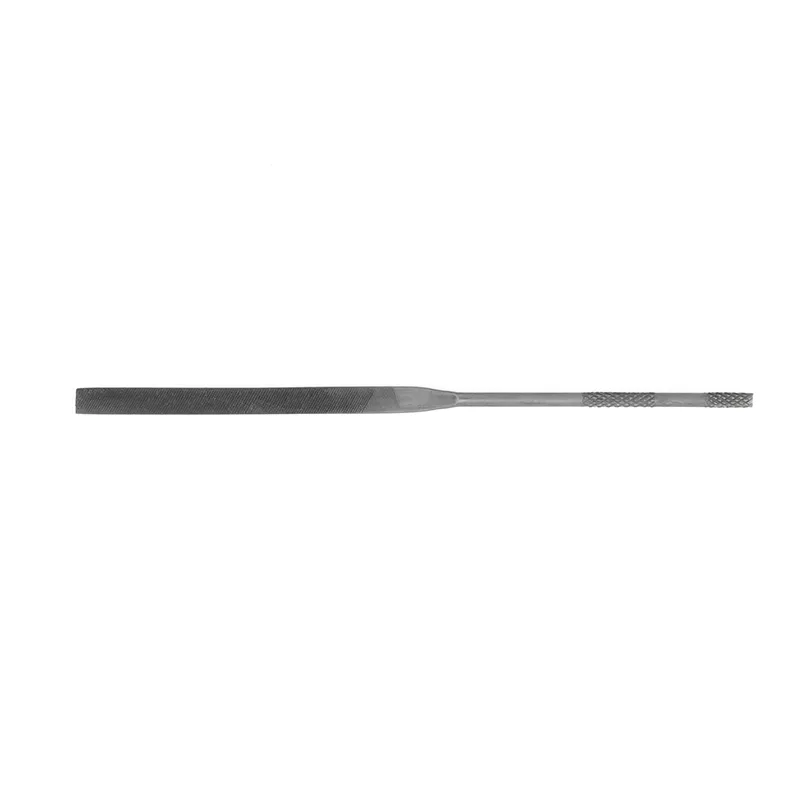
Equaling Needle File
- Use a sanding stick when the surface matters more than the exact profile.
- Use a needle file when the profile matters more than the surface finish.
Reach and control in tight spaces
Sanding sticks are usually longer than needle files, which helps when you need to reach into a recess without your fingers blocking the view. The trade-off is that a longer stick can flex or round over an edge if you press too hard. Keep the stick parallel to the surface and let the abrasive do the work.
Needle files are short and stiff, so they give you more feedback when you are cutting a slot or opening a hole. That stiffness is an advantage in metal and hard plastic, but it also means a needle file can remove material faster than you expect. Check your progress often, especially on soft metals and thin walls.
- Mark your target depth with tape or a pencil line before filing.
- Clean the file with a card file or brush to keep teeth cutting.
Material match: wood, plastic, and metal
On wood, a sanding stick is usually the faster choice for shaping and finishing because the abrasive belt cuts across the grain without clogging as quickly as a file. The Standing Stick With 1 Belt is aimed at wood sanding, deburring, grinding, shaping, and finishing, so it fits model makers, crafters, and hobbyists working in softer materials.
On metal, a needle file is the better first tool because steel teeth shear metal instead of smearing it. The Equaling Needle File is built from high-quality steel for strength and durability, and its shape is meant for evening out rectangular or square slots and removing burrs. After filing, you can switch to a fine abrasive if you need a smoother surface.
- Do not use a wood sanding belt on metal; the abrasive will dull quickly.
- Do not use a needle file to blend a large curved surface; it will leave facets.
When the job needs both tools
A common tight-space sequence is file, then sand. Start with a needle file to correct the shape, open the slot, or knock down a burr. Then switch to a sanding stick with an appropriate grit to blend the scratches and even out the surface. This order works because the file removes material predictably, while the sanding stick controls the final texture.
If you are working on a small area where you cannot see the bottom, stop and clear the chips before switching tools. Chips left in a slot can make a file skip or a sanding belt ride up on debris. A quick blast of air or a soft brush keeps the cut consistent.
- File first for geometry, sand second for finish.
- Re-check fit after each step; tight spaces change quickly.
Trade-offs at a glance
- Material removal speed: A sanding stick with fresh abrasive removes material quickly on wood and plastic, but a needle file cuts faster on metal and hard plastic. Match the tool to the material, not just the size of the space.
- Shape control: A needle file holds a defined profile for slots and edges, while a sanding stick can round over a crisp corner if you are not careful. Use a file when the shape must stay sharp.
- Surface finish: A sanding stick leaves a consistent scratch pattern you can refine with grit changes; a needle file leaves visible tooth marks that usually need sanding. Plan on a finishing step after filing.
Product facts that affect your choice
- Standing Stick With 1 Belt: Excel Blades Sanding Stick Kit with 1 Aluminum Oxide Sanding Belt is designed for wood sanding, deburring, grinding, shaping, and finishing a wide array of materials, making it useful for hobbyists, crafters, and model makers. Choose this when you need to blend or finish a surface and want to change grits for different materials.
- Equaling Needle File: The Equaling Needle File features an equivalent shape profile that can help sharpen trimmer blades to saws, even out rectangular or square slots, and remove burrs and inconsistencies, and it is constructed of high-quality steel for strength and durability. Choose this when you need to correct a profile, open a slot, or remove a burr from metal or hard material.
Which tool fits your job
Best for
- Blending, deburring, and finishing wood, plastic, or resin in a recess
- Model makers and crafters who want to change grits for different materials
- Correcting a square slot, opening a hole, or removing a burr from metal
- Detail work where you need feedback and a defined profile
Not for
- Heavy metal removal where a larger file or grinder is faster
- Blending large curved surfaces where a flexible abrasive works better
- Jobs where you cannot control the depth and risk cutting too far
Pick the sanding stick for surface finishing and the needle file for shape correction, then use them in that order when a tight space needs both. If you are unsure, start with the file, check the fit, and finish with a sanding stick.