Quick Answer
Choose satin when you want smooth, cool comfort against the skin, easy hand washing, and a sleek silhouette under clothing. Choose lace when you want texture, stretch, and a forgiving fit that moves with you. If you can't decide, look for pieces that combine both — satin cups or panels with lace trim — so you get breathable softness where it matters and visual interest where you want it.
Satin and lace are the two fabrics most people picture when they think of lingerie, and they solve different problems. Satin is about how the fabric feels against your body: smooth, cool, and low-friction. Lace is about how the fabric looks and moves: textured, stretchy, and forgiving over curves. Neither is better in every situation, and the right pick depends on your skin sensitivity, your daily routine, and how much time you're willing to spend on care.
This comparison breaks down comfort, fit, and care for each fabric, using real pieces from our catalog as examples. You'll see where satin wins, where lace wins, and how to combine them so you don't have to choose one fabric for your whole drawer.
Comfort: Smooth vs. Textured Against the Skin
Satin's main comfort advantage is its smooth, low-friction surface. It glides over the skin instead of catching on it, which makes it a good choice if you have sensitive skin or you hate the feeling of fabric grabbing at your hips and waist. The Rosewater Lace Nightslip pairs silky blush satin with delicate white lace and underwire cups for gentle lift — the satin does the smoothing, while the lace side panels add stretch and airflow where you need it most. That combination is a good example of why the satin-vs-lace question isn't always either/or.
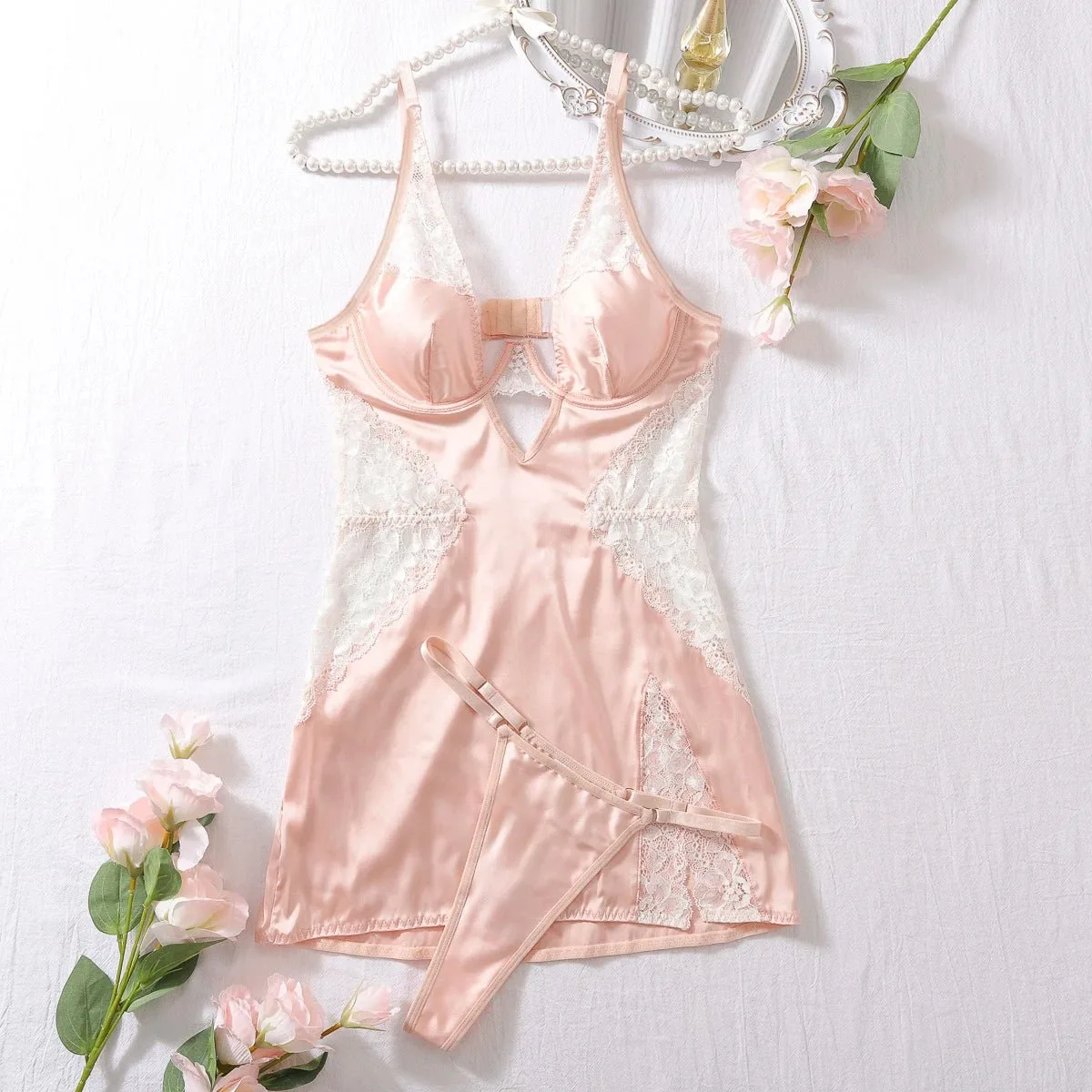
Rosewater Lace Nightslip
Lace's comfort advantage is stretch and breathability. A well-made lace panel moves with you rather than restricting you, and the open structure lets air circulate. The trade-off is texture: some lace edges can feel scratchy against bare skin, especially along the underbust or inner thigh. If you're sensitive to that, look for lace that sits on top of a smoother lining, or choose a set where the lace is decorative rather than the main body fabric.
- If your skin reacts to texture, put satin where the fabric meets your waist, ribs, and thighs, and keep lace to trim and side panels.
- If you overheat easily, lace's open weave breathes better than a solid satin panel.
- Check the underbust edge first — that's where scratchy lace is most noticeable.
Fit: How Each Fabric Handles Curves and Movement
Lace usually contains some stretch, which means it forgives small fit variations and moves with you as you sit, stand, and bend. That makes lace-heavy sets a practical pick if your weight fluctuates or you're between sizes. The Romantic Lace See-Through Floral Lingerie Set is a five-piece design with underwire cups for lift and support plus adjustable straps, so you can fine-tune the fit rather than relying on the fabric alone. The sheer mesh and floral pattern add romance without adding bulk.
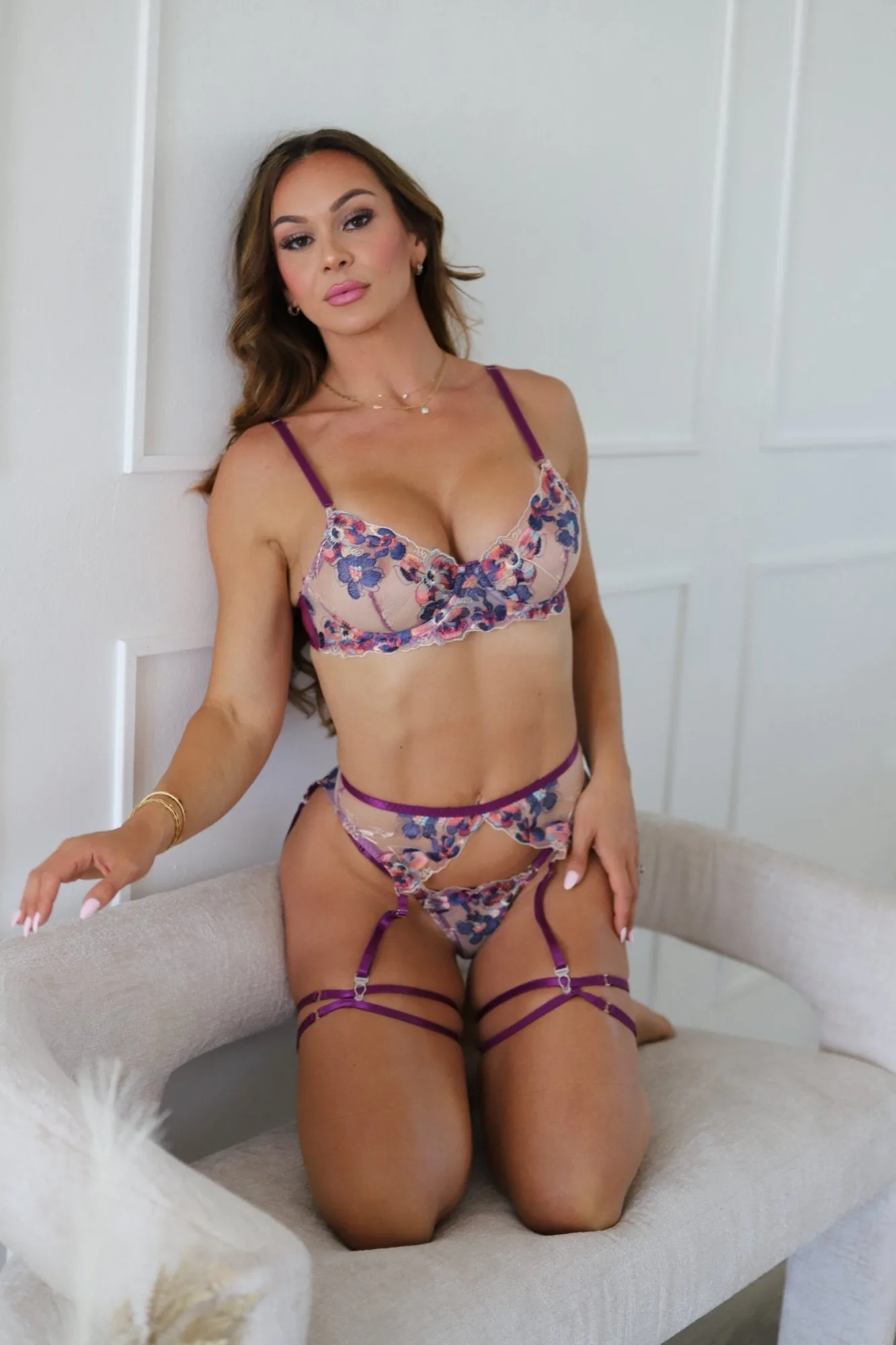
Romantic Lace See-Through Floral Lingerie Set
Satin has less give, so fit matters more. A satin piece that's slightly too tight will pull and crease; one that's slightly too loose can slide. The payoff is a clean, sculpted line — the Fiona Polka Dotted Bustier uses a structured silhouette with an underwire bra and matching thong to flatter your natural shape while staying supportive. If you want that smooth look under clothing, satin is the fabric that delivers it, but you should treat sizing as a priority rather than an afterthought.
- Between sizes in lace? Size down if the lace has stretch; size up if it's a rigid lace with no give.
- Between sizes in satin? Size up — satin shows every pull and crease when it's too tight.
- Adjustable straps and underwire cups matter more in satin pieces because the fabric won't stretch to compensate.
Care: What Each Fabric Demands From You
Satin lingerie care is generally simpler. Hand wash in cool water with a gentle detergent, press the water out instead of wringing, and lay flat to dry away from direct heat. Satin's smooth surface doesn't trap lint or snag easily, so it holds its look with minimal fuss. The main risk is heat: hot water or a hot dryer can dull the sheen and break down the fibers, so keep temperatures low and skip the machine dryer entirely.
Lace needs a little more attention because it's a looped, textured fabric. The same hand-wash routine works, but you should use a mesh laundry bag if you ever machine wash on a delicate cycle, and you should check for snags along the edges before washing. Lace also stretches more easily when wet, so avoid hanging it by the straps — lay it flat to dry so it keeps its shape. If a lace edge starts to curl, a few minutes of cool air drying flat usually settles it back.
- Never wring either fabric — press water out between two towels.
- Keep both away from direct sunlight and radiators; heat is the enemy of satin sheen and lace elasticity.
- Store lace flat or folded loosely; hanging by straps stretches them over time.
When to Combine Satin and Lace in One Piece
The most practical answer to satin vs. lace lingerie is often both. A piece that uses satin for the body and lace for the trim gives you the smooth feel where fabric meets skin and the visual texture where you want it. The Rosewater Lace Nightslip does exactly this: silky blush satin with delicate white lace and lace side panels, plus a matching thong. It's available in blush pink or deep red, so you can pick the mood without changing the comfort profile.
Combination pieces also solve the fit problem. The satin body gives you a clean line, while the lace panels add the stretch that lets the piece move with you. If you're shopping for a first piece or replacing a set that never felt right, a satin-and-lace hybrid is usually the safest bet — you get the strengths of both fabrics and you only have to manage one care routine.
- Look for satin in the body and lace at the edges if you want smoothness plus stretch.
- Look for lace in the body and satin trim if you want breathability plus structure.
- Match your care routine to the most delicate fabric in the piece — that's usually the lace.
Satin vs. Lace Trade-Offs at a Glance
- Comfort trade-off: Satin wins on smooth, low-friction feel against sensitive skin; lace wins on breathability and stretch. If you overheat or want movement, lace is the better pick. If texture bothers you, satin is. Pick satin for skin comfort, lace for airflow.
- Fit trade-off: Lace forgives small size variations because it stretches; satin does not, but it gives a cleaner, more sculpted line under clothing. Structured satin pieces like a bustier rely on underwire and seams rather than stretch. Between sizes: size down in stretch lace, size up in satin.
- Care trade-off: Both need hand washing in cool water and flat drying. Satin resists snags and lint but dulls with heat; lace snags more easily and stretches when wet, so it needs a mesh bag and flat drying. Match your routine to the lace — it's the more demanding fabric.
- Best-of-both option: Hybrid pieces put satin in the body and lace at the edges, so you get smoothness where fabric meets skin and texture where you want it. You also only manage one care routine. If you can't choose, buy the hybrid.
Catalog Facts That Matter
- Rosewater Lace Nightslip: Silky blush satin paired with delicate white lace, underwire cups for gentle lift, lace side panels, and a matching thong; available in blush pink or deep red. This is the hybrid option: satin gives you the smooth, cool feel, while the lace side panels add stretch and airflow. The underwire cups provide lift without a separate bra.
- Fiona Polka Dotted Bustier - White, Black, & Red: Polka-dotted bustier with a structured silhouette, underwire bra for a smooth sculpted fit, and a matching thong; available in multiple colors. A satin-like structured piece shows why fit matters more than fabric choice here — the underwire and structure do the shaping, so sizing up when between sizes protects the clean line.
- Romantic Lace See-Through Floral Lingerie Set: Five-piece see-through floral set with sheer mesh, underwire cups for lift and support, and adjustable straps; available in multiple sizes and colors. A lace-and-mesh set is the breathable, forgiving choice. Adjustable straps let you fine-tune fit, which matters more in lace because the fabric stretches over time.
Which Fabric Should You Choose?
Choose satin if you...
- Have sensitive skin or dislike textured fabric against your waist, ribs, or thighs
- Want a smooth, sculpted line under clothing for a wedding, event, or fitted dress
- Prefer a simpler care routine and don't want to baby your lingerie
- Are shopping for a structured piece like a bustier where the fit does the shaping
Choose lace (or a hybrid) instead if you...
- Overheat easily and want the breathability of an open weave
- Are between sizes and want fabric that stretches with you
- Want visible texture and romance as the main visual feature
- Don't want to worry about every crease and pull showing in the fabric
There's no universal winner in satin vs. lace lingerie — there's only the fabric that fits your skin, your size range, and your laundry habits. Start with a hybrid piece if you're unsure, then branch out once you know whether you reach for the smooth satin or the stretchy lace more often. Either way, hand wash in cool water, dry flat, and keep heat away, and both fabrics will hold their shape and feel far longer.