Quick Answer
A scalloped trivet riser elevates dishes for a layered tablescape and doubles as a charcuterie board, while a flat trivet sits flush to protect surfaces from heat. Choose the riser if you want a decorative, multi-use piece; pick a flat trivet for simple, low-profile heat protection.
Design and Height
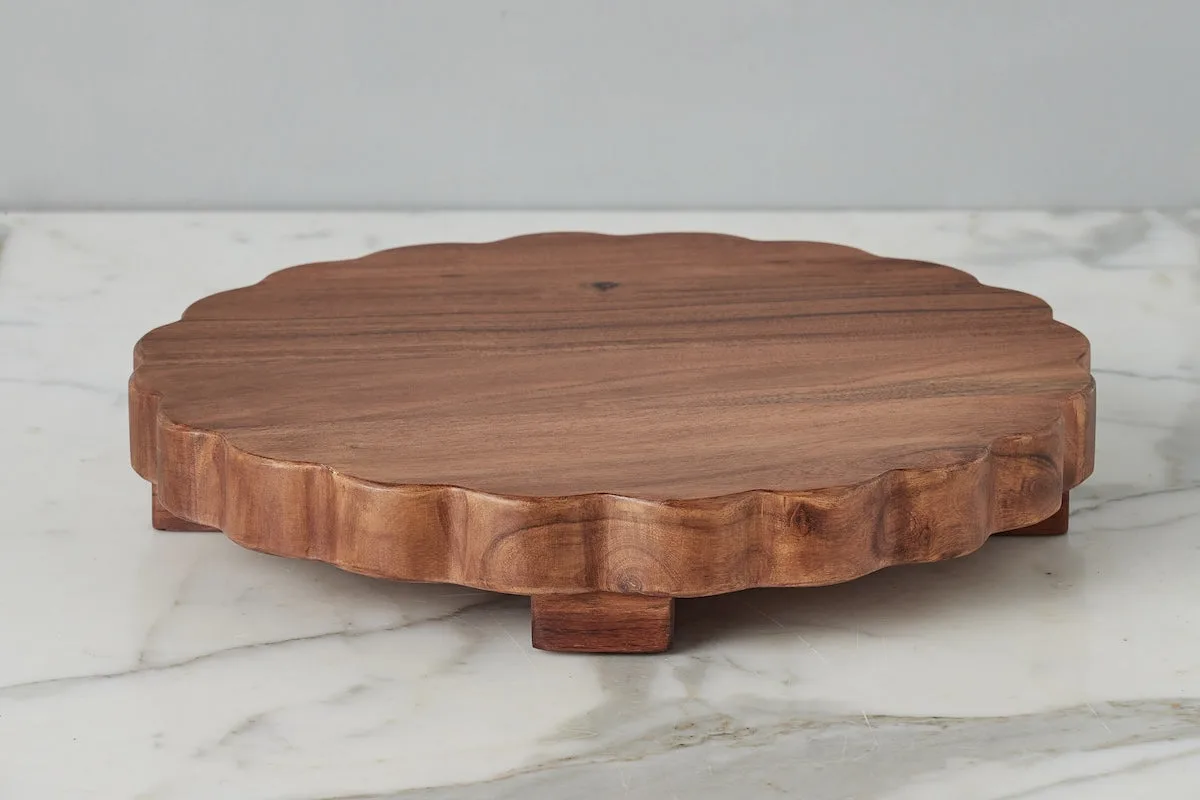
A scalloped trivet riser, like the Round Footed Scalloped Trivet, has a raised, footed base that lifts serving dishes a few inches off the table. This creates visual depth and makes it easy to layer plates or bowls. A flat trivet, in contrast, sits directly on the surface with minimal height, offering a clean, unobtrusive look that blends into the table setting.
Function and Versatility
The scalloped riser works as a hot plate, charcuterie board, or serving riser, making it a versatile piece for both cooking and entertaining. Its raised design also allows air to circulate under warm dishes, which can help protect surfaces. A flat trivet focuses solely on heat insulation and is typically better for heavy cookware or pots that need a stable, level base.
Scalloped Riser vs Flat Trivet: Tradeoffs
- Heat Protection: The scalloped riser's raised feet allow airflow, reducing direct contact with the table. A flat trivet provides full-surface insulation but may trap heat if the material isn't thick enough. For very hot cookware, a flat trivet with a solid heat barrier is more reliable.
- Versatility: The scalloped riser doubles as a charcuterie board or serving piece. A flat trivet is single-purpose but often more compact for storage. Choose the riser if you want one piece for serving and protection.
- Tabletop Impact: The scalloped edges and elevated design create a decorative focal point. A flat trivet is subtle and works best when you want the dish to stand out. For entertaining, the riser adds visual interest; for daily use, the flat trivet is unobtrusive.
Product Facts
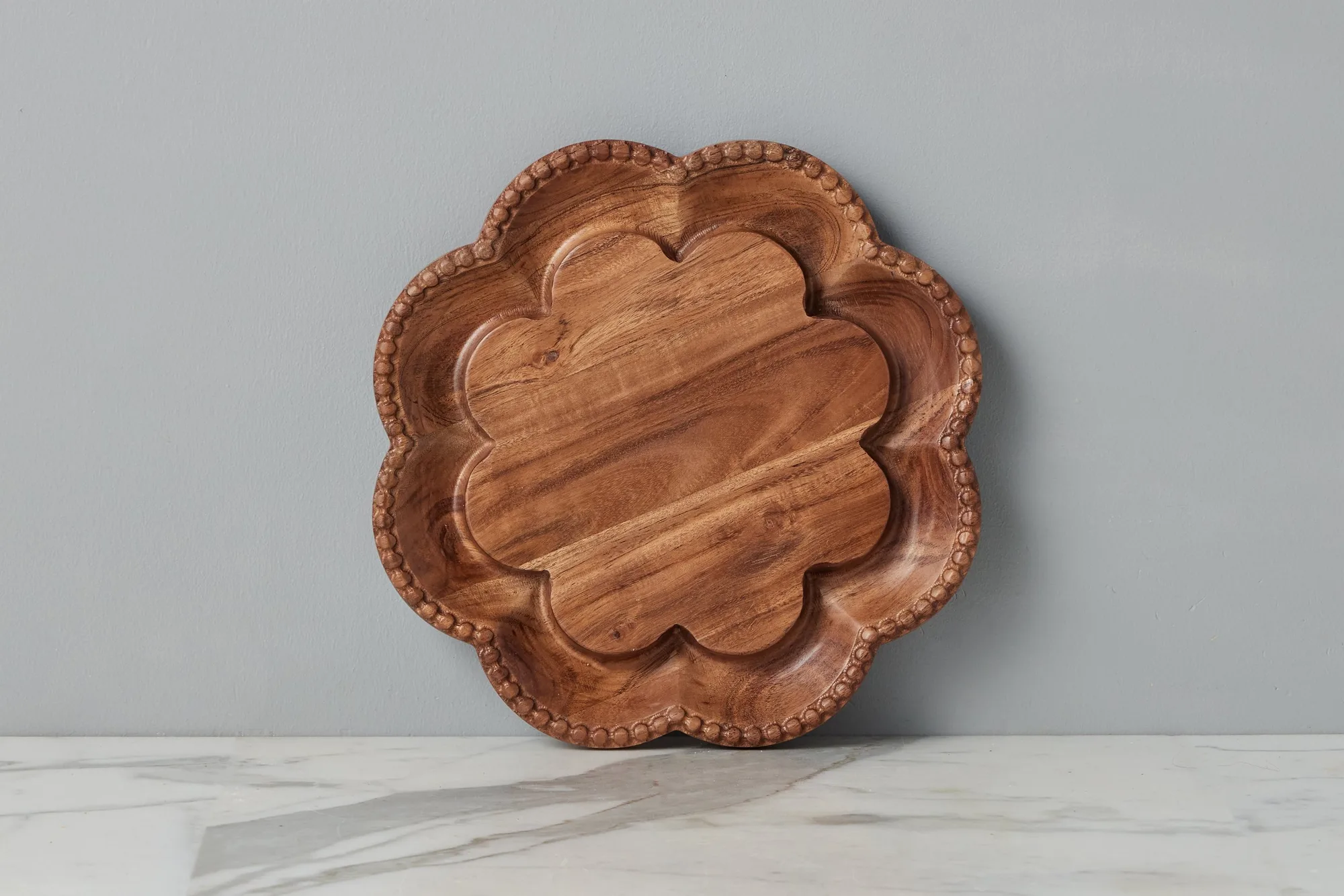
- Scalloped Trivet Riser, Large Round, Natural: Crafted from premium Acacia wood, this board offers exceptional durability. Inspired by 18th Century European architecture, the Scalloped Collection blends old-world charm with contemporary aesthetics. Acacia wood is naturally hard and water-resistant, so the riser can handle frequent use as a serving board or hot plate without warping.
- Vintage English Bread Board, Medium Scalloped: Rooted in centuries of culinary tradition, English Bread Boards were originally used for slicing bread and as a centerpiece for gathering around the table. If you prefer a flat, traditional board with historical character, the English Bread Board offers a low-profile surface that works well for bread, cheese, or as a stable trivet.
Which One Fits You?
Best For
- Home cooks who want a decorative, multi-use piece for serving and heat protection
- Entertainers who like to layer dishes and create a tablescape
Not For
- Those who need a simple, low-profile heat protector for heavy pots and pans
- Minimalists who prefer a flat, single-purpose trivet that stores easily