Quick Answer
Choose a belt when you want to define your waist and sharpen a dress or blouse silhouette; choose a scarf when you want to add color, texture, or neckline interest without changing the fit. If your outfit already has a strong waistline, a scarf is the safer finishing touch. If it feels shapeless, a belt does more work.
How Each Accessory Changes the Silhouette
A belt works horizontally. It draws the eye to the narrowest part of your torso and can turn a loose dress or long blouse into something with a defined shape. That makes it the more structural choice, and also the more demanding one: a belt that sits too high, too low, or too tight will fight the garment instead of finishing it.
A scarf works vertically and diagonally. Draped, knotted, or looped, it adds movement and color near the face without altering how the garment fits. That makes it the more forgiving choice for loose layers, asymmetric hems, and pieces where you do not want to interrupt the drape.
Scarf Styling vs Belt Styling: Where Each Belongs
Belts suit dresses and blouses with a clear waist seam or a fabric that can take gentle compression, such as cotton, structured linen, or a stable knit. They also work well over a slip dress when you want a day-to-night shift. Avoid belting very fluid chiffon or heavily draped pieces, because the belt creates a hard line the fabric was not cut to follow.
Scarves suit open necklines, strapless shapes, and layered lingerie looks where you want a soft frame rather than a cinch. A lightweight scarf can also cover a neckline you would rather keep private under a jacket. The trade-off is bulk: a heavy scarf near the face can overwhelm a delicate camisole or a fine strap.
Matching the Accessory to Your Lingerie Layer
When you are accessorizing lingerie outfits, start with the piece that will be visible. A belted blouse or dress gives you a clear waist, so keep the lingerie underneath simple and smooth. A scarf near the neckline draws attention upward, which pairs well with a detailed cami or a dress with rosette or strap details that deserve to be seen.
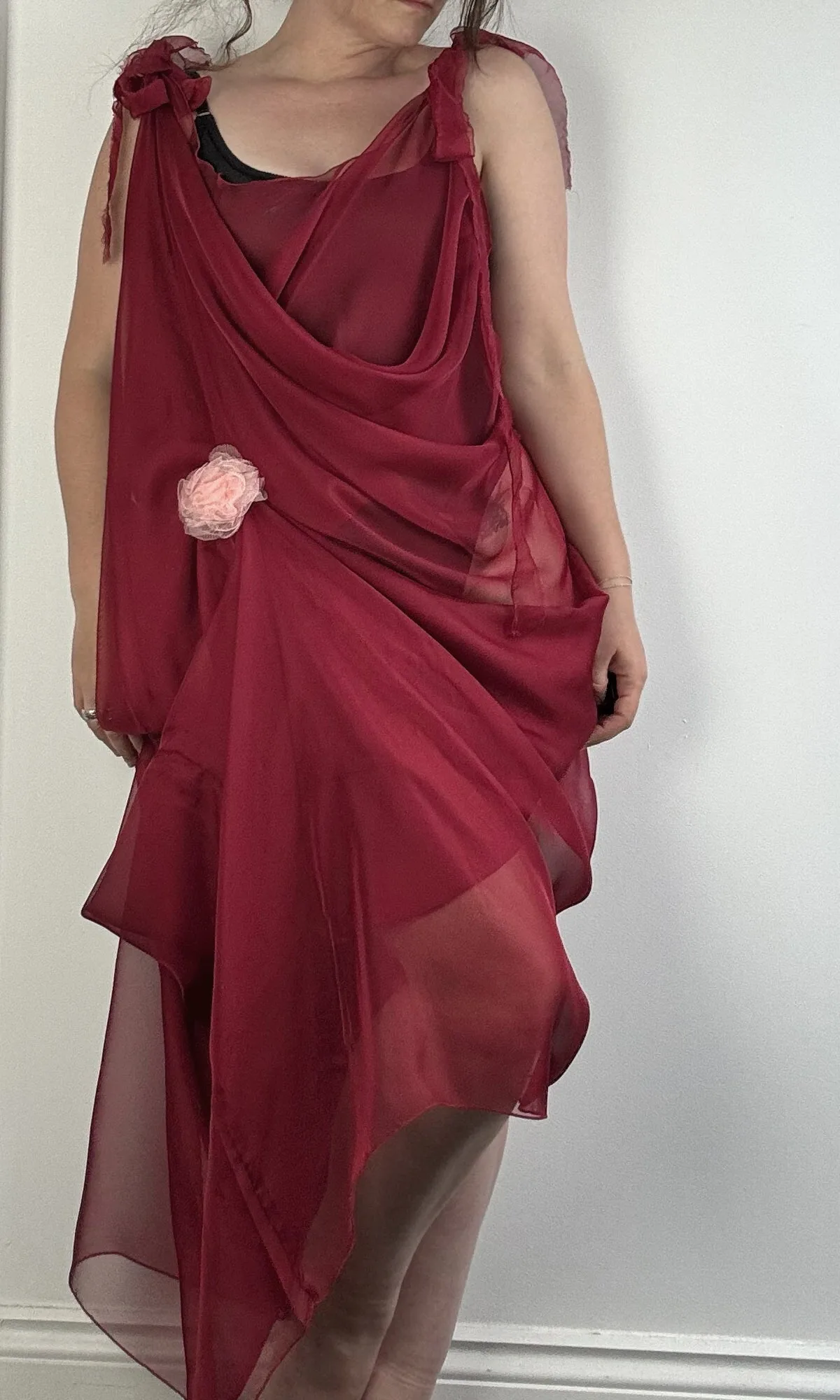
If you are wearing a one-of-a-kind draped dress, let the drape lead. Adding a belt to a fluid, asymmetric piece usually flattens its movement; a scarf worn loosely over one shoulder keeps the line intact. If you are wearing a fitted knicker-and-cami set under a blouse, a belt at the waist can tie the layers together without hiding the neckline.
Trade-Offs at a Glance
- Belt: structure vs. drape: A belt defines the waist and can rescue a shapeless dress, but it creates a hard horizontal line that flattens fluid chiffon, asymmetric hems, and heavily draped pieces. Choose a belt only when the garment has a stable waist area or a fabric that can take gentle compression.
- Scarf: softness vs. bulk: A scarf adds color and neckline interest without changing fit, but a heavy or bulky scarf can overwhelm fine straps and delicate camisoles. Match scarf weight to the garment: lightweight for lingerie layers, heavier only over structured outerwear.
- Detail conflict: hip ties vs. waist belts: Pieces with existing hip detail, like tie-side ribbons or embroidered fronts, already draw the eye downward; adding a belt there splits attention rather than finishing the look. If the garment already has a focal point at the hip or waist, put the accessory at the neckline instead.
Product Facts
- Ondine Dress: The Ondine Dress is free size (fits UK 8-14 best) with an asymmetric length and cascading sheer burgundy chiffon, cut using zero waste pattern cutting techniques. Because the dress is deliberately fluid and asymmetric, a belt would interrupt the drape; a scarf worn over one shoulder adds interest without fighting the cut.
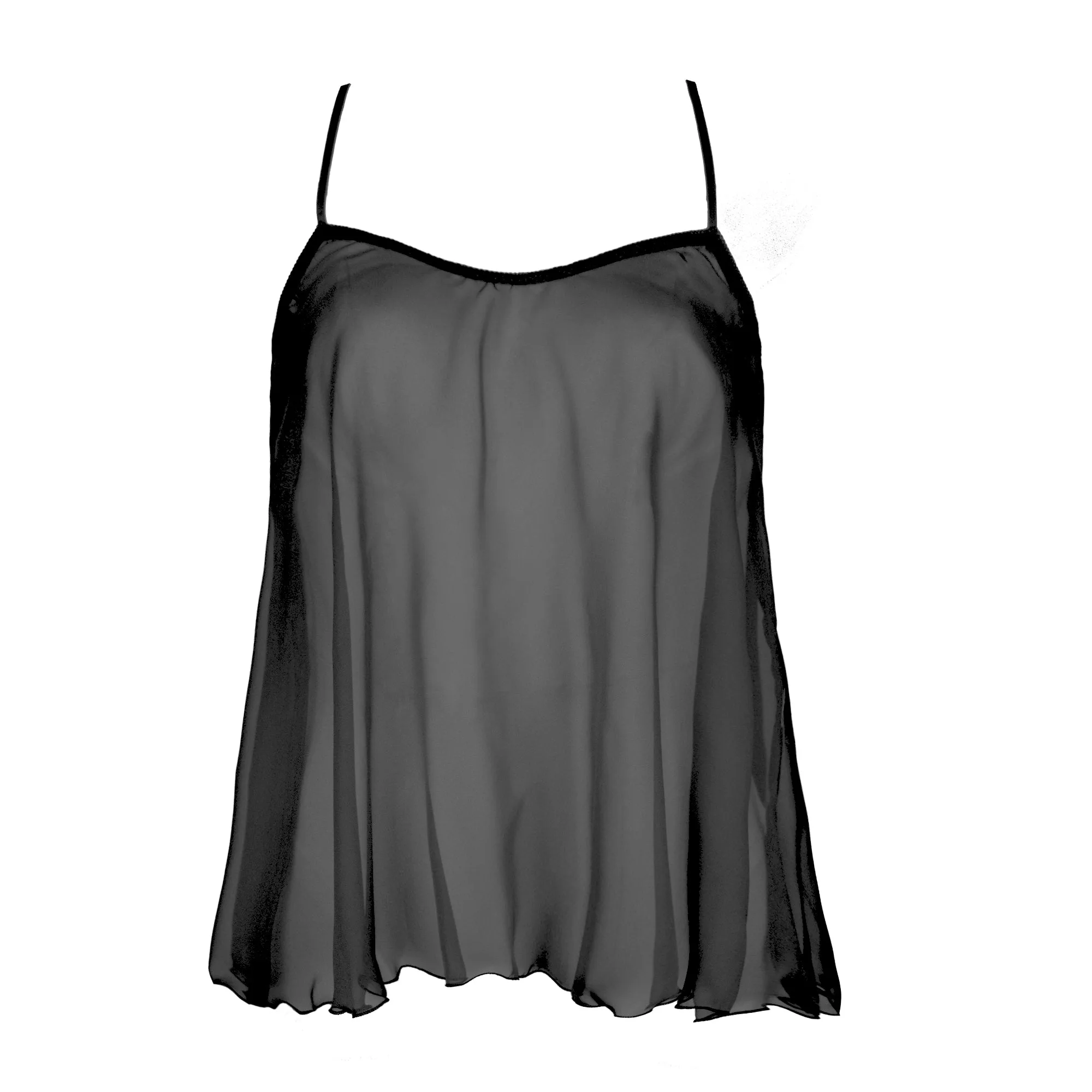
- Dreamy Babydoll Cami: The Dreamy Babydoll Cami is A-line with a straight neckline, satin spaghetti straps, an elasticated neckline, and a frilly rolled hem, finishing at low hip. The straight neckline and A-line shape leave room for a scarf near the collarbone, while a belt at the waist would sit on top of the frilly hem rather than define a natural waist.
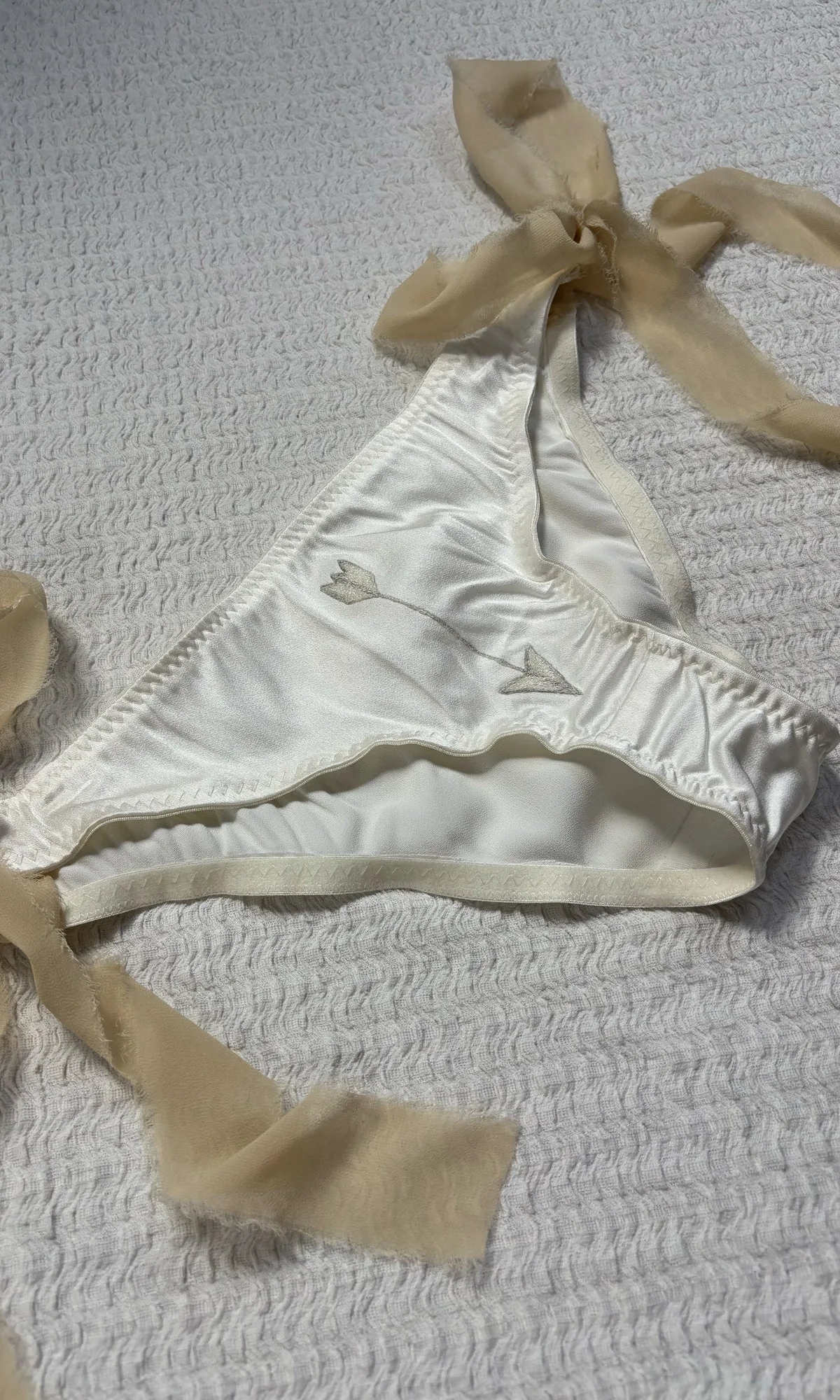
- Arrow Tie Side Knicker: The Arrow Tie Side Knicker has cream chiffon ribbon ties at each hip for an adjustable fit, with a freehand embroidered arrow front and centre. The tie-side ribbons already create a small focal point at the hip, so a belt is unnecessary; if you want to add a scarf, keep it high near the neckline so the two details do not compete.
Which Should You Choose?
Best for
- Outfits that feel shapeless and need waist definition, such as a loose dress or a long blouse over a cami
- Structured fabrics like cotton or linen that hold a belt line without pulling
- Day-to-night looks where you want one accessory to change the silhouette
Not for
- Fluid, asymmetric, or heavily draped dresses like the Ondine Dress, where a belt interrupts the cut
- Garments with existing hip detail, such as tie-side knickers or embroidered fronts, where a belt would compete
- Anyone who prefers an unbroken line and wants the fabric, not the accessory, to lead