Why This Book Belongs in Your Training Library
If you're serious about scent detection work, understanding how your dog processes odor is just as important as the drills you run. Scent and the Scenting Dog, written by William Syrotuck after years of research into the canine olfactory system, gives handlers a foundation that most training manuals skip. Rather than handing you a step-by-step routine, it explains the science behind the nose so you can build smarter searches.
The book covers topics like the anatomy and physiology of smell, how odor moves through the air, and how humans themselves become a scent source. For anyone running detection dog training — whether in K9 scent work, nose work, or professional detection — this primer helps you relate to your dog's experience in a way that improves both communication and results.
What the Book Offers
-
Scent And The Scenting Dog: Contains 23 diagrams and 4 charts covering the sense of smell, anatomy, physiology, theories of odor, and atmospheric factors. These visuals help you grasp how scent travels and how a dog's nose processes it, which directly affects how you set up training hides and manage air currents.
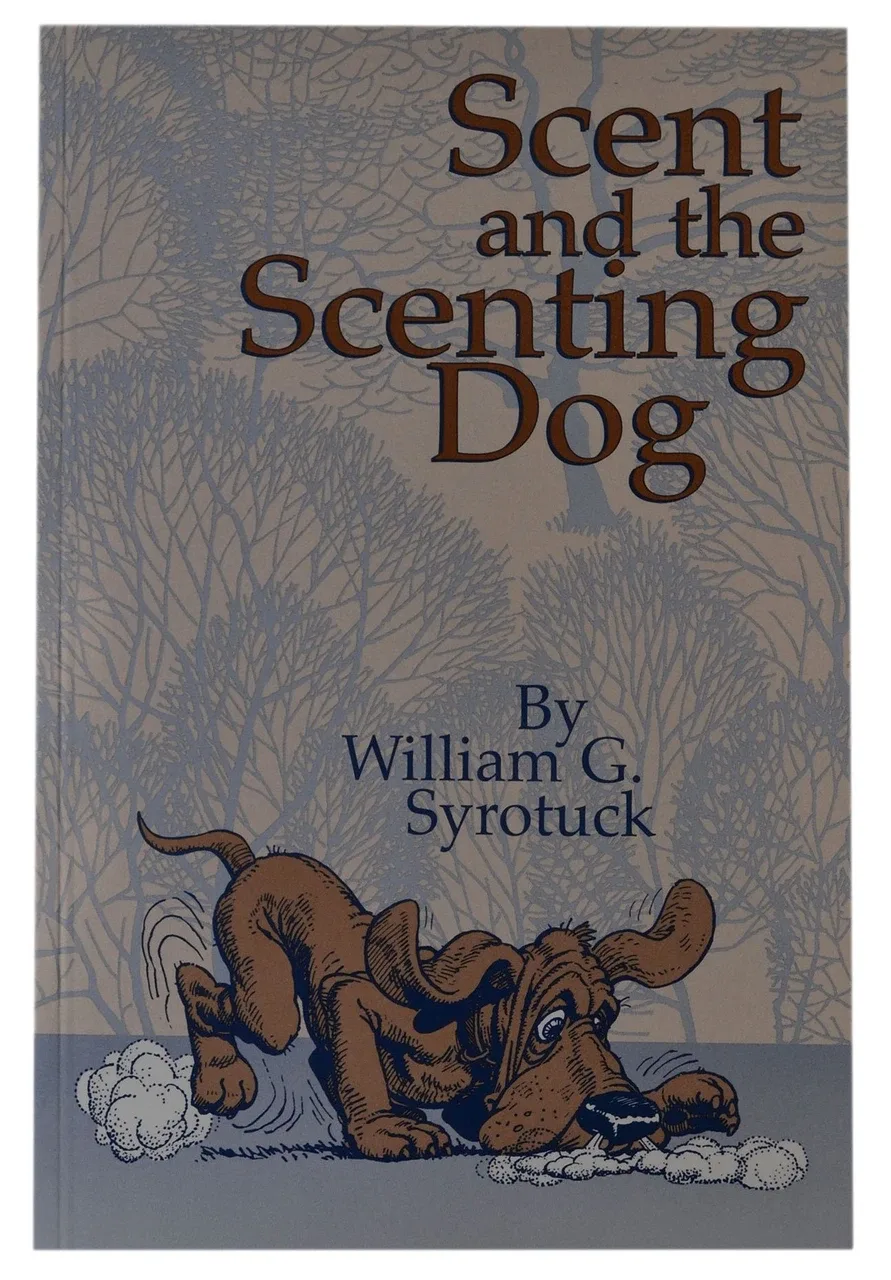
Scent And The Scenting Dog
-
Scent And The Scenting Dog: Topics include 'Develop a scent picture', 'The Human as a Scent Source', and 'Atmospheric Factors and Airborn Scent'. Understanding that you leave a scent trail and that wind direction matters lets you design more realistic searches and avoid inadvertently confusing your dog.
Applying the Science to Your Training Sessions
Once you understand the principles Syrotuck lays out, you can start adjusting how you handle scent introductions. For example, knowing that odor is carried by air currents means you should place hides where airflow is predictable, not in dead zones. Recognizing that your own scent can contaminate an area encourages you to use clean handling gear and approach hides from downwind.
The book also helps you develop a 'scent picture' — the complete set of odors your dog must learn to identify or ignore. This is especially useful when imprinting a target odor or transitioning from simple box searches to complex area searches. By grounding your training decisions in how the dog actually smells, you reduce guesswork and build reliability.
How to Use This Book Alongside Your Training
- Read the anatomy and physiology sections first: Before you run another search, understand the structure of the canine nose and how odor molecules are processed. This knowledge will change how you interpret your dog's behavior on the line.
- Study the diagrams and charts with your training area in mind: Look at the atmospheric factors and airborne scent diagrams. Then walk your training space and note where wind patterns, obstacles, and temperature gradients might affect scent movement.
- Apply the scent picture concept to your odor imprinting: When introducing a new target odor, think about the full scent picture your dog experiences. Minimize distractions and background odors so the target stands out clearly.
- Review the human as a scent source chapter: This section helps you manage your own scent contamination. Use it to refine your handling protocols, such as approach direction and how you handle training aids.
A Note on Safety and Compatibility
This product can expose you to chemicals, which is known to the State of California to cause cancer and birth defects or other reproductive harm. For more information go to www.P65Warnings.ca.gov. The book itself is a reference primer, not a training tool that requires handling precautions beyond normal use.