Quick answer
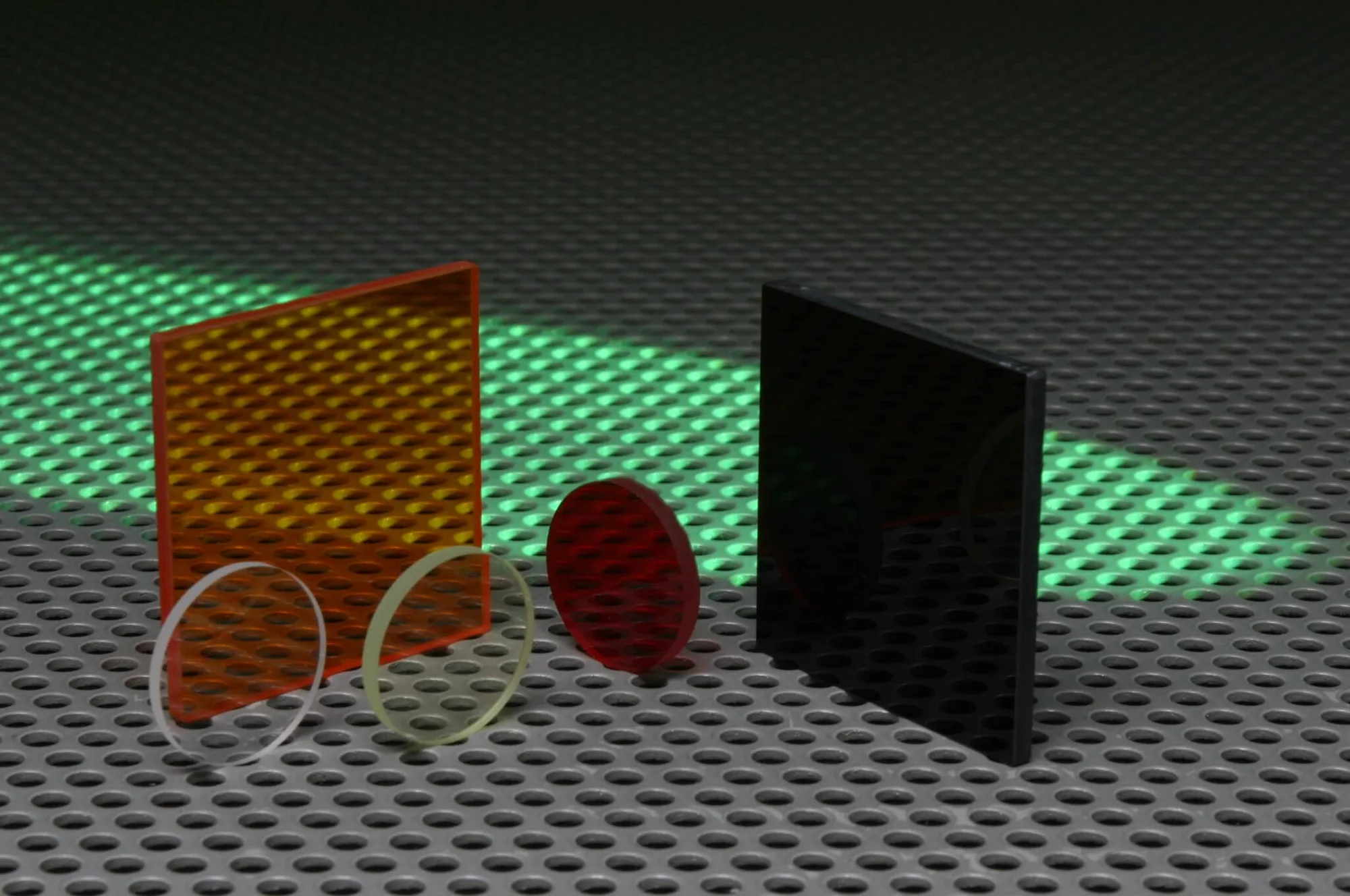
The Schott N-WG320 is a longpass filter that transmits ultraviolet and visible light while blocking longer wavelengths, making it useful when you need to isolate UV or short-wave visible content. For most benchtop work, choose the 2 mm thick, 25 mm diameter stock version and confirm your source, detector, and mounting method before you order. If you need a larger aperture or a different IR cutoff, compare it with a Hoya W-IR800 in the appropriate size.
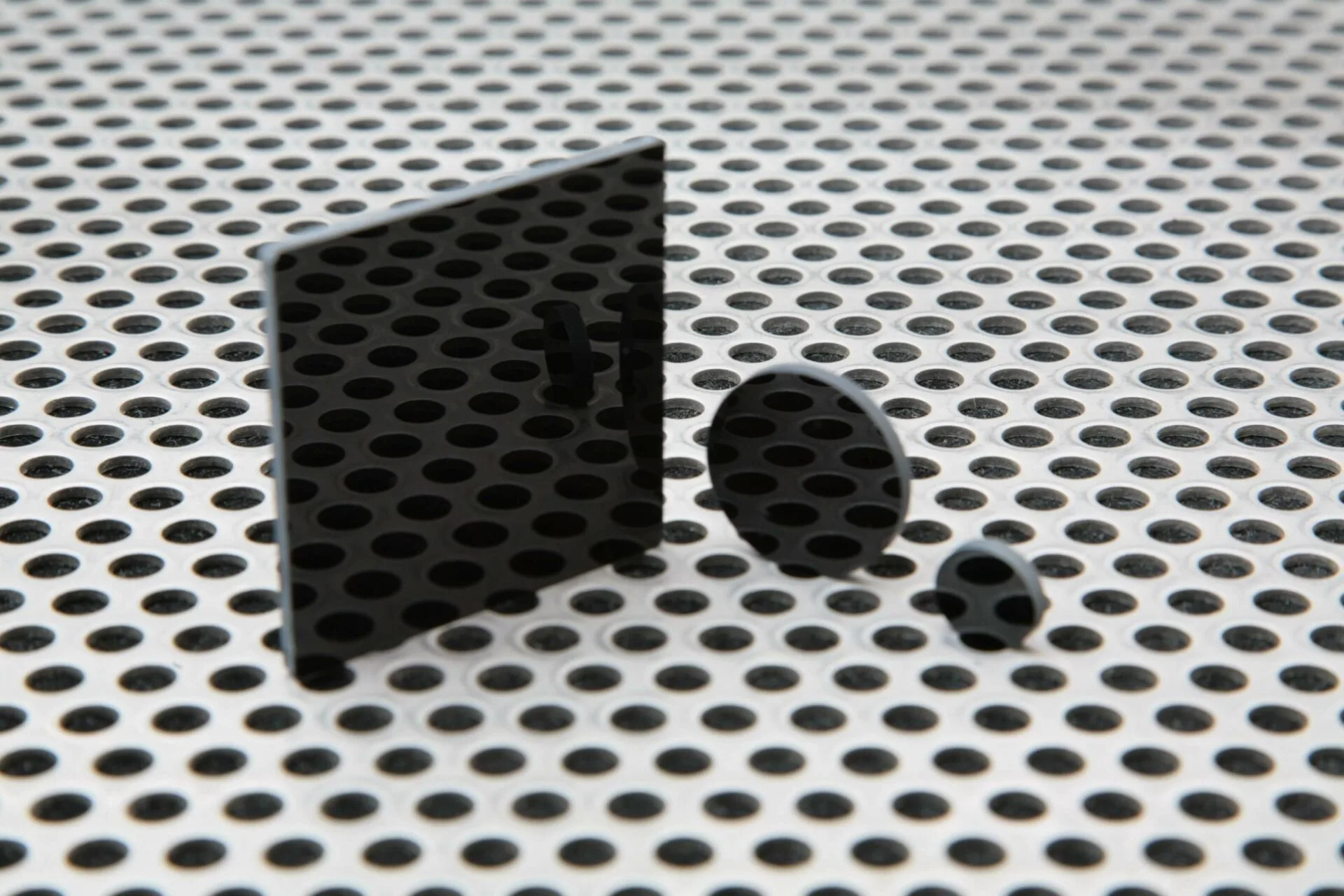
Hoya W-IR800
What the N-WG320 actually does in a light path
The N-WG320 is a Schott longpass glass that passes UV and shorter visible wavelengths while absorbing longer wavelengths. That behavior makes it a UV transmitting filter in practice: you place it in front of a detector or camera when you want the UV or blue end of the spectrum to reach the sensor and want longer wavelengths suppressed. The exact transmission curve depends on thickness, so the 2 mm stock thickness is part of the specification, not an incidental detail.
Because the glass is absorbing rather than purely reflective, it can warm slightly under intense illumination. That is normal, but it means you should not sandwich it against a heat-sensitive component or ignore airflow in a closed housing. If your application is primarily infrared, a Hoya W-IR800 is the more logical starting point because it is designed for the opposite task.
How to choose the right version for your setup
Start with the physical envelope. The stock Schott N-WG320 is 2 mm thick and 25 mm in diameter, which suits many lens tubes, filter wheels, and small detector windows. If your beam is wider than the clear aperture or your mount expects a different format, check whether a comparable filter exists in the size you need before forcing an adapter.
Then check the spectral requirement. If you need UV and visible transmission, the N-WG320 is a reasonable candidate. If you need to isolate infrared, look at the Hoya W-IR800, which is available in a 50 x 50 mm format and a Ø 12.50 mm format. Matching the filter family to the band you want to keep is more important than matching brand names.
Common mistakes and how to avoid them
The most frequent error is ordering by diameter alone. A 25 mm filter may not fit a mount designed for a 25.4 mm or 1-inch optic, and the difference matters when the filter sits in a threaded retainer. Measure the actual seat, not the nominal size.
The second mistake is assuming the filter is interchangeable with an IR longpass. The N-WG320 and a Hoya W-IR800 do opposite jobs in the spectrum, so swapping them without checking the transmission curve will give you the wrong result. If you are unsure which band you need, test with a broadband source and a simple detector before committing to a permanent build.
Step-by-step: specifying and using the N-WG320
- Define the band you need to keep: Write down the wavelength range your source emits and the range your detector should see. If you need UV and short visible, the N-WG320 is a candidate; if you need infrared, choose an IR longpass such as the Hoya W-IR800 instead. Checkpoint: if you cannot state the passband in nanometres, stop and measure before ordering.
- Match the physical size to the mount: The stock N-WG320 is 2 mm thick and Ø 25 mm. Measure the clear aperture and the seat diameter of your holder, and allow for any retaining ring or adhesive thickness. Common mistake: assuming a 25 mm filter fits a 25.4 mm or 1-inch mount without an adapter.
- Confirm thickness and orientation: Thickness affects the transmission curve, so use the specified 2 mm part unless you have re-characterised a different thickness. Install the filter with the coated or marked face as intended by the manufacturer, and keep handling to the edges. Checkpoint: if the filter is unmarked, record the orientation you chose so you can reproduce it.
- Control heat and stray light: Absorbing glass can warm under intense illumination. Provide airflow or a heat sink if the filter sits in a closed housing, and use a baffle or aperture to keep off-axis light from bypassing the filter. Common mistake: stacking the filter directly against a heat-sensitive sensor or leaving it loose in a high-vibration setup.
- Verify performance with a test target: Before committing to a full build, image a known UV or visible target and compare with and without the filter. If the contrast or signal does not change as expected, re-check the band and the mounting. Next step: if the result is wrong, revisit the band choice and consider an IR longpass such as the Hoya W-IR800 for the opposite task.
Product facts
- Schott N-WG320: Schott N-WG320, part numbers FWG32025, FWG-32025, FWG 32025; thickness 2 mm; dimensions Ø 25 mm. The 2 mm thickness defines the spectral performance, and the Ø 25 mm size fits common small mounts; confirm your holder accepts that exact diameter before ordering.
- Hoya W-IR800: Hoya W-IR800, part numbers HIR8050, HIR-8050, HIR 8050; thickness 3 mm; dimensions 50 x 50 mm. A larger square format for IR work where you need to pass infrared rather than UV; useful when your beam or sensor area exceeds a 25 mm round filter.
- Hoya W-IR800: Hoya W-IR800, part numbers HIR8012, HIR-8012, HIR 8012; thickness 3 mm; dimensions Ø 12.50 mm. A small-diameter IR option for compact assemblies; check that the 12.50 mm size matches your mount rather than assuming it is a drop-in for a 12.7 mm seat.