Quick answer
For most video productions, the Scrim Jim Cine Frame 4x4 is the most versatile size, balancing portability and diffusion area. Choose the 8x8 for large group shots or full-body lighting, and a Flex Cine Frame for tight spaces or quick on-camera diffusion.
Why frame size matters for light control
The size of your frame directly affects how soft or directional your light appears. A larger frame lets you place diffusion or modifiers farther from the subject while maintaining a large source, which wraps light around faces and reduces harsh shadows. A smaller frame is easier to position in tight sets and requires less stand support.
All Westcott Cine Frames use heavy-duty anodized aluminum and riveted industrial-grade touch fasteners, so the build quality is consistent across sizes. Your choice comes down to the physical space you work in and the coverage you need.
When to go bigger vs smaller
The 8x8 frame gives you the most diffusion area, ideal for lighting a full standing subject or multiple people in a wide shot. But it also demands more studio floor space and a heavier stand or C-stand to support it safely. Wind or air movement can also become a factor outdoors.
The 4x4 frame covers head-and-shoulders shots comfortably and packs down smaller for location work. It's the most common choice for interviews and narrative close-ups. The Flex Cine Frame options (2x2 or 1x2) are designed for quick attachment of front diffusion fabric, making them great for on-camera lights or tight product shots.
How to choose your Cine Frame size
- Subject distance: If your subject is 3-6 feet from the frame, a 4x4 gives soft light without wasting output. For subjects closer than 3 feet, consider a Flex Cine Frame (2x2 or 1x2) to keep the source small enough for controlled falloff.
- Coverage area: Use the 8x8 when lighting a full body or multiple people in a single frame. Use the 4x4 for head-and-shoulders interviews or product shots. Use Flex Cine Frames for tight macro or on-camera applications. Measure your shot's widest field of view before buying.
- Portability and setup: The 4x4 collapses to a manageable size for location kits. The 8x8 requires a larger bag and a heavier stand. Flex Cine Frames fold even smaller and attach directly to light fixtures, making them the most travel-friendly option. If you fly to shoots often, the 4x4 or Flex 2x2 are better choices than the 8x8.
Frame size comparison
-
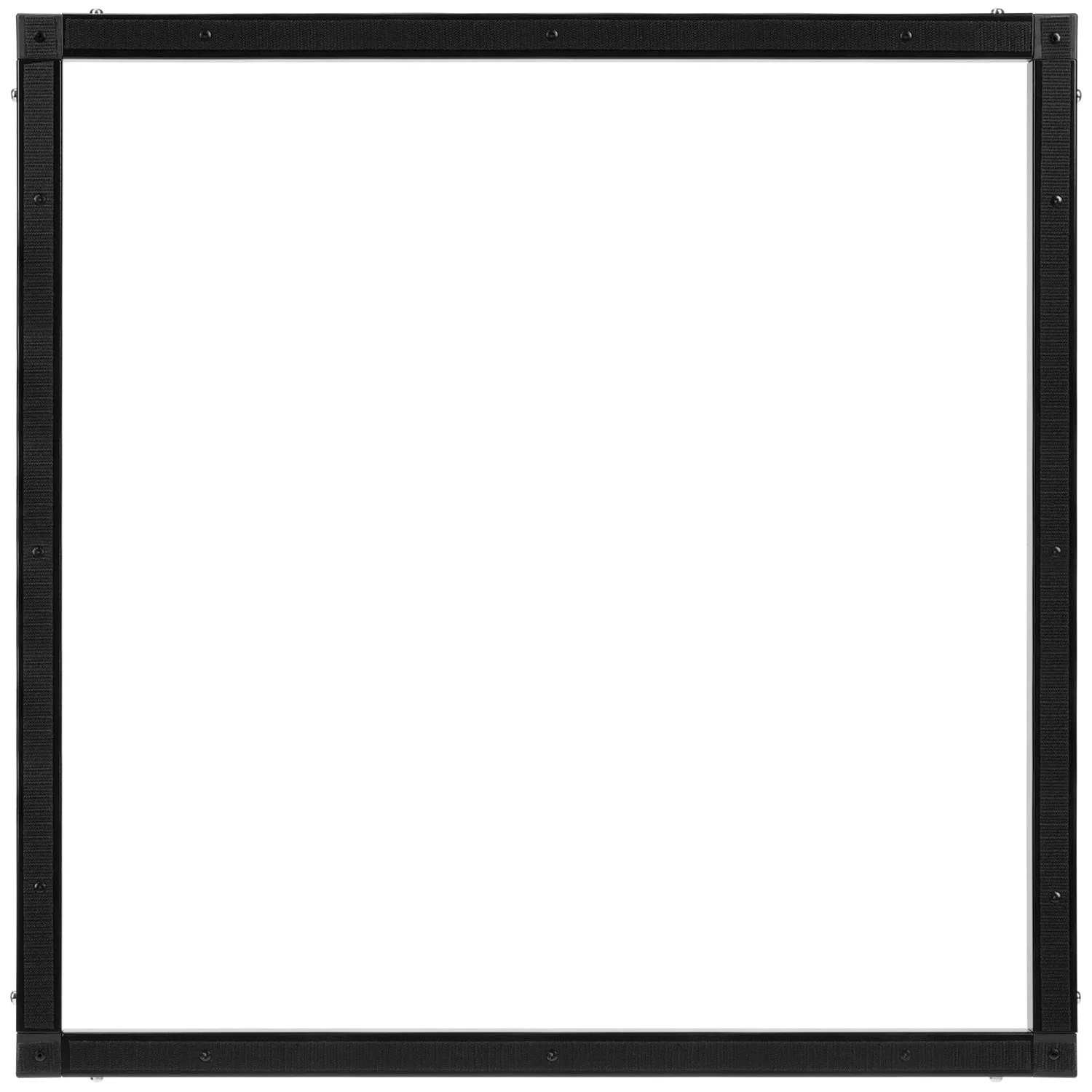
Scrim Jim Cine Frame (4' x 4'): Heavy-duty anodized aluminum frame with built-in 3/8"-16 receptacle. You can mount this 4x4 frame directly on a light stand or boom without extra adapters, saving setup time.

Scrim Jim Cine Frame (4' x 4')
-
Scrim Jim Cine Frame (8' x 8'): Riveted industrial-grade touch fastener holds diffusion fabrics securely across the full 8x8 surface. The larger frame stays taut even with heavy fabric, so you won't get sagging or uneven light falloff on wide shots.

Scrim Jim Cine Frame (8' x 8')
-
Flex Cine Frame (2' x 2'): Quickly attaches front diffusion fabric using the same riveted touch fastener system. The 2x2 Flex Cine Frame sets up in seconds for on-camera lights, making it ideal for run-and-gun video where speed matters.
Which frame fits your workflow?
Best for
- Solo interview shooters who need one versatile diffusion size (4x4)
- Studio productions with space for a large modifier and multiple subjects (8x8)
- Run-and-gun videographers who need quick on-camera diffusion (Flex Cine Frame 2x2 or 1x2)
Not ideal for
- Tight tabletop product shots where even a 4x4 is too large (choose Flex 1x2 instead)
- Outdoor shoots with wind where a large 8x8 acts like a sail (choose 4x4 or smaller)