Quick answer
Buy the design size that matches your finish first, then choose mesh count. For a framed or pillow piece, a 6 x 6 design on 18 mesh gives you detail without an overwhelming stitch count. For a faster, more forgiving project, choose a larger design or a canvas with fewer intricate color shifts. Sea life needlepoint rewards a subject you genuinely like looking at, because you will spend many hours with it.
Sea creature needlepoint canvas is one of the easiest themes to buy badly. The subject is appealing, the colors are pretty, and it is very simple to order a canvas that is too detailed, too large, or too specific to a room you may redecorate. The fix is not to overthink it, but to decide the finish before you decide the fish.
This guide gives you concrete rules for choosing ocean needlepoint designs, nautical needlepoint canvas, and beach needlepoint canvas. It also covers the trade-offs that matter most: mesh count, design size, whether thread is included, and how much hand-painted variation to expect. The goal is a coastal needlepoint project you actually complete rather than one that sits in a bag for two years.
Start with the finish, not the fish
The single most useful decision rule is to name the finished object before you shop. A framed piece, a pillow insert, a paperweight, and a bag charm all tolerate different design sizes. If you plan to frame it, a 6 x 6 design size on a 10 x 10 canvas gives you comfortable margins for stretching and blocking. If you plan a small accessory, a smaller design keeps the stitching time reasonable.
This matters because sea creature canvases often have large, sweeping shapes like fins, tentacles, or waves. Those shapes look wonderful at scale, but they can become awkward when cropped or squeezed into a small finish. Decide the finish, then let that decision filter your options.
- Write down the finished object and its approximate dimensions before you browse.
- Check the canvas size against the design size; the difference is your working margin.
- If you are unsure between two sizes, choose the smaller design for a first sea life project.
Mesh count: 18 mesh versus larger counts
Mesh count tells you how many threads per inch the canvas has. An 18 mesh canvas has finer holes, which supports more detail and smoother curves, but it also means more stitches per square inch and more demand on your eyes and lighting. A 13 mesh canvas is more open, stitches faster, and is easier to see, but it holds less fine detail.
For sea creature subjects, the choice usually comes down to how much detail the design depends on. A fish with distinct scales, a crane with feather texture, or a face with expression benefits from 18 mesh. A bold silhouette or a large single-color area is perfectly happy on a more open canvas. There is no universally better count, only a better match.
- Choose 18 mesh when the design's appeal depends on fine detail or facial expression.
- Choose a more open mesh when you want faster progress or you stitch in dim light.
- If you wear readers, test your comfort level before committing to a large 18 mesh piece.
Design size and stitch time
Design size is the stitched area, not the full canvas. A 6 x 6 design size is a genuinely different commitment from a 10 x 10 design size, even though both may arrive on similar canvas dimensions. As a rough planning rule, the stitched area grows with the square of the dimensions, so doubling the width and height roughly quadruples the work.
For a first sea creature canvas, a design in the 4 x 3 to 6 x 6 range is a sensible target. It is large enough to show real detail and small enough to finish in a reasonable number of evenings. Larger designs are rewarding, but they are better as a second or third project once you know your own stitching pace.
- Compare design size, not canvas size, when estimating how long a project will take.
- A 4 x 3 design is a good test project for a new subject or a new mesh count.
- If you have unfinished projects already, buy smaller, not larger.
Thread, kits, and what is not included
Many hand-painted canvases are sold as canvas only and do not come with thread. That is not a flaw; it is a deliberate choice that lets you match colors to your own palette, your own fiber preference, and your own stash. It does mean you should budget for thread separately and plan a shopping trip before you start stitching.
Some projects, like paperweight kits, are designed as a complete self-finishing experience, but wholesale versions may exclude threads for the same reason. Read the product description carefully for the phrase about what is included. If threads are excluded, note the recommended colors so you can kit them before you begin.
- Assume hand-painted canvases do not include thread unless the listing says otherwise.
- If a kit excludes threads, buy them at the same time as the canvas so you are not stalled.
- Match your thread weight to your mesh count; finer mesh usually wants finer thread.
Hand-painted variation and color planning
Hand-painted canvases may vary slightly from one to the next. That is part of the appeal, but it is also a planning consideration. If you are stitching two matching pieces, or if you are matching a specific paint color in a room, expect small differences and plan for them rather than being surprised by them.
For sea creature designs, variation often shows up in water, sky, or gradient areas. Those are forgiving places to have variation. Where it matters more is in a face or a signature color. If exact color matching is essential, choose a design with fewer large gradient areas or be prepared to blend your own threads to bridge the difference.
- Expect slight variation in hand-painted canvases; do not treat it as a defect.
- Photograph your canvas in daylight before buying thread so you can match accurately.
- For paired projects, buy both canvases at the same time to reduce noticeable differences.
Subject and placement: where will it live?
A coastal needlepoint project is often bought for a specific room, and that should influence the subject. A red-crowned crane or a French bulldog in a bougie style reads differently in a nursery than in a hallway. Ocean needlepoint designs with blues, teals, and neutrals are versatile, while bright tropical subjects make a stronger statement.
Think about the wall, the light, and the frame or finish. A dark hallway benefits from a lighter, higher-contrast design. A bright sunroom can handle more saturated color. If you are stitching a gift, choose a subject the recipient already talks about rather than a generic nautical motif.
- Match the design's dominant colors to the room's existing palette.
- Choose a subject with personal meaning if the piece is a gift.
- Consider the frame or finish color before you commit to the canvas palette.
Decision rules for buying a sea creature canvas
- Rule 1: Finish first: Name the finished object and its approximate size before you look at designs. A 4 x 3 design suits small finishes; a 6 x 6 design suits framing or a pillow. If you cannot name the finish, you are not ready to buy.
- Rule 2: Detail follows mesh: Choose 18 mesh when the design depends on fine detail, faces, or gradients. Choose a more open mesh when speed and visibility matter more than precision. Match mesh to the detail the design actually needs, not to prestige.
- Rule 3: Budget for thread separately: Hand-painted canvases typically do not include thread. If a kit excludes threads, buy the recommended colors at the same time so you are not stalled mid-project. Canvas price is not total project cost.
- Rule 4: Expect hand-painted variation: Slight variation between canvases is normal. Plan for it in gradient areas, and buy paired canvases together if you need them to match. Variation is a feature to plan around, not a defect to return.
- Rule 5: Buy the subject you will still like in month two: Sea life needlepoint takes many hours. Choose a subject with personal meaning or a color palette that fits the room where it will live. Enthusiasm for the subject is the best predictor of finishing.
Product facts to compare
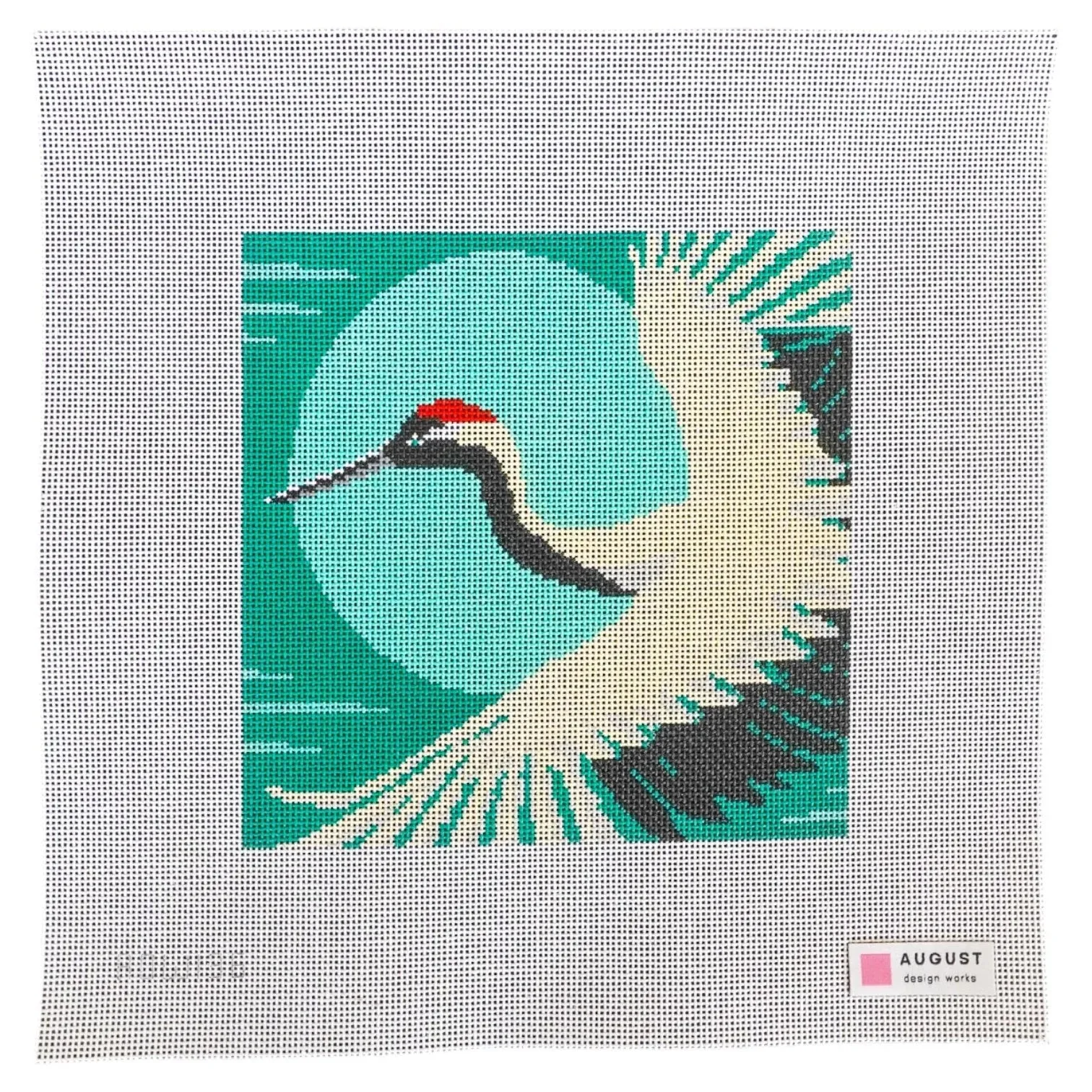
- Red-Crowned Crane - Needlepoint Canvas (Wholesale): 10 x 10 canvas size, 6 x 6 design size, 18 mesh. Hand-painted, and canvases do not come with thread. The 6 x 6 design size is a practical middle ground for a framed piece, and 18 mesh supports the feather detail. Because thread is not included, budget for it separately and match colors in daylight.
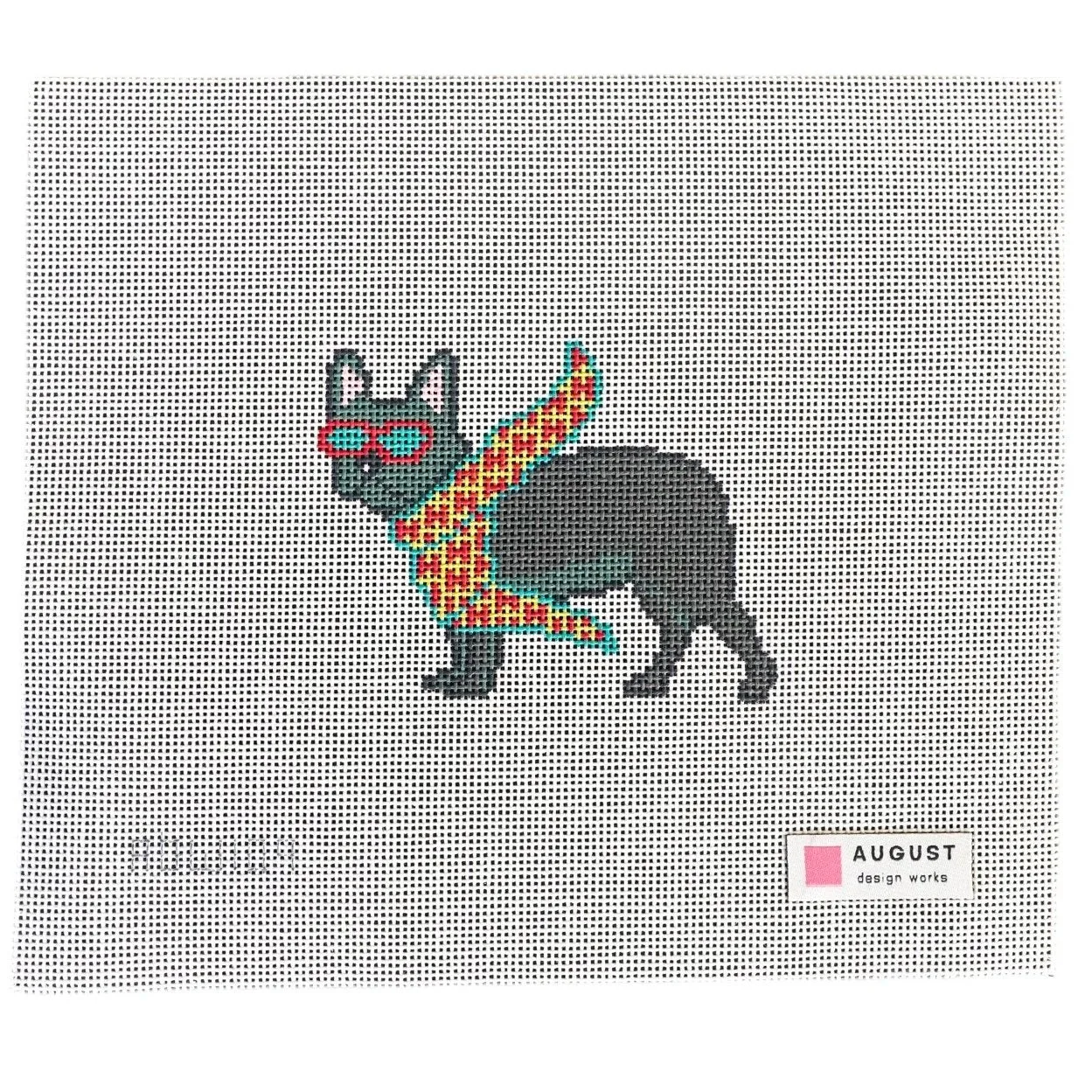
- https://augustdesignwork.com/products/bougie-french-bulldog-wholesale-c069e31bcdcdea5e06370aaa-1481525Bougie French Bulldog - Needlepoint Canvas (Wholesale): 8 x 7 canvas size, 4 x 3 design size, 18 mesh. Hand-painted, and canvases do not come with thread. The 4 x 3 design size makes this a faster, lower-commitment project, and the smaller stitched area suits a paperweight, ornament, or small framed finish. The 18 mesh still allows facial detail.
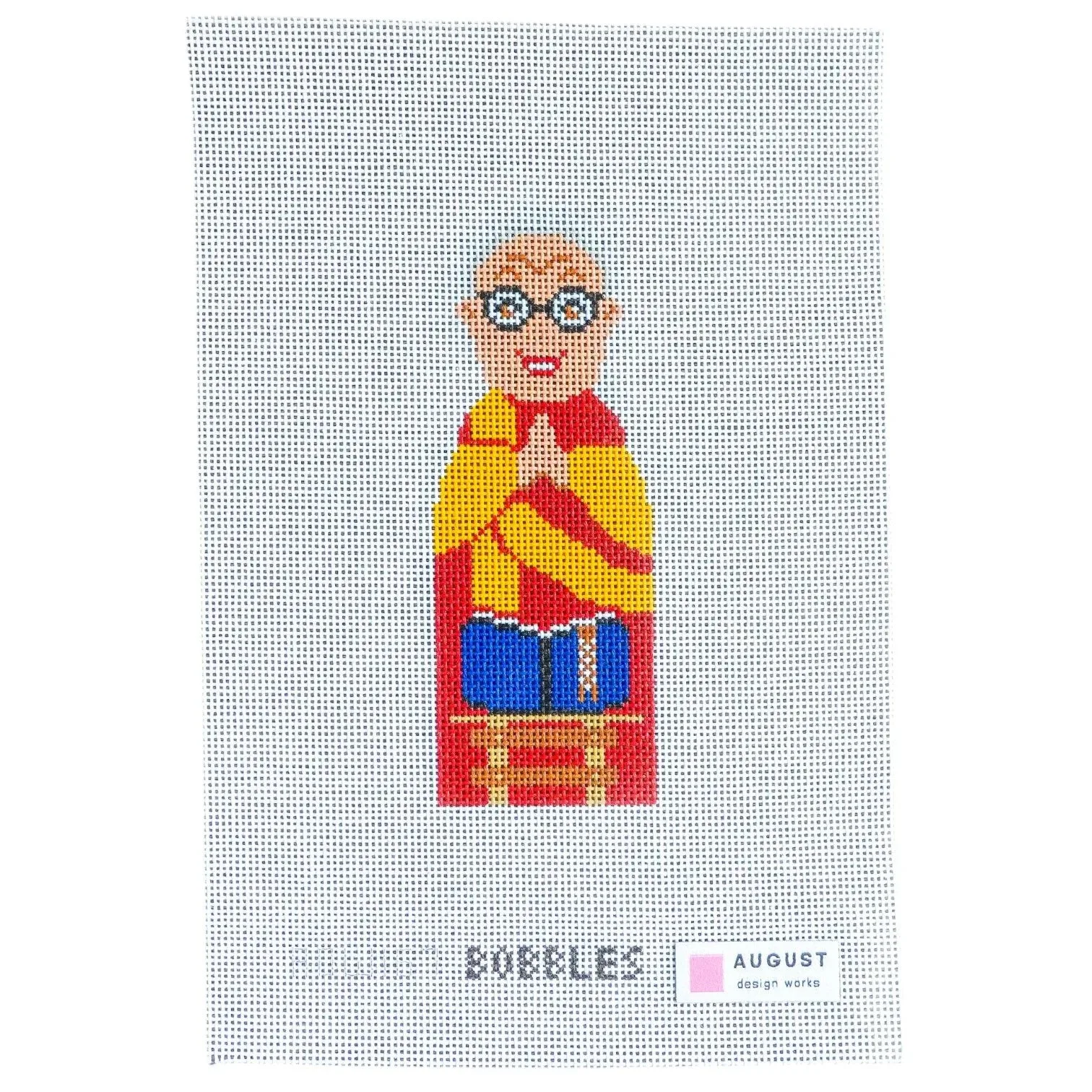
- https://augustdesignwork.com/products/dalai-lama-bobble-wholesale-4488c7b62067c5e6e3d341a8-1481534Dalai Lama Bobble - Needlepoint Canvas (Wholesale): Part of the Bobbles Series of hand-painted canvases designed to be stitched, displayed, and collected. 18 mesh. A collectible series is a good fit if you like stitching a set over time. The 18 mesh supports portrait detail, and the display-and-collect framing means you can plan a consistent finish across several pieces.
- Banksy Bobble - Needlepoint Canvas: Part of the Bobbles Series of hand-painted canvases designed to be stitched, displayed, and collected. 18 mesh. If you prefer a graphic, high-contrast subject over a naturalistic sea creature, this shows the same 18 mesh detail level applied to a stencil-inspired design. Useful as a comparison point when deciding how much detail you want.
Who this approach suits
Best for
- Stitchers who want a coastal needlepoint project with a clear finish in mind
- Gift makers choosing a sea life or nautical subject for a specific person or room
- Stitchers comfortable buying canvas and thread separately
Not for
- Stitchers who want a single all-inclusive kit with thread and finishing supplies in one purchase
- Anyone looking for a very large, multi-month canvas as a first project
- Buyers who need exact, repeatable color matching across multiple canvases
Pick the finish, then the design size, then the mesh count, and treat thread as a separate purchase. That order prevents most sea creature needlepoint regrets. If you are new to the theme, start with a 4 x 3 to 6 x 6 design on 18 mesh, buy your threads in daylight, and choose a subject you will still enjoy looking at when the last stitch goes in.