Quick answer
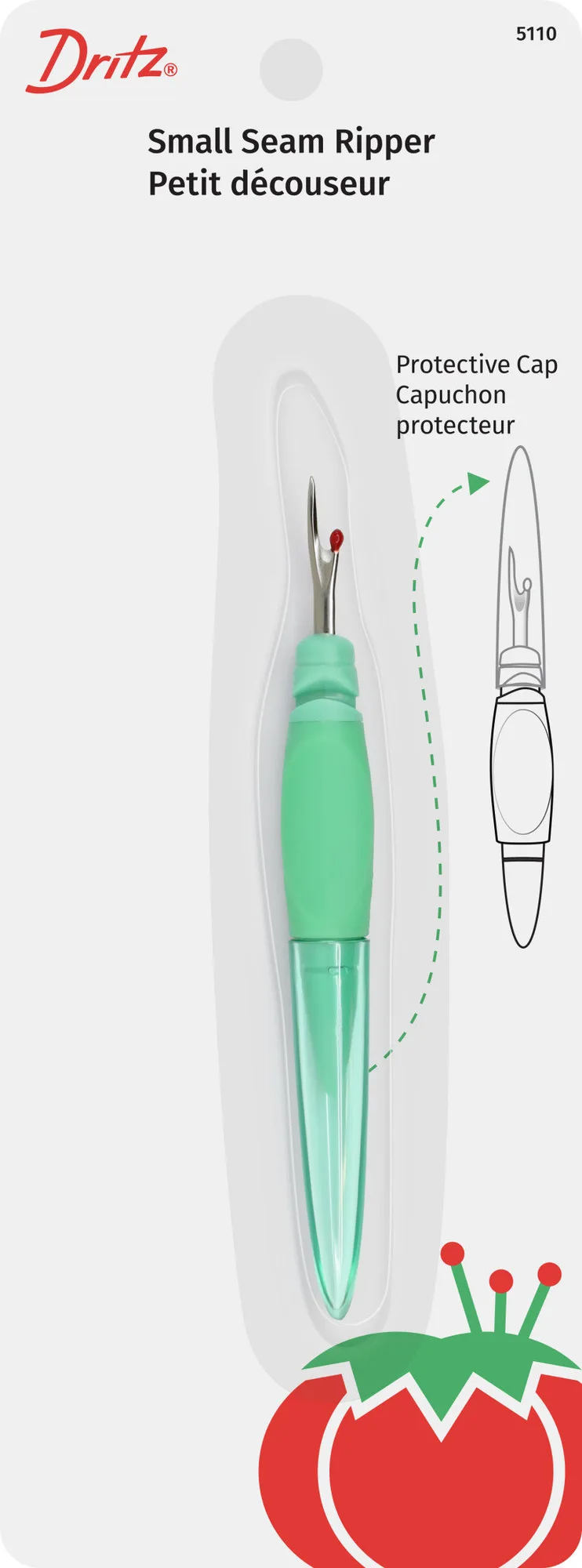
The Dritz Double-Sided Seam-Fix removes stitches faster in most situations because its two blades let you switch between delicate and dense fabrics without changing tools, and its rubber tips grab loose threads so you can clear a seam in one pass. A standard https://prymamerica.com/products/dritznotseamripg-566a7bfbd0dff8b9402472aa-1316001seam ripper is still the better pick for tight curves, tiny buttonholes, and anyone who prefers a single, familiar blade.
How each tool actually removes a stitch
A standard seam ripper has one small blade and a pointed tip. You slide the tip under a stitch, push forward, and the blade cuts that stitch; you repeat along the seam. It works, but on dense fabric you may need two or three passes to break heavier thread, and you often stop to pick out cut threads with your fingers or a pin.
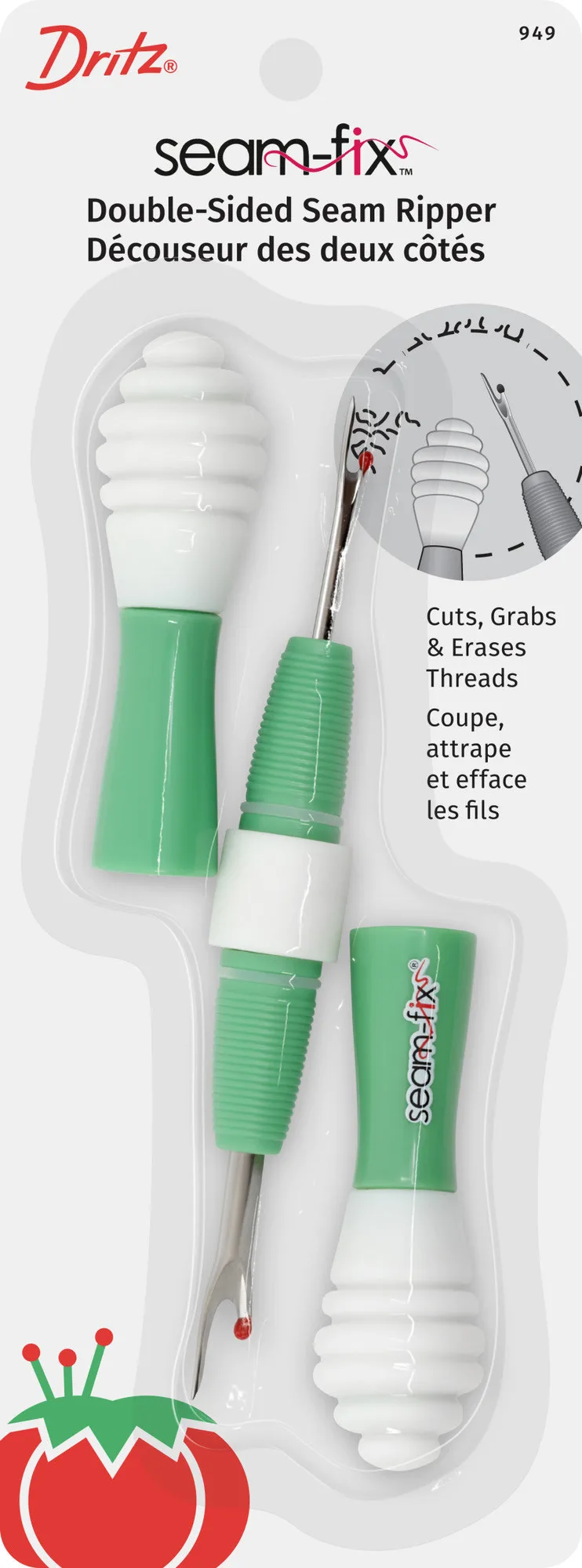
The Dritz Double-Sided Seam-Fix changes that routine. The tool has a small fine blade on one end and a heavy-duty blade on the other, so you can start with the fine blade on lightweight fabric and flip to the heavy blade for denim, canvas, or upholstery. The rubbery tips on the ends lift and remove stray threads after cutting, which means fewer interruptions and less time spent hunting for loose bits.
Where the Seam-Fix pulls ahead
The speed advantage shows up on long, straight seams and on mixed-weight projects. Instead of switching between two separate tools, you keep one in your hand and change ends. The rubber tips also help on serged or overlocked edges, where cut threads tend to cling to the fabric. If you unpick a lot of seams, that saved motion adds up.
The trade-off is bulk. The Seam-Fix is larger than a standard seam ripper, so it can feel clumsy inside a narrow sleeve, a small collar, or a buttonhole. Those jobs still favor a slim, single-blade ripper that you can angle precisely.
What to check before you buy either one
Look at the fabrics you unpick most. If you sew mostly quilting cotton, garment lining, or lightweight knits, a standard seam ripper is enough. If you also work with denim, home decor fabric, or bags, the heavy-duty blade on the Seam-Fix earns its place. The Seam-Fix also includes a small blade, so you are not giving up fine work entirely.
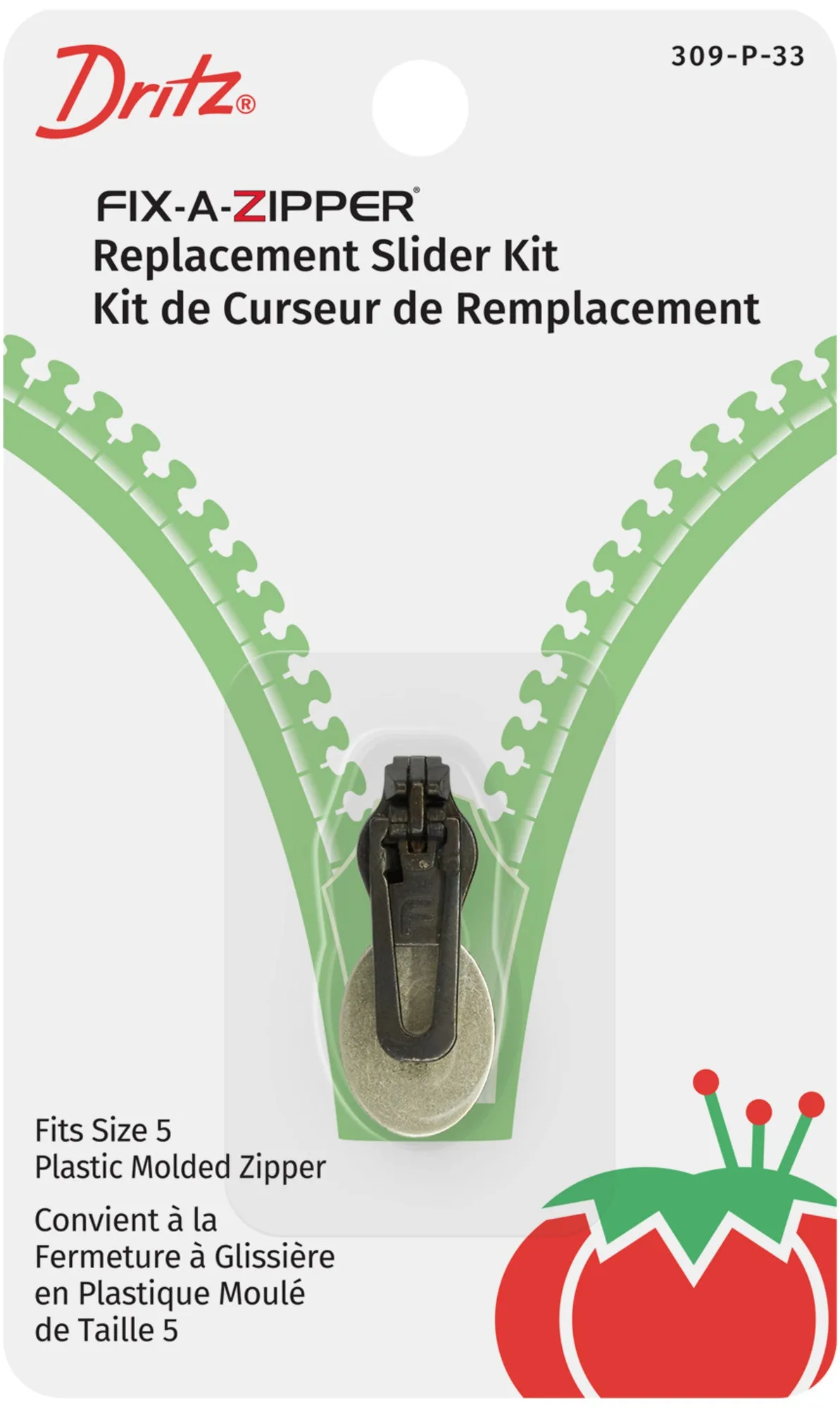
Replacement parts matter, too. The Dritz Fix-A-Zipper Replacement Slider Kit solves a different repair problem: it replaces a broken Size 5 plastic molded zipper slider without replacing the whole zipper. That is a separate tool from a seam ripper, but it belongs in the same repair kit if you fix jackets, coats, sleeping bags, tents, purses, duffle bags, or luggage. Keeping both on hand means you can handle a cut seam and a failed zipper in one sitting.
Trade-offs at a glance
- Speed on long seams: The Seam-Fix wins because you can switch blades and grab threads with the rubber tips in one motion. Choose the Seam-Fix if you unpick long straight seams often.
- Control in tight spots: A standard seam ripper is slimmer and easier to angle inside buttonholes, collars, and narrow sleeves. Keep a standard ripper for fine, close work even if you own a Seam-Fix.
- Fabric range: The Seam-Fix covers lightweight to heavy fabric with its two blades; a standard ripper usually has one blade size. Match the blade to the fabric, and test on a scrap if you are unsure.
Product facts
- Seam-Fix Double-Sided Seam Ripper: The Dritz Double-Sided Seam-Fix is a three-in-one tool with a small fine blade, a heavy-duty blade, and special rubbery tips for removing threads. One tool covers delicate to dense fabrics and lets you lift cut threads without reaching for a pin, which speeds up unpicking seams.
- Plastic Molded Fix-A-Zipper Replacement Slider Kit: The Dritz Fix-A-Zipper Replacement Slider Kit replaces a broken Size 5 plastic molded zipper slider without replacing the entire zipper, and it includes a tool to help install the new slider. If your repair pile includes jackets, coats, sleeping bags, tents, purses, duffle bags, or luggage, this kit saves you from ripping out the whole zipper.
Which should you choose?
Best for
- Sewists who unpick seams on a mix of light and heavy fabrics
- Quilters and bag makers who want one tool for cutting and thread removal
- Anyone who wants fewer hand swaps and faster cleanup
Not for
- People who only unpick lightweight fabric and prefer a slim, single-blade tool
- Very tight spots like buttonholes or doll clothes, where a standard seam ripper gives more control
- Anyone who needs a zipper repair tool instead; see the Fix-A-Zipper kit for that job