Quick answer
A crash-safe dog seat belt must either attach to your vehicle's seat belt buckle or integrate with a crash-tested harness. The Mightypaw Seat Belt for Buckle is a simple, affordable option that limits movement and reduces distractions, but for full crash protection you need a harness rated for impact. Choose based on your dog's size, car setup, and whether you prioritize convenience or maximum safety.
Buckle-based vs harness-based restraints
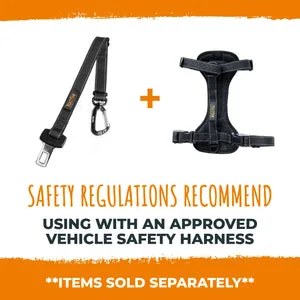
Buckle-based restraints, like the Mightypaw Seat Belt for Buckle, clip directly into your car's existing seat belt receiver. They keep your dog seated and prevent roaming, which reduces driver distraction. However, most buckle-only tethers are not tested for crash forces — they are designed for motion restriction, not impact protection.
Harness-based systems use a body-supporting vest that attaches to the car's seat belt or LATCH anchors. A crash-tested harness spreads impact forces across the chest and shoulders, reducing the risk of neck or spine injury. The trade-off is cost and setup time: you need to fit the harness correctly every ride.
What to look for in a crash-safe design
Look for products that mention crash testing to a recognized standard (such as FMVSS 213 or similar). The restraint should have a secure attachment point that does not rely on a thin carabiner or flimsy clip. Also check that the tether length is short enough to prevent your dog from reaching the front seats or sticking their head out the window — a common risk during sudden stops.
For buckle-based designs, verify that the buckle connector is compatible with your vehicle's seat belt receiver. Some universal models may not click in firmly in all cars. If you drive a newer model, test the fit before relying on it for daily use.
Fit and sizing considerations
A proper fit is essential for both comfort and safety. The restraint should allow your dog to sit, lie down, and stand naturally, but not move more than a few inches side to side. For harness-based systems, measure your dog's chest girth and neck circumference, and follow the manufacturer's size chart exactly. A loose harness can slip off in a collision, while a too-tight one can chafe or restrict breathing.
For buckle-based tethers like the Mightypaw Seat Belt for Buckle, the main fit variable is the tether length. Most come in a fixed length, so check that it is not too long for your back seat. If you have a small dog, a shorter tether prevents them from falling off the seat during turns.
Decision rules for choosing a dog seat belt
- Trip length and speed: For short, low-speed trips (under 15 minutes, local roads), a buckle-based restraint is sufficient. For highway or long drives, choose a crash-tested harness. Match restraint type to driving conditions.
- Dog size and behavior: Small dogs under 15 lb may be safer in a crash-tested harness that prevents them from sliding under the seat. Large, excitable dogs need a harness that clips to the seat belt path, not just a buckle tether. Size and energy level affect safety.
- Vehicle compatibility: Test the buckle connector in your car's receiver before buying. Some universal models do not lock securely in all vehicles. If in doubt, choose a harness that uses the seat belt itself. Check fit before relying on it.
Products that fit this guide
- Seat Belt For Buckle: Designed to attach to your vehicle's existing seat belt buckle, this simple restraint helps limit your dog's movement while traveling, promoting safer journeys for both of you. It is a quick, no-fuss solution for reducing driver distraction — ideal for calm dogs on short trips where full crash protection is not the priority.
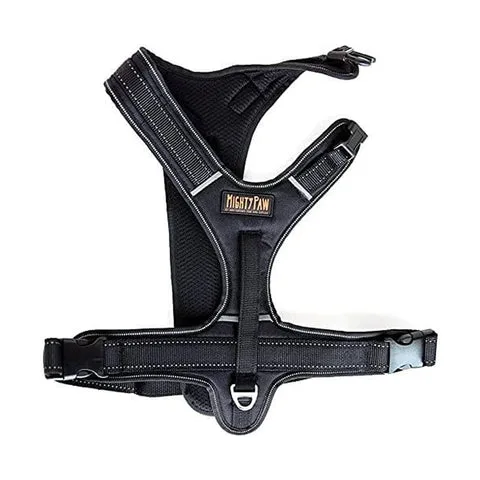
- Sport Dog Harness: Constructed with premium weather-proof materials and a neck buckle for secure, comfortable car rides. A harness distributes force more evenly than a collar or buckle tether, making it a better choice for dogs that pull or for longer highway drives.
Which restraint is right for your dog?
Best for
- Calm dogs that stay seated during short trips around town
- Owners who want a simple, low-cost way to reduce driver distraction
Not for
- Dogs that need full crash protection on highways or long journeys
- Strong pullers or dogs that try to climb into the front seat