Quick answer
Judge pre-owned designer pants by the numbers, not the label. Compare the listed waist and inseam against pants you already own, then check the hem, crotch, and dye for wear. If the measurements are missing or the hem is frayed, skip it. If the numbers fit and the fabric is sound, buy.
Secondhand designer pants live or die on two things: exact measurements and honest condition. A size tag tells you almost nothing once a garment has been worn, washed, or tailored, which is why a pre owned bootcut pants checklist starts with a tape measure rather than a brand name.
This guide walks through what to verify before you check out, from waist and inseam numbers to hem rub, dye fading, and how bootcut and straight legs actually sit on your frame. Two real listings from the current catalog show how to read the details.
Start with measurements, not the size tag
Waist and inseam are the only numbers that decide whether a pair of pants works. Measure a pair you already like, flat, from side seam to side seam at the waistband, then double it. Compare that to the listing. Inseam runs from the crotch seam to the hem. If a listing shows only a tag size, treat it as unverified.
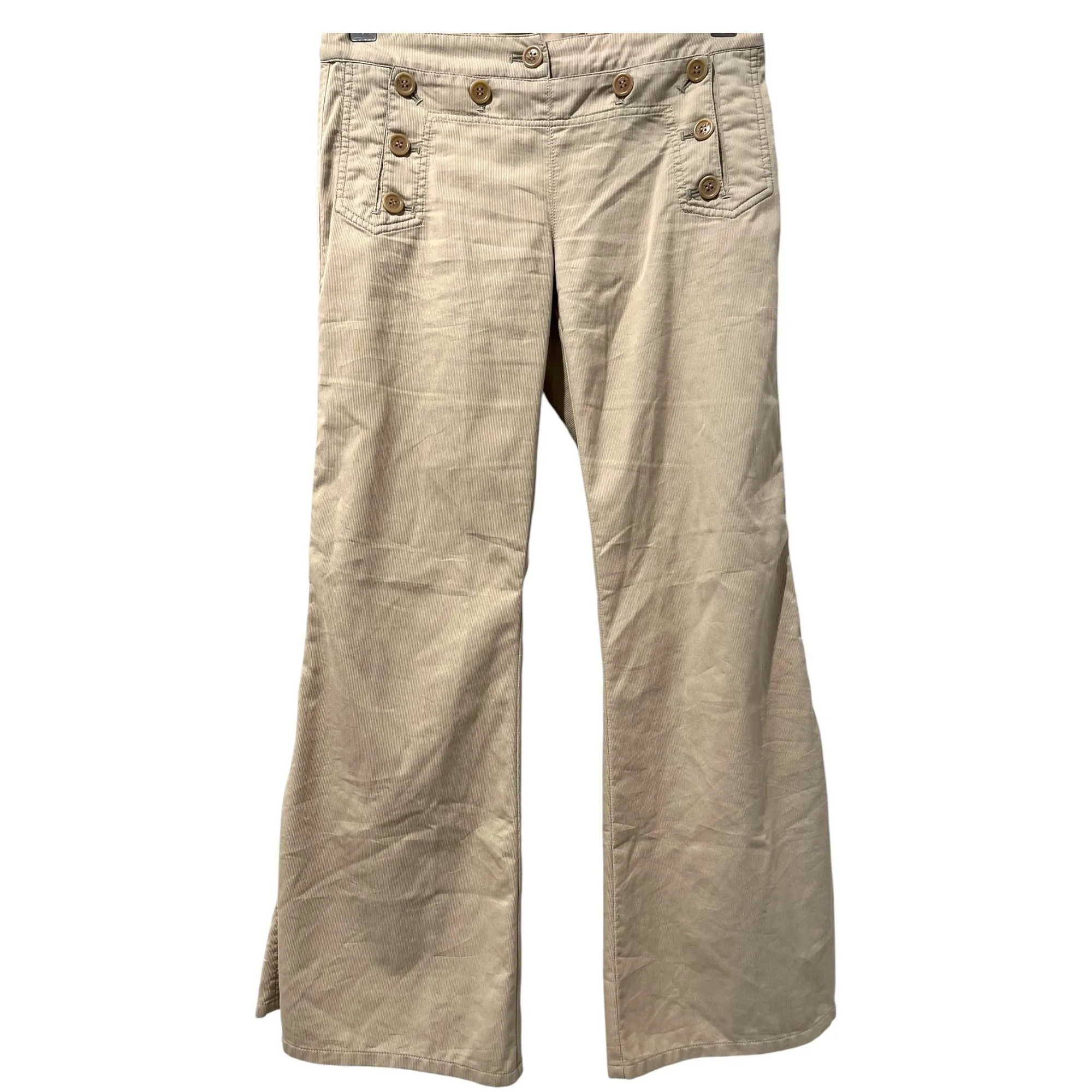
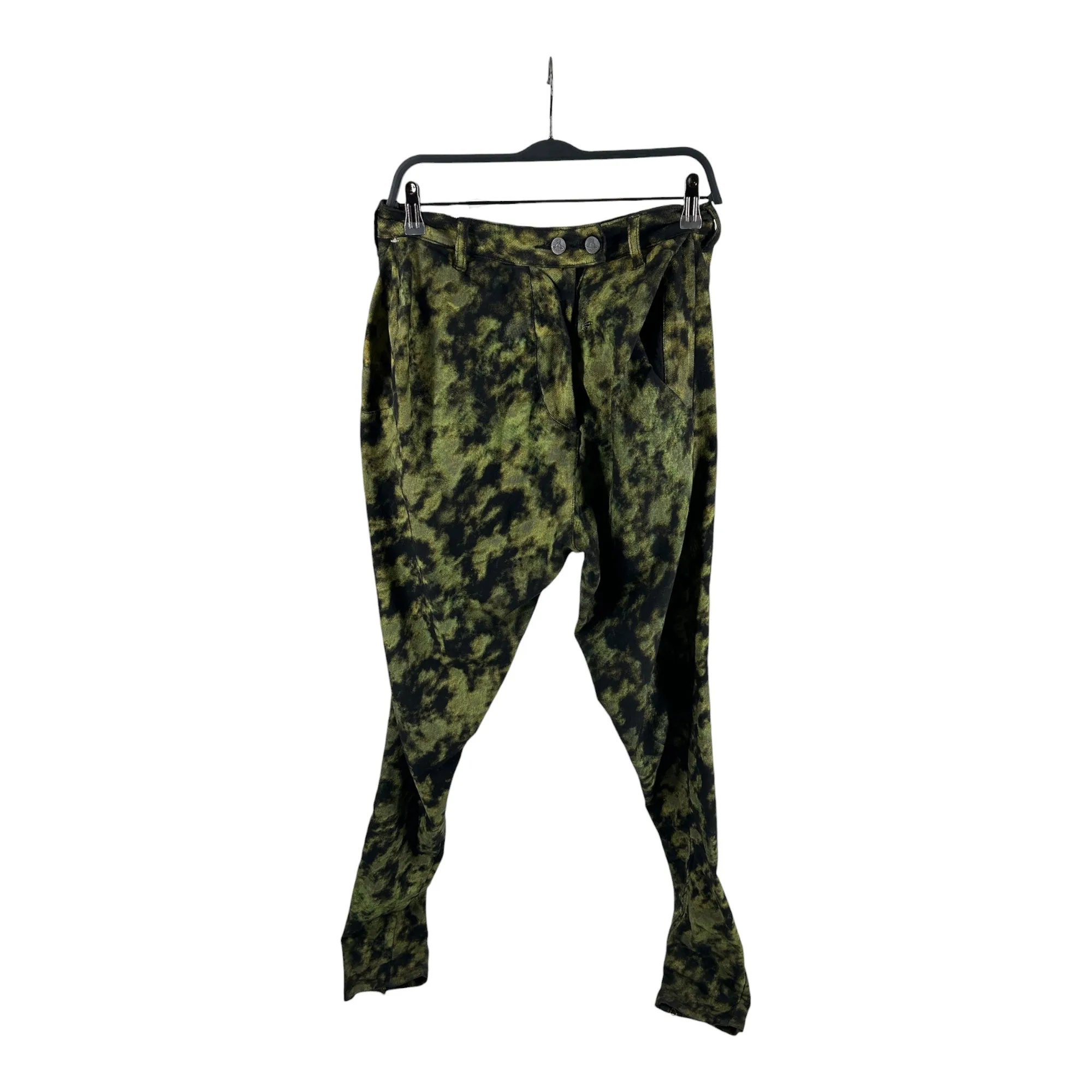
This is where used straight pants inspection tips pay off. A 28-inch waist and 38-inch inseam, like the Vivienne Westwood/Lee straight pants in the catalog, describes a long, lean cut. A 30-inch waist with a 28.5-inch inseam, like the Jean Paul Gaultier flared naval pants, sits very differently. Same category, opposite proportions.
- Measure your best-fitting pair flat, then double the waist number.
- If inseam is missing, assume the pants may be too short or too long.
- Check whether the waistband has stretch or was altered.
Inspect the hem, crotch, and dye
The hem is the first place pants wear out. Drag on the ground frays the back edge; repeated washing fades the color there first. On dark or printed pants, look for a lighter band along the hem and inner thigh. Even, intentional fading is fine. Patchy, uneven fading usually means the fabric is thinning.
The crotch and seat take the second hit. Check for shine, thinning, or repairs. On cotton and denim, small repairs are normal and often invisible when worn. On structured wool, any repair in the seat is a hard pass. For a secondhand designer pants buying guide, condition notes like "Good" or "Used_Good" are a starting point, not a guarantee.
- Look for a lighter band along the hem and inner thigh.
- Check the crotch seam for thinning or shine.
- Ask for extra photos of any repair before buying.
Bootcut vs straight: how each should fit
Bootcut pants flare slightly from the knee down, which balances wider hips and works over boots or chunky shoes. Straight pants fall in a clean line from hip to hem and read sharper with loafers or slim sneakers. Neither is better, but the wrong one for your frame or shoes will sit in the closet.
The Vivienne Westwood/Lee straight pants, in cotton with an all-over print, suit someone who wants a graphic, casual look and has the leg length for a 38-inch inseam. The Jean Paul Gaultier flared naval pants, also cotton, have a 28.5-inch inseam and a flared leg, which flatters shorter frames and pairs well with heeled boots.
- Bootcut: balances wider hips, needs shoe volume at the hem.
- Straight: sharpest with loafers or slim sneakers.
- Long inseams need heels or a hem; short inseams need flats or boots.
Fabric, care, and what the label hides
Cotton wrinkles and fades but breathes and takes a repair well. Wool holds shape and resists odor but can pill and shrink if washed wrong. Denim is the most forgiving secondhand buy because fading and whiskering are part of the look. If the listing does not state the material, ask before you commit.
Care history matters more than the fiber. Pants washed hot and dried on high may have shrunk or lost their finish. Pants dry-cleaned only tend to hold their original cut. When buying secondhand denim pants, expect some fading; when buying wool, expect none.
- Cotton: fades and wrinkles, repairable.
- Wool: holds shape, pills, shrinks if washed wrong.
- Denim: fading is normal and often desirable.
Decision rules for buying pre-owned designer pants
- Measurements listed: Both waist and inseam are stated and match a pair you own within one inch. Buy with confidence.
- Hem condition: Hem is intact with no fraying, thinning, or uneven fading. Proceed; if frayed, skip or budget for a hem repair.
- Dye and fabric: Color is even across the legs and the fabric feels sound at the crotch. Good sign; patchy fading is a pass.
- Missing details: No measurements, no material, or no clear photos of the hem and crotch. Ask for more information before buying.
Catalog details that matter
- Vivienne Westwood/Lee/Straight Pants/28/Cotton/GRN/All Over Print/TIEDYE(?0: Waist 28 inches, inseam 38 inches, cotton, green, all-over print, condition Good. A long 38-inch inseam means these straight pants need heels or a hem; the all-over print hides minor fading better than a solid color.
- Jean Paul Gaultier/Bottoms/40/Cotton/CRM/FLARED NAVAL PANTS: Waist 30 inches, inseam 28.5 inches, cotton, cream, flared, condition Used_Good. The shorter inseam and flare suit petite frames and boots; cream cotton shows stains and fading, so inspect the hem closely.
Who these pants suit
Best for
- Shoppers who know their waist and inseam numbers and want a specific cut.
- Buyers comfortable with minor fading or a hem adjustment on cotton or denim.
- Anyone pairing bootcut or straight pants with boots, loafers, or slim sneakers.
Not for
- Shoppers who rely on tag sizes alone and cannot measure a pair at home.
- Buyers who want a flawless, unworn finish with no fading or repairs.
- Anyone unwilling to ask for extra photos before checkout.
Secondhand designer pants reward patience. Get the waist and inseam numbers, check the hem and crotch, and match the cut to your shoes and frame. Do that, and a pre-owned pair will outlast most new ones.