Quick Answer
Self-finishing needlepoint uses a pre-made backing with adhesive or a built-in frame, so you stitch the canvas and attach it yourself without sewing. Traditional finishing means sending your stitched canvas to a professional finisher who cuts, sews, and assembles the piece. Choose self-finishing for speed, lower cost, and control; choose traditional finishing for heirloom-quality edges, complex shapes, and a polished result you cannot easily replicate at home.
You have just put the last stitch in your canvas. Now you face a choice: finish it yourself with a self-finishing kit or send it to a professional finisher. Both methods turn needlepoint into something usable, but they differ in time, cost, skill, and the final look. This comparison breaks down the trade-offs using real kit examples so you can pick the right path for your project.
Self-finishing needlepoint has grown popular because it removes the intimidating parts of finishing: measuring, cutting, and sewing. Traditional finishing still dominates for ornaments, pillows, and belts that need a crisp edge or a specific shape. The right answer depends on your project, your deadline, and how much control you want over the final result.
What Self-Finishing Needlepoint Actually Involves
Self-finishing means the kit includes a pre-made form, such as a leather luggage tag with an adhesive front, or a shaped ornament backing. You stitch the canvas, then follow the included instructions to attach it. No sewing machine, no hand-sewing a backing, and no waiting for a finisher. The Luggage Tag Needlepoint Kit | Blue | Bon Voyage is a clear example: it includes a blue leather luggage tag with 3M adhesive front and a color-printed 18-hole canvas with a 3" x 2.25" design. You stitch the Bon Voyage design, then use the QR code instructions to self-finish.
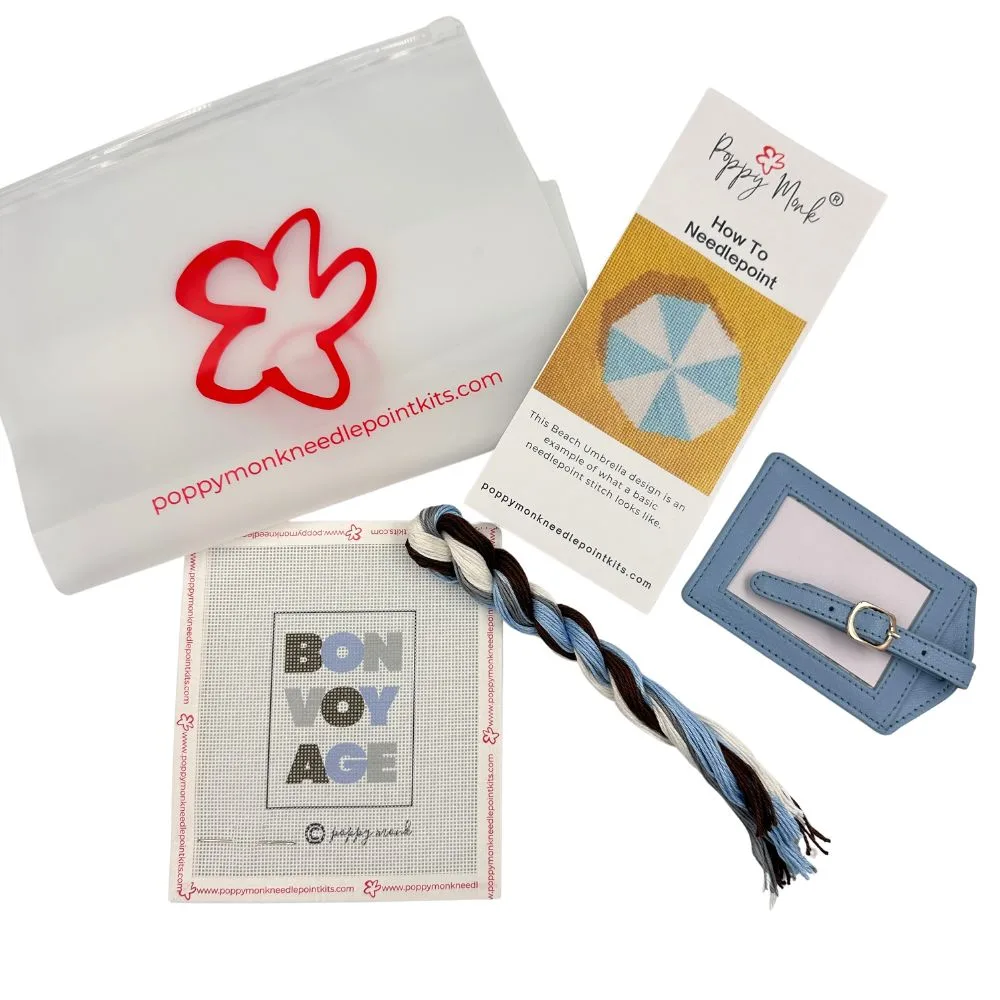
Luggage Tag Needlepoint Kit | Blue | Bon Voyage
The trade-off is that self-finishing limits your shape and edge options. You are working with the form provided, so the final piece looks like the manufacturer intended, not a custom creation. For many stitchers, that is exactly the point: a predictable, quick result with no sewing skills required.
- Self-finishing kits are ideal when you want a usable item without learning finishing techniques.
- Check whether the kit includes adhesive, backing, or a frame before you buy.
What Traditional Finishing Adds
Traditional finishing hands your stitched canvas to a professional who cuts, blocks, sews, and assembles the piece. This is how you get a knife-edge pillow, a flat ornament with twisted cord, or a belt with leather ends. The finisher can accommodate almost any shape and can add lining, piping, or a specific backing fabric. The result is usually more durable and more polished than a self-finishing kit, especially for pieces meant to be handled often.
The trade-offs are cost, time, and loss of control. Professional finishing can cost more than the kit itself, takes weeks or longer, and requires you to trust someone else with your stitching. If you enjoy the finishing process or want a specific look, traditional finishing is worth it. If you want a finished object this weekend, it is not.
- Traditional finishing is best for heirloom pieces, complex shapes, and gifts that need a professional edge.
- Ask your finisher for a timeline and a quote before you commit.
How to Choose Based on Your Canvas and Deadline
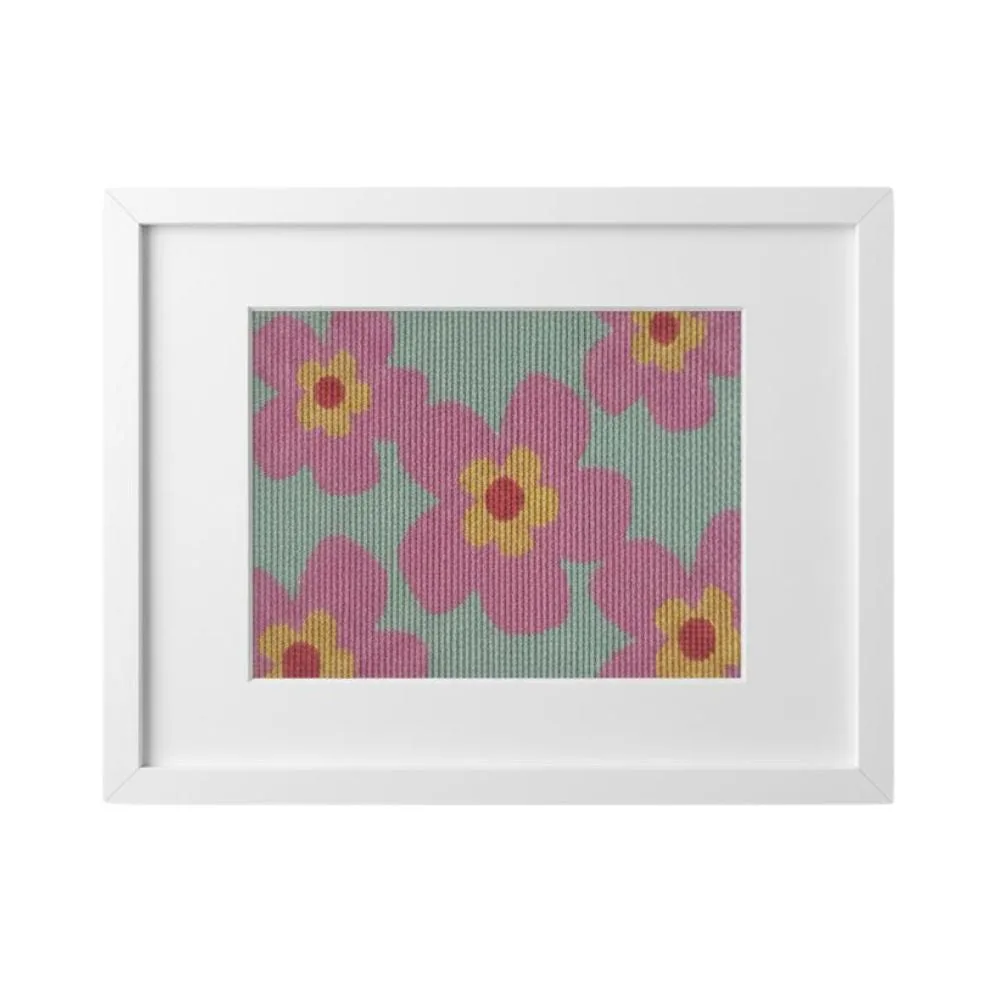
Start with the canvas itself. A small, round design like the Nutcracker Needlepoint Round CANVAS ONLY (4" diameter on 18-mesh, taped edges, needle included, threads not included) can be self-finished into an ornament with a purchased backing or finished traditionally with a sewn edge. A rectangular design like the Stash Buster | Pink Floral Frenzy Needlepoint CANVAS ONLY (4.5" x 3.5" on 18-mesh, taped edges, needle and project bag included) fits a self-finishing flat ornament or a small pillow. The shape and size guide what is possible.
Next, consider your deadline and skill level. If you need a gift in two weeks and do not sew, self-finishing is the practical choice. If you have months and want a keepsake, traditional finishing gives you a better result. There is no single right answer, only the one that matches your project.
- Measure your stitched design area before ordering any finishing supplies.
- If you are unsure, stitch a small test piece and try self-finishing first.
Cost and Time Compared
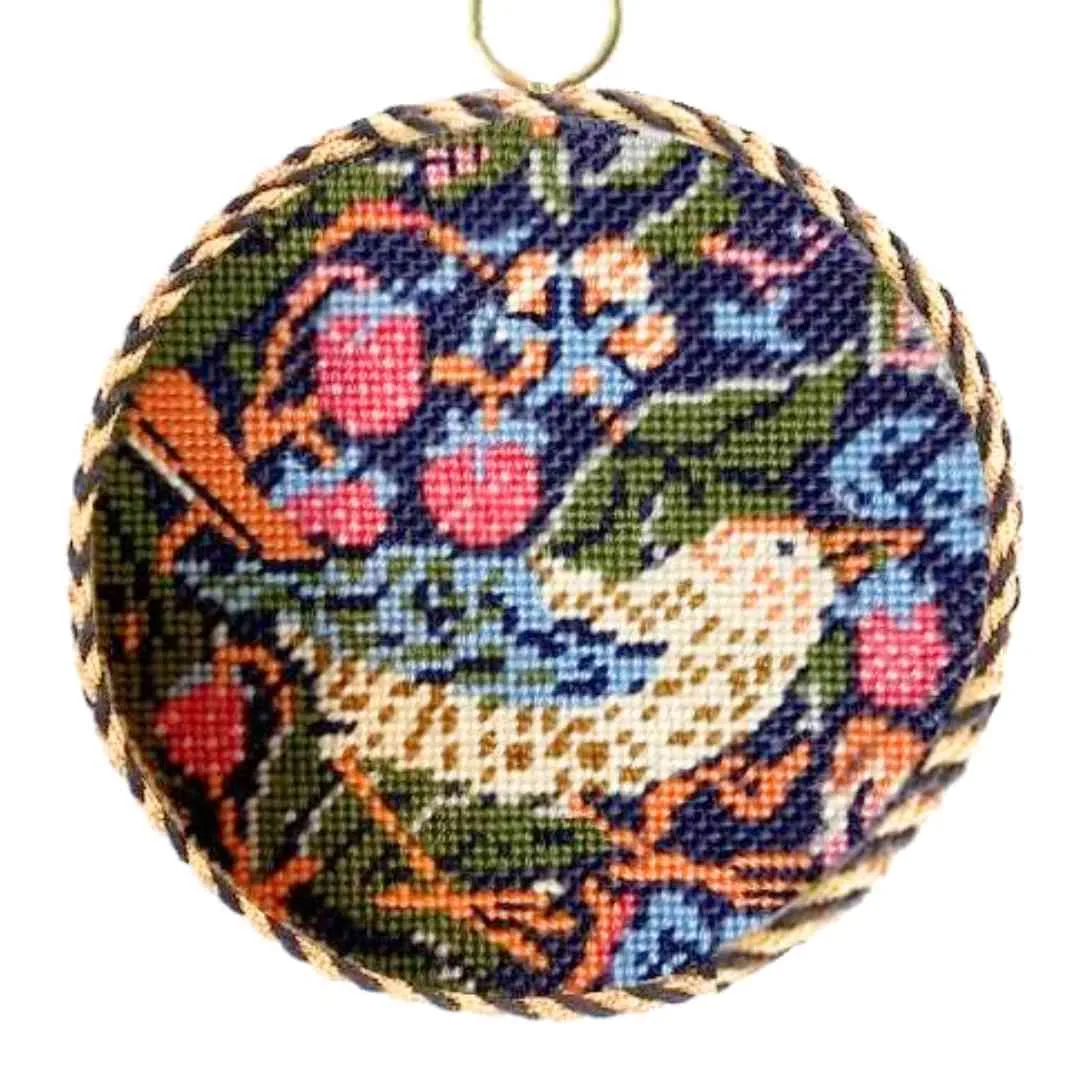
Self-finishing kits usually cost less than professional finishing because the finishing labor is built into the kit price and you supply the time. For example, the Strawberry Thief Needlepoint Ornament Kit includes a 4" diameter design on 18-mesh mono canvas and a luxury thread palette, and it is designed as a self-contained project. You still need to finish it, but the kit gives you the canvas and threads; the finishing method is up to you. Traditional finishing adds a separate labor charge, which can range widely depending on the finisher and the complexity.
Time is the other trade-off. Self-finishing can be done in an evening once the stitching is complete. Traditional finishing adds shipping time, queue time at the finisher, and return shipping. If your project is a gift, factor in those weeks. If it is for yourself, the slower path may be fine.
- Self-finishing total time: stitching time plus one evening of assembly.
- Traditional finishing total time: stitching time plus several weeks for professional service.
When a Kit Already Includes Finishing Supplies
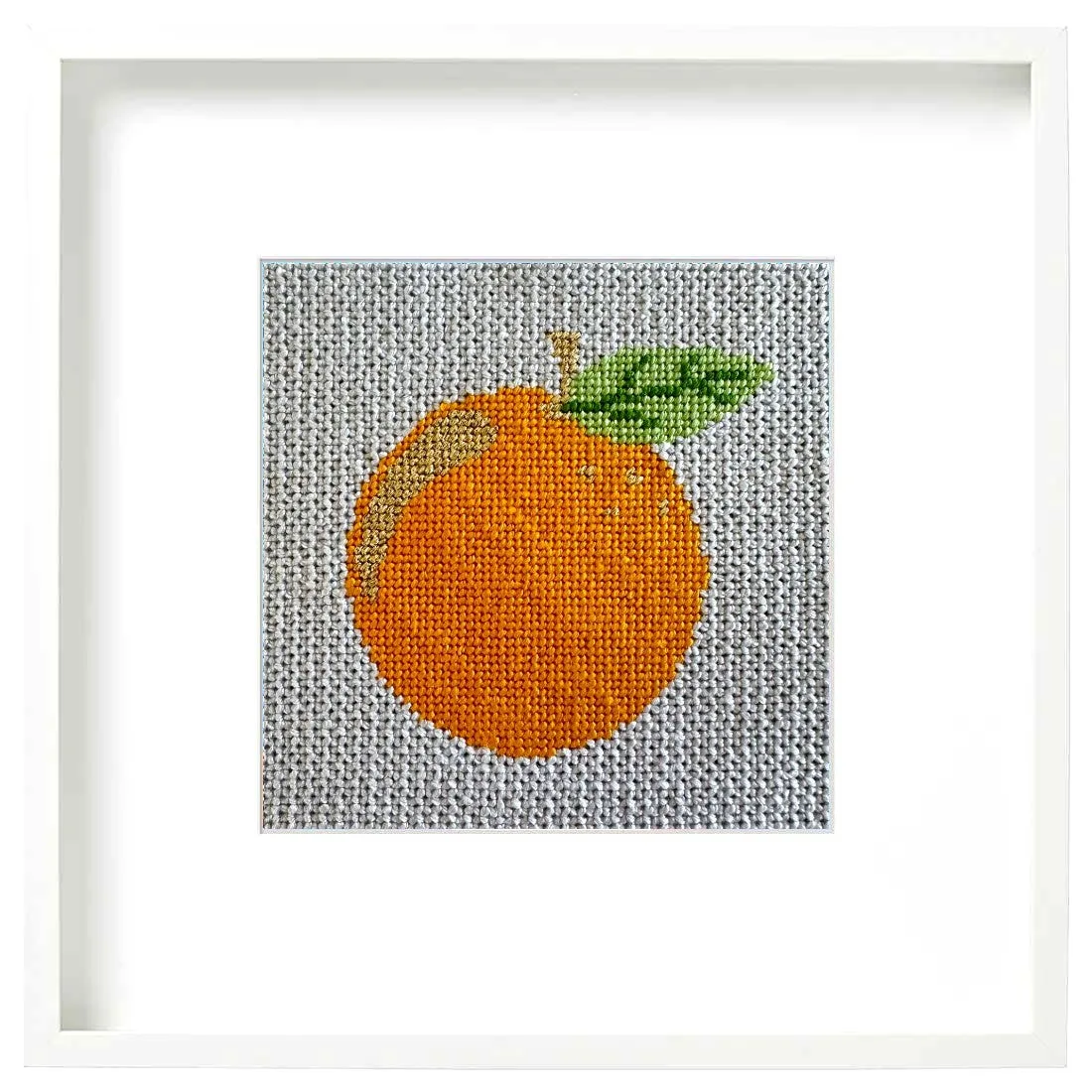
Some kits blur the line by including finishing materials. The Luggage Tag Needlepoint Kit | Blue | Bon Voyage includes a leather luggage tag with adhesive front and a QR code for self-finishing instructions. That is a hybrid: you stitch, then self-finish with the provided form. The Orange Beginner Needlepoint Kit is designed as an easy project for beginners, but it does not include a pre-made finishing form, so you would choose your own finishing method. Always read the kit contents to know what is included.
If a kit includes a finishing form, you are committed to that shape and style. If it does not, you have flexibility but also more decisions. Neither is better; they simply suit different stitchers.
- Check the kit description for words like adhesive, backing, or self-finishing.
- If finishing supplies are not included, budget for them separately.
Trade-Offs at a Glance
- Speed vs. polish: Self-finishing is faster and gives you a finished object in an evening. Traditional finishing takes weeks but produces a more refined edge and shape. Choose self-finishing for deadline gifts; choose traditional for heirlooms.
- Control vs. convenience: Self-finishing keeps you in control of the final look, but you are limited to the form or backing you buy. Traditional finishing gives you custom shapes but you hand over control to a professional. Decide how much of the finishing process you want to own.
- Cost vs. durability: Self-finishing kits often cost less overall because you supply the labor. Traditional finishing adds a labor charge but typically yields a more durable, professional result. Budget for finishing separately if you choose traditional.
- Skill vs. satisfaction: Self-finishing requires no sewing skills, which makes it accessible to beginners. Traditional finishing requires no skills from you either, but you miss the satisfaction of completing the piece yourself. If you enjoy the process, self-finishing adds to the hobby.
Product Facts That Affect Finishing Choices
- Luggage Tag Needlepoint Kit | Blue | Bon Voyage: Includes a blue leather luggage tag with 3M adhesive front and a color-printed 18-hole canvas with a 3" x 2.25" design. QR code instructions for self-finishing are included. This is a true self-finishing kit: you stitch the design, then attach it to the provided tag without sewing. The small design size makes it a quick project.
- Strawberry Thief Needlepoint Ornament Kit: A 4" diameter design on 18-mesh mono canvas with a hand-picked thread palette. The kit does not include a pre-made finishing form. You can choose self-finishing with a purchased ornament backing or send it to a traditional finisher. The round shape is easy to finish either way.
- Nutcracker Needlepoint Round CANVAS ONLY: Canvas only: 18 holes to the inch with a 4" diameter design area, taped edges, and a Bohin stainless steel Size 22 needle. Threads are not included. Because it is canvas only, you supply threads and finishing. This is a good choice if you already have a finishing method in mind and want to use your stash.
Which Finishing Method Fits You?
Best for
- Stitchers who want a finished, usable item without learning to sew or waiting for a finisher.
- Small projects like ornaments, luggage tags, and coasters where a self-finishing form is available.
- Gift-givers on a deadline who need a completed project in days, not weeks.
Not for
- Stitchers making large pillows, belts, or shaped pieces that require custom sewing and blocking.
- Anyone who wants a specific edge finish, lining, or professional tailoring that self-finishing cannot replicate.
- Heirloom projects where durability and a flawless finish matter more than speed.
Self-finishing and traditional finishing are not rivals; they are tools for different jobs. Use self-finishing when you want speed, control, and a no-sew path to a finished object. Use traditional finishing when the piece deserves a professional edge and you can wait for it. Match the method to the project, and you will enjoy the result either way.