Why the Right Swab Matters
Using the wrong cleaning tool on your camera can leave streaks, push debris into crevices, or even scratch delicate surfaces. The main split is between sensor swabs and lens swabs. Sensor swabs are designed to be perfectly flat and lint-free to avoid leaving fibers on the sensor filter. Lens swabs, on the other hand, often have a pointed tip to reach into grooves and corners without touching the glass with excess material.
For routine lens cleaning – including the front element, rear element, viewfinder, and buttons – a pointed cleaning stick gives you precision without risking damage to the coatings. A sensor cleaning job demands a different shape and material to cover the full sensor area in one pass.
Sensor Swab vs Lens Swab: Key Differences
The table below summarizes the main differences so you can pick the right tool for each cleaning task.
- Shape and size: Sensor swabs are flat, wide, and sized to match your camera sensor (APS-C, full-frame, etc.). Lens swabs, like pointed cleaning sticks, have a narrow tip to reach into tight spaces such as the focus ring groove, flash shoe, or between keyboard keys.
- Material and lint: Sensor swabs use a woven, lint-free fabric that won't shed fibers onto the sensor. Lens swabs often have a soft cotton tip – like the 100% cotton on the Reinigungsstäbchen – that is gentle on coatings but not designed for the electrostatic-sensitive sensor chamber.
- Typical use case: Sensor swabs are for sensor cleaning only, usually with a drop of sensor cleaning fluid. Lens swabs handle everything else: lens glass, viewfinder, buttons, ports, and even keyboard and model-building cleanup.
- Reusability and hygiene: Both are single-use to avoid carrying debris from one surface to another. The pointed cleaning sticks are individually packed to stay dust-free until use.
When to Choose Pointed Cleaning Swabs
Pointed cleaning swabs are the better choice for most routine camera maintenance. They excel at reaching into the small gaps around your lens mount, the rim of the viewfinder, and the crevices around buttons and dials. Because they are dry or can be lightly dampened, they are versatile enough for dust and smudges alike.
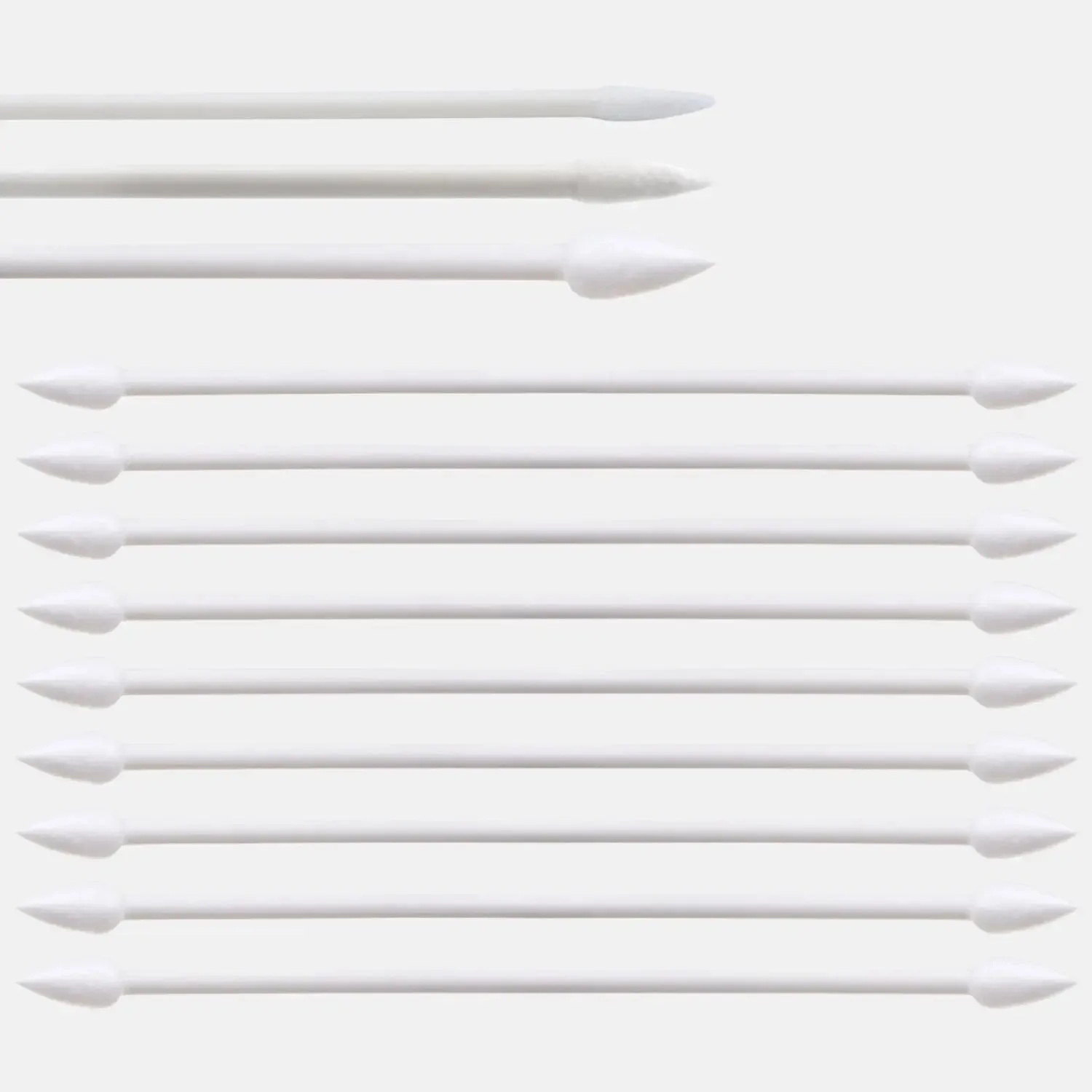
The Lens-Aid Reinigungsstäbchen mit Spitze are a good example: they have a double-ended pointed tip so you can flip the stick and continue cleaning without cross-contaminating. The 100% cotton tips are soft enough for sensitive surfaces and leave no scratches. Available in multiple sizes – including a 3-pack with S, M, and L – you can match the tip size to the gap you need to clean.
What the Pointed Cleaning Stick Provides
-
Reinigungsstäbchen mit Spitze für Kamera, Objektiv, Tastatur usw.: Feinste Reinigung für schwer erreichbare Stellen – perfekt für Sucher, Knöpfe, Blitzschuh oder das Fokusringgewinde deines Objektivs. These are exactly the areas where a flat sensor swab cannot reach, making a pointed stick the practical choice for lens and body maintenance.
Reinigungsstäbchen mit Spitze für Kamera, Objektiv, Tastatur usw.
-
Reinigungsstäbchen mit Spitze für Kamera, Objektiv, Tastatur usw.: Weiche Baumwollspitzen für eine schonende Anwendung – 100% Baumwollspitzen sind sanft zu empfindlichen Oberflächen und hinterlassen keine Kratzer. Gentle cotton tips reduce the risk of scratching lens coatings or the camera body, which is critical for both lenses and electronics.
-
Reinigungsstäbchen mit Spitze für Kamera, Objektiv, Tastatur usw.: Dank der beidseitigen Spitze kannst du die Stäbchen einfach umdrehen und direkt weiter reinigen. Double-ended design gives you a fresh tip without needing a second stick, saving time and keeping the process hygienic.
When to Choose a Sensor Swab Instead
A sensor swab is the only safe tool for cleaning the camera sensor itself. The sensor filter is extremely delicate and any fibers or residue left behind will show up in your images as spots. Sensor swabs are flat, lint-free, and sized to exactly match the sensor dimensions so you can wipe the entire surface in a single smooth pass.
If you do not have sensor dust spots visible in your images, you likely do not need a sensor swab. For general dust on the lens or body, a pointed cleaning stick is faster, cheaper, and more versatile.
Practical Advice for Choosing
Keep both types in your kit if you clean your own gear. Use a sensor swab only when you see sensor spots. Use pointed cleaning sticks for everything else: lens glass, viewfinder, buttons, flash shoe, and even your keyboard or model-building projects.
When buying pointed swabs, consider the size of the gaps you need to clean. A set with multiple sizes, like the 3-pack (S, M, L), gives you flexibility. For heavy use, a value pack of 100 or 300 sticks in your most-used size saves money and ensures you always have a fresh one ready.