Quick Answer
Start with one sensory ball and one clear goal: grasping and mouthing for babies, rolling, squeezing, and matching games for toddlers. Keep sessions short, follow your child's cues, and stop while they are still enjoying it. A two-piece set like the 2 Pack Sensory Ball & Fidget Ball gives you both a textured ball for grasping and a quieter fidget option for focus.
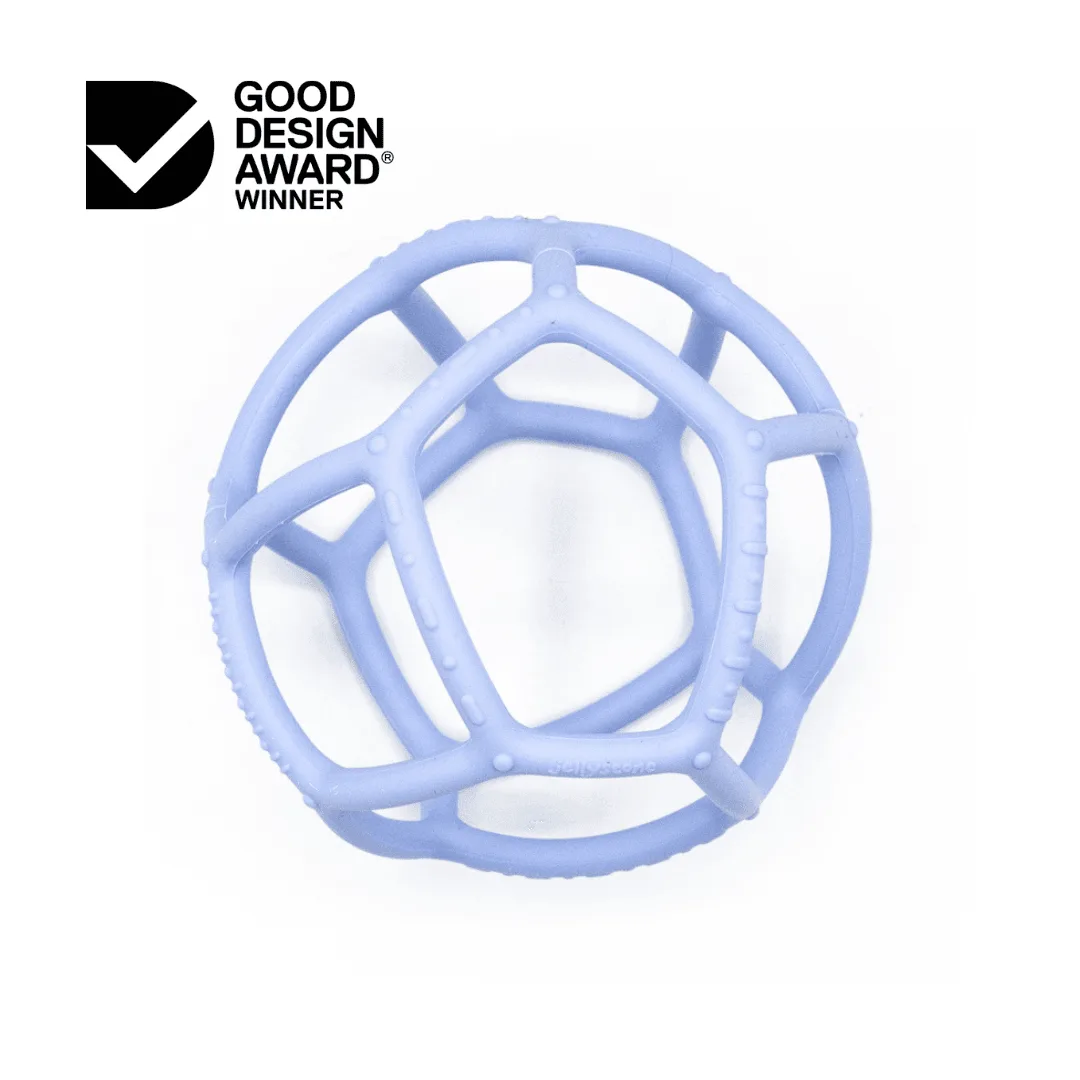
sensory ball
A sensory ball is one of the few toys that grows with your child from first grasp to toddler games. The trick is knowing what to do with it at each stage, because the same ball that soothes a teething baby can also become a rolling target game for a three-year-old.
This guide walks through practical sensory ball activities in the order most families use them, with checkpoints so you can tell whether an activity is working or needs adjusting.
Why Sensory Ball Play Works at Every Stage
Sensory balls combine texture, resistance, and movement in one object. For babies, that means something safe to mouth and grip during teething. For toddlers, it means a tool for rolling, squeezing, and simple games that build hand strength and focus.
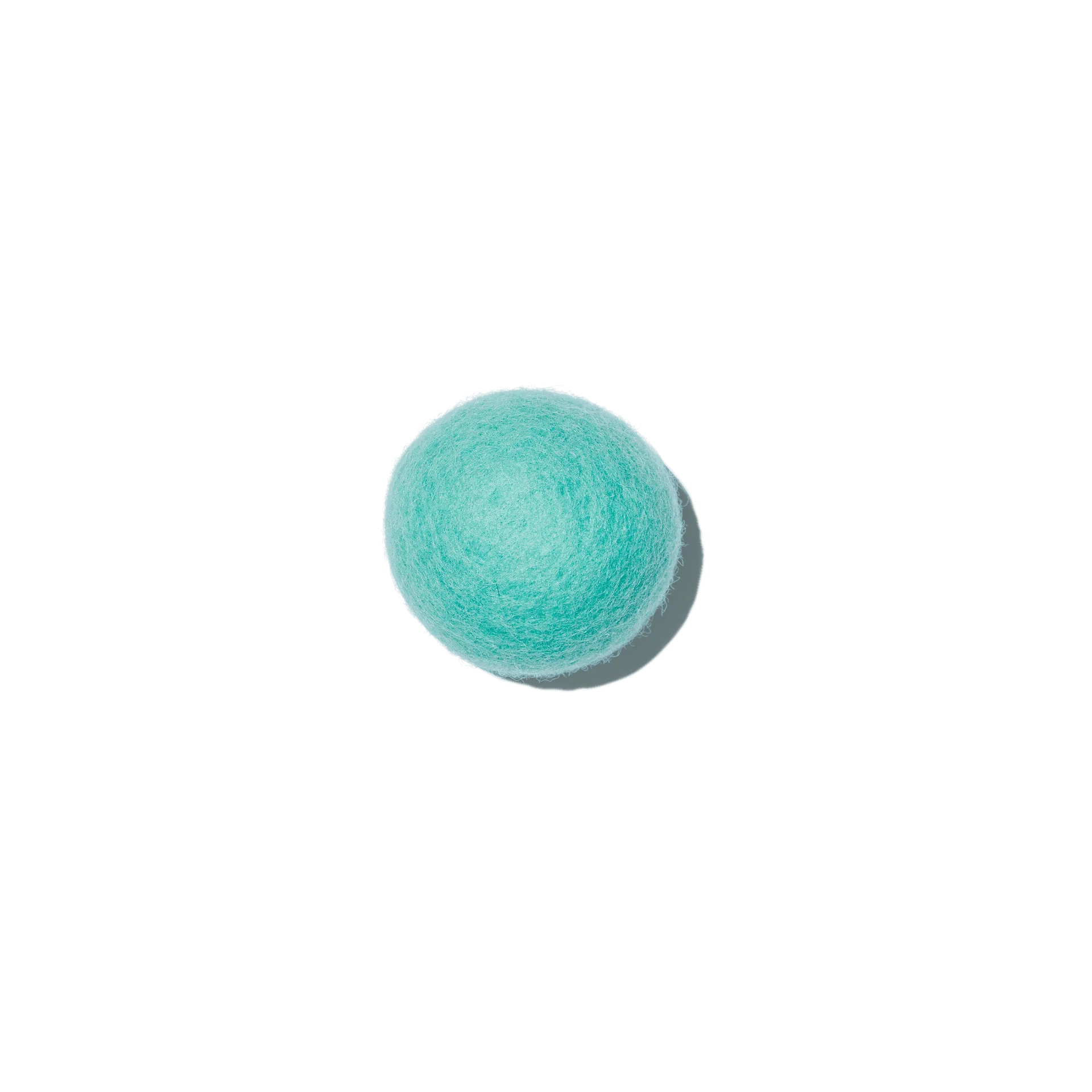
The 2 Pack Sensory Ball & Fidget Ball pairs a textured sensory ball with a fidget ball, so you have a mouthing option and a quieter focus option in one set. The Fidget Ball is designed to help children who have trouble sitting still by giving their hands something to do.
- Use one ball at a time so your child can focus on the texture and movement.
- Keep the other ball out of sight until you introduce it, so it stays novel.
How to Use a Sensory Ball with Babies
For babies, the goal is simple: offer the ball during calm, alert moments and let them explore. Hold it near their hands so they can reach and grasp, then let them bring it to their mouth if they are teething. Stay close and check the ball for wear before each session.
If your baby loses interest quickly, try a different position, such as lying on their back or sitting supported. A change of angle often renews curiosity more than a new toy does.
- Offer the ball when your baby is fed and rested, not overtired.
- Wipe the ball with a damp cloth between uses.
Toddler Sensory Ball Games That Build Focus
Toddlers often want a job to do with a ball. Roll it back and forth across the floor, squeeze it while counting to five, or hide it under a cloth and ask them to find it. These games build turn-taking and hand strength without needing a lot of setup.
For children who struggle to sit still, keep a fidget ball within reach during quiet activities. The Fidget Ball works as a stress reliever and can help children focus by giving their hands a calm, repetitive task.
- Name what your child is doing: 'You squeezed it hard!' This builds body awareness.
- End the game before your child gets bored, so they ask for it again next time.
Pairing Sensory Balls with Other Sensory Toys
Once your child is comfortable with a sensory ball, you can add a second toy to extend the play. The Rainbow Stacker and Teether Toy is a good pairing because the silicone rings double as teethers and stacking pieces, so babies can mouth them and older toddlers can stack them.
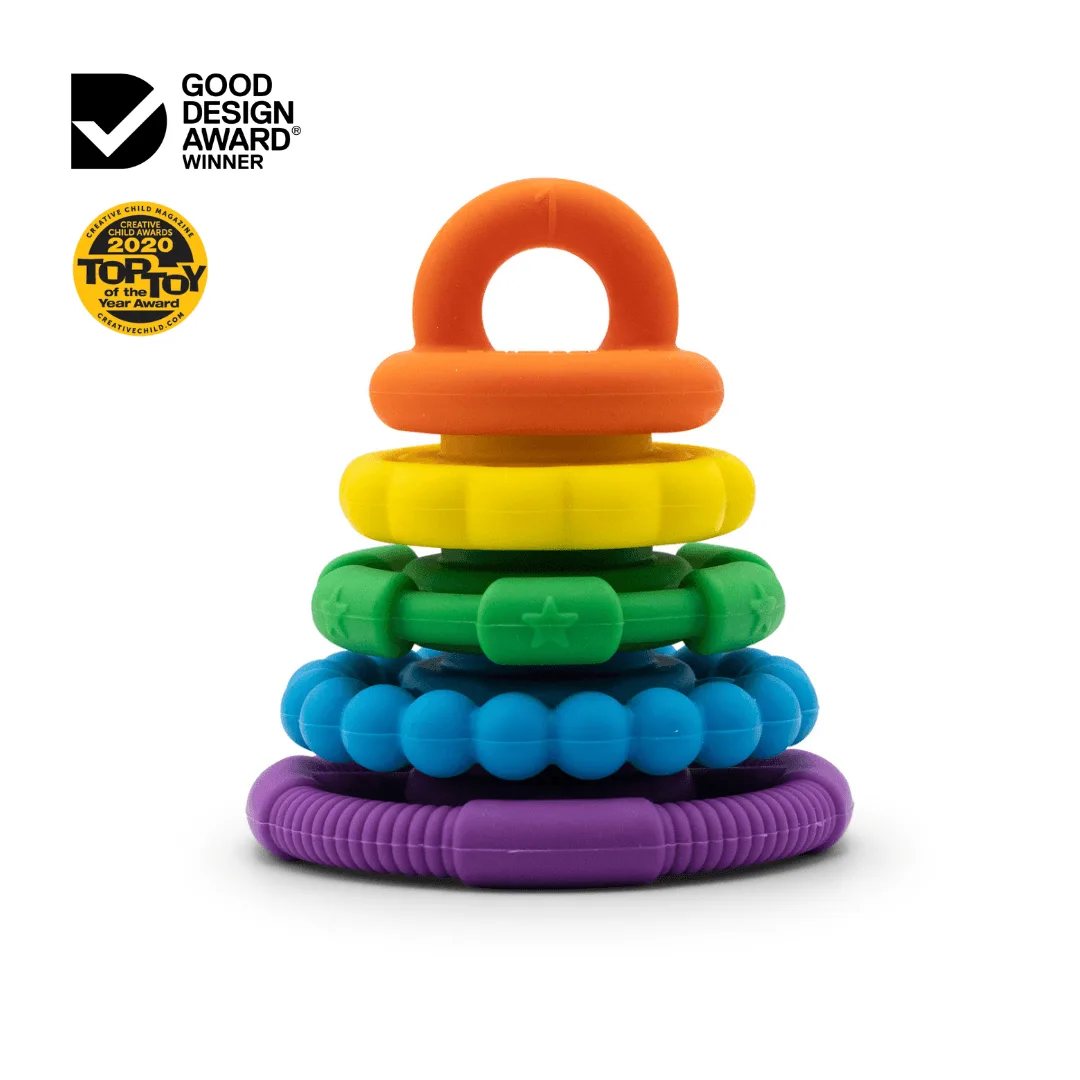
Rainbow Stacker and Teether Toy
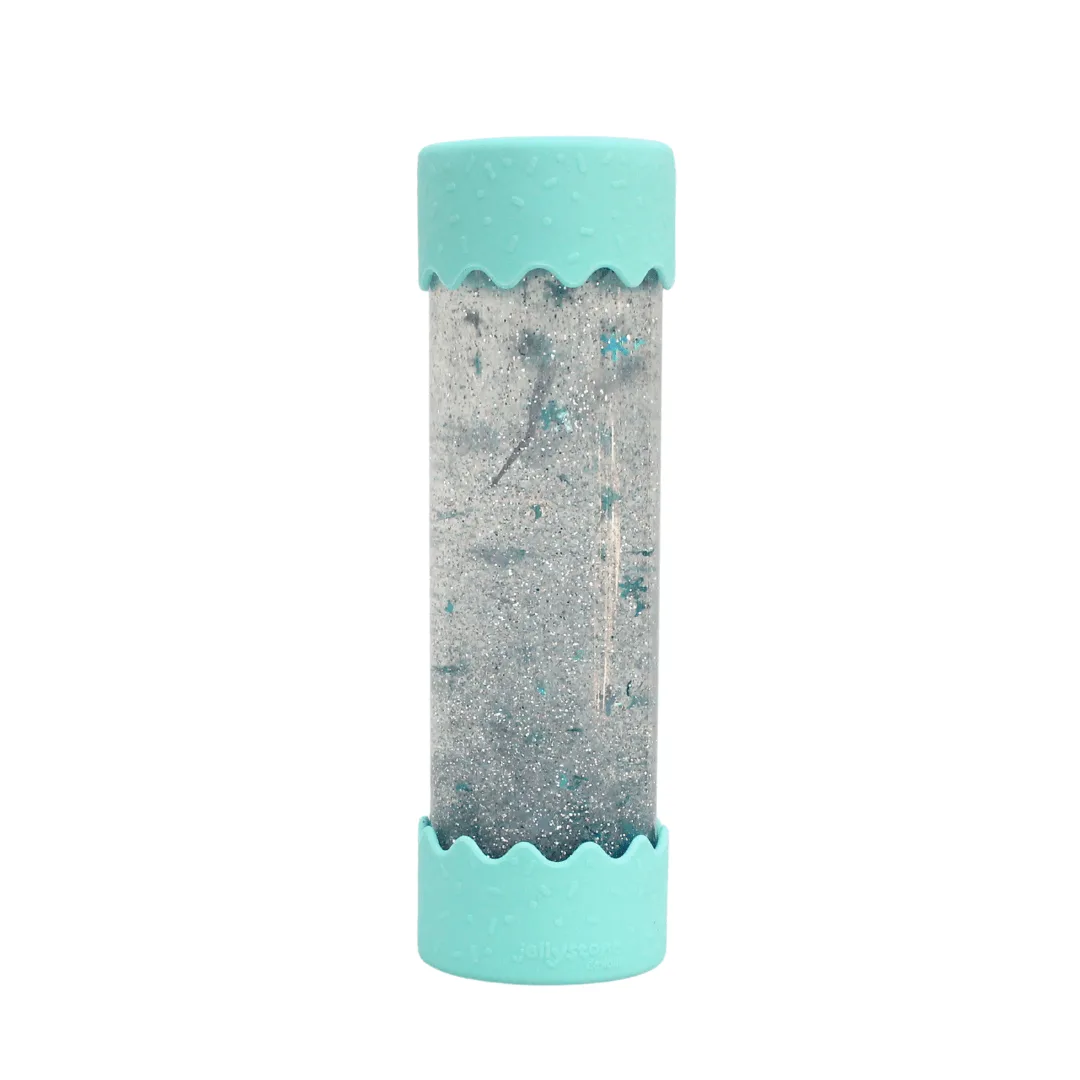
For a calmer, visual option, the Baby Calm Down Bottle is sealed and prefilled with sparkles and water, which makes it a good wind-down toy after active ball play. Rotating between movement and calm helps children regulate without a big transition.
- Rotate two or three toys rather than putting everything out at once.
- Use active ball play first, then a calmer toy to help your child settle.
Sensory Ball Play: Step-by-Step
- Step 1: Check the ball before every session: Look for cracks, tears, or loose pieces. Wash it with warm water and mild soap, then let it dry fully. Checkpoint: if you see damage, retire the ball instead of using it.
- Step 2: Start with one ball and one goal: For babies, offer the ball for grasping and mouthing. For toddlers, roll or squeeze it together. Keep the session to a few minutes at first. Common mistake: putting out several toys at once and losing your child's attention.
- Step 3: Follow your child's lead: If they mouth the ball, let them. If they roll it away, roll it back. Narrate what they are doing to build body awareness. Checkpoint: stop while your child is still interested, not after they are bored.
- Step 4: Add a focus or calm-down toy: Bring in the Fidget Ball for quiet focus time, or the Baby Calm Down Bottle for a wind-down after active play. Common mistake: using the calm-down toy during active play, which blurs the signal.
- Step 5: Store it where your child can reach it: Keep the ball in a low bin or basket so your child can choose it independently during the day. Next step: rotate in the Rainbow Stacker and Teether Toy when the ball stops holding attention.
Product Facts That Matter for Sensory Ball Play
- 2 Pack Sensory Ball & Fidget Ball: A Sensory Ball and Fidget Ball combined into one 2 Pack, described as a teether toy for early development; the Fidget Ball is designed to calm a busy mind and act as a stress reliever to aid focus. You get a mouthing and grasping ball plus a focus tool in one purchase, which covers both baby and toddler stages.
- Rainbow Stacker and Teether Toy: A Good Design Award Winner 2021, described as a multi-purpose toy where stacking rings double as soothing teethers, and older children practise hand-eye coordination by stacking. It extends sensory ball play into stacking and coordination practice without needing a separate teether.
- Baby Calm Down Bottle: A mini baby-friendly size, prefilled with sparkles and water and totally sealed, described as a sensory haven that captivates babies with swirling sparkles. It gives you a sealed, no-mess calm-down option to use after active sensory ball games.
Sensory ball activities work best when they are short, simple, and led by your child. Start with one ball, follow their cues, and add a calm-down or stacking toy when you need to extend the play.