Quick answer
A sensory table is designed for hands-on exploratory play with materials like sand, water, or rice, while a play table is a general-purpose surface for drawing, puzzles, and snacks. Choose a sensory table if you want to boost sensory development and fine motor skills; choose a play table if you need a versatile everyday activity station.
Why the difference matters for your child
The main difference is the purpose. A sensory table usually features bins or trays that hold materials for tactile exploration, encouraging children to pour, scoop, and manipulate. This kind of play supports fine motor skills, concentration, and curiosity. A play table, on the other hand, offers a flat surface for drawing, building blocks, or even meals, making it a more versatile addition to a playroom.
For toddlers and preschoolers, sensory play is especially valuable because it engages multiple senses at once and can be calming. If you have limited space, a play table might be more practical since it serves multiple functions. But if you have room and want to encourage focused, messy play, a sensory table is a dedicated solution.
What to consider before you buy
Think about your child's age and interests. Sensory tables are ideal for ages 1 to 6, but younger children may need supervision to avoid putting small items in their mouths. Also consider the available space and how easy the table is to clean. Look for durable materials like wood that can withstand spills and frequent use.
Another factor is storage. Some sensory tables come with lids or covers, while others are open. If you plan to use the table for other activities, check whether the bins are removable or if the surface can double as a play table.
How to decide: trade-offs at a glance
- Purpose: Sensory tables are for messy, exploratory play; play tables are for general activities. If your main goal is sensory development, choose a sensory table. List your child's top activities before deciding.
- Versatility: Play tables can be used for drawing, puzzles, and snacks; sensory tables are more specialized. If you need one table for everything, a play table is more flexible.
- Space and setup: Sensory tables often come with bins and stools, taking up more room. Play tables are usually simpler. Measure your space and consider if you have storage for accessories. Check dimensions and storage requirements before purchasing.
Featured product
-
Sensory Table: The Sensory Table from Woodandhearts is a complete set that includes a sensory table for kids and two stools, in natural wood and white finish, with dual bins. This set is ready to use right out of the box, and the dual bins let you offer two different sensory materials at once, which is great for variety and sibling play.
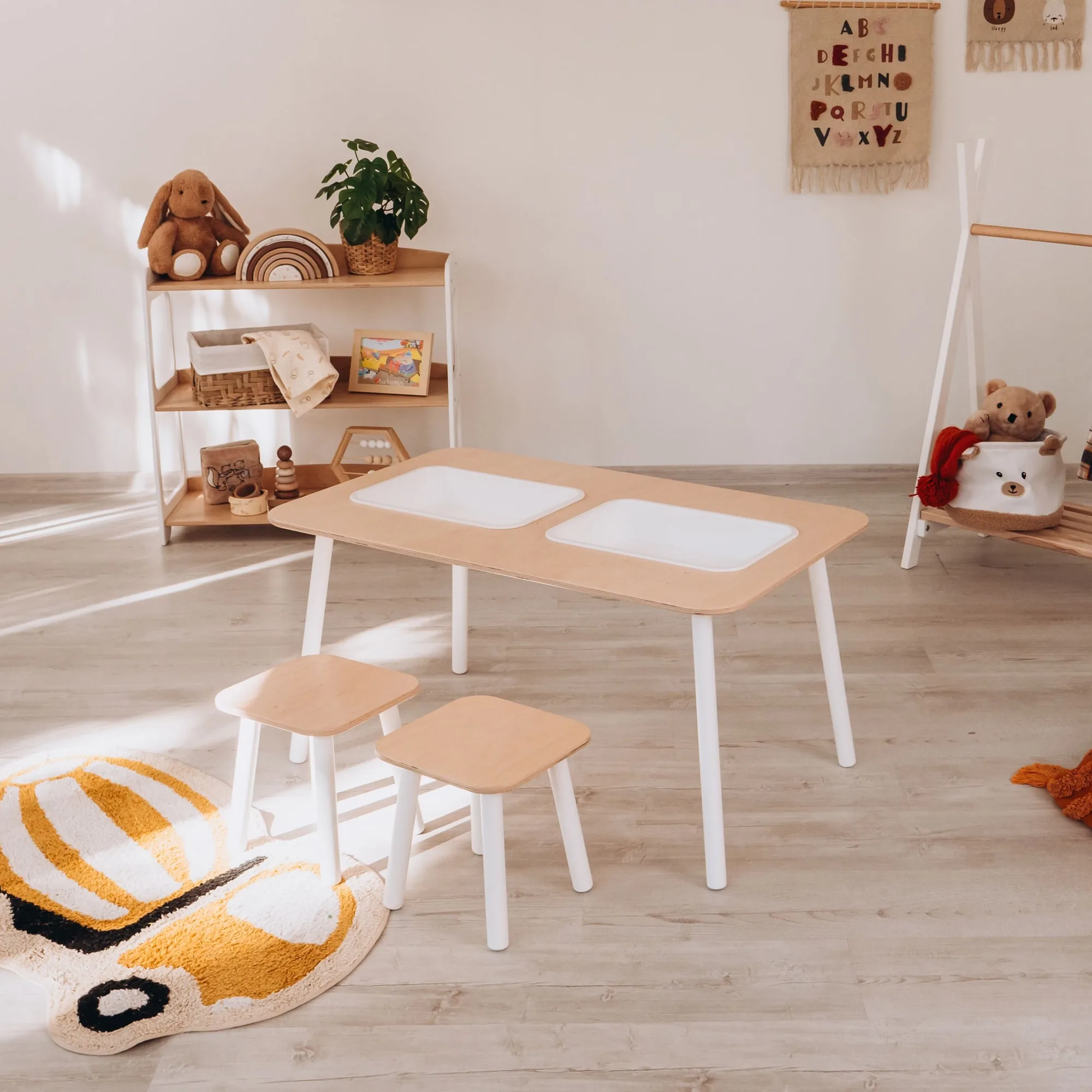
Sensory Table
Which table fits your family?
Best for
- Parents who want to encourage sensory exploration and fine motor skill development in children aged 1 to 6.
- Families with space for a dedicated activity station and who don't mind occasional mess.
Not for
- Families needing a single, versatile table for drawing, snacks, and homework.
- Small playrooms where a multi-purpose surface is more practical.