Quick Answer
Choose a serrated chef spoon when you need to cut and serve in one motion; choose a slotted spoon when you need to drain liquids while serving.
Serrated Edge vs Slots: What Each Does Best
A serrated chef spoon combines a spoon with a cutting edge, letting you slice soft foods like roasted vegetables, tofu, or lasagna right in the pan. This saves time and reduces extra dishes. The serrated edge is efficient for light cutting tasks, but it is not a replacement for a chef's knife for heavy-duty chopping.
A slotted spoon is designed to lift solid foods out of liquid, leaving broth, oil, or sauce behind. It excels at serving from pots with liquid, such as stews, poached eggs, or vegetables in stock. The slots are not for cutting; they are for draining.
Trade-Offs to Consider
The main trade-off is versatility vs. specialization. A serrated chef spoon offers two functions in one utensil, but its cutting edge may not be ideal for precise plating or for serving from deep pots where the serrations can catch on the sides. A slotted spoon is purpose-built for draining, but it cannot cut, so you may need a separate knife for portioning.
For serving tasks that involve both cutting and scooping, the serrated chef spoon saves time. For tasks where drainage is critical, the slotted spoon is more effective. Consider your most common serving scenarios to decide which tool earns a spot in your drawer.
Serving Spoon Trade-Offs
- Cut and serve in one step: Use a serrated chef spoon when you need to portion soft foods directly in the pan, like casseroles or roasted vegetables. It saves time and reduces cleanup. Check if your pan is non-stick; the serrated edge may scratch delicate coatings.
- Drain liquids while serving: Reach for a slotted spoon when serving from a pot with broth, oil, or sauce, such as stews or poached eggs. It lets you leave excess liquid behind. For tasks that require both cutting and draining, consider using two utensils rather than forcing one.
- Precision plating: If your goal is elegant presentation, a plating spoon offers better control for drizzling sauces and placing garnishes than either a serrated or slotted spoon. Match the spoon to the task: cutting, draining, or plating each benefit from a specialized design.
Misen Chef Spoons at a Glance
-
Serrated Chef Spoon: The Serrated Chef Spoon combines the functions of a spoon and a knife, allowing you to slice, scoop, and cut with a single utensil. You can cut and serve in one motion, reducing the need for multiple tools and speeding up meal prep.
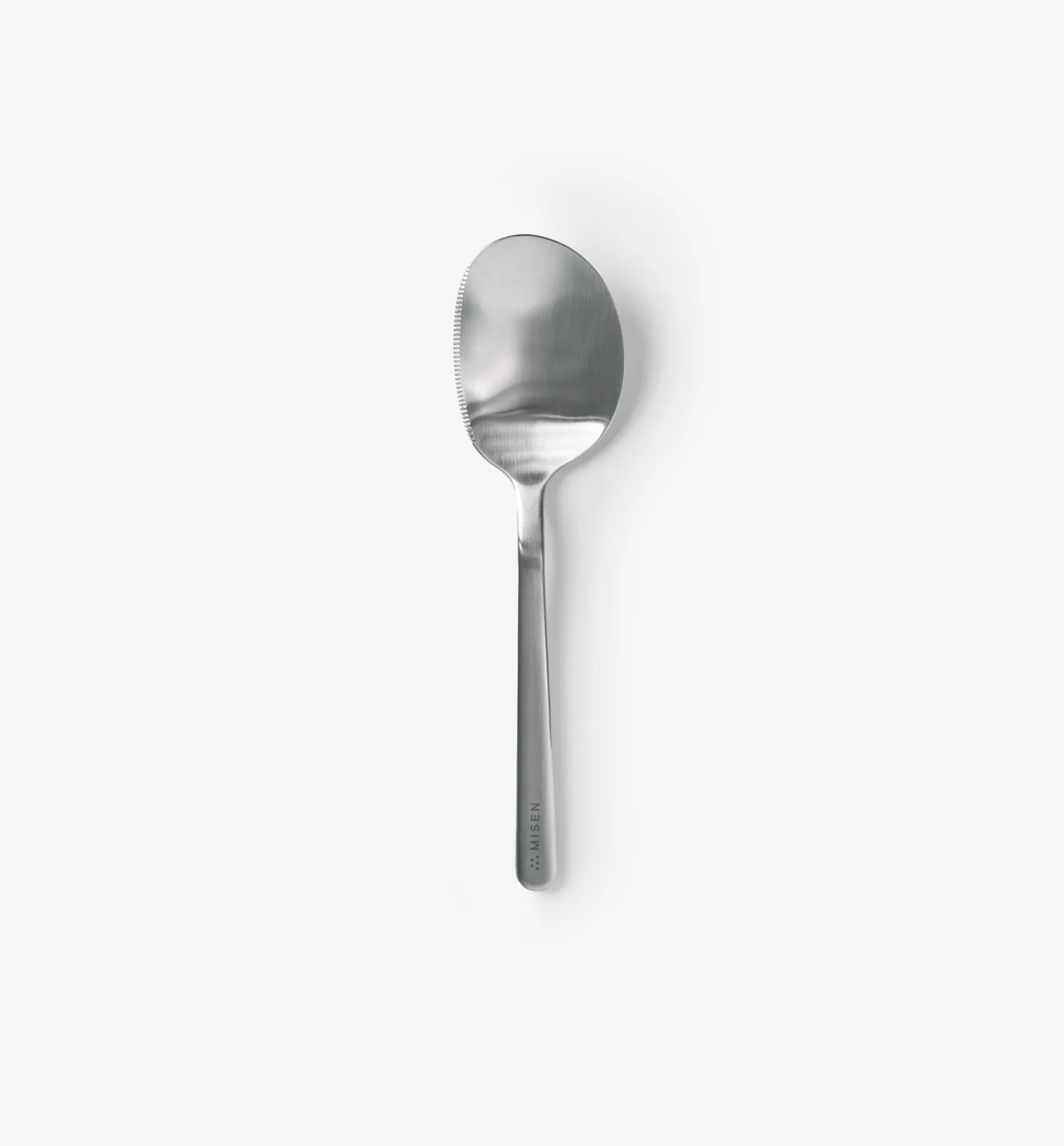
Serrated Chef Spoon
-
Plating Chef Spoon: The Plating Chef Spoon is designed for drizzling, saucing, and adding final touches for elegant plating. If your serving style focuses on presentation, this spoon gives you precision for sauces and oils that a slotted or serrated spoon cannot match.
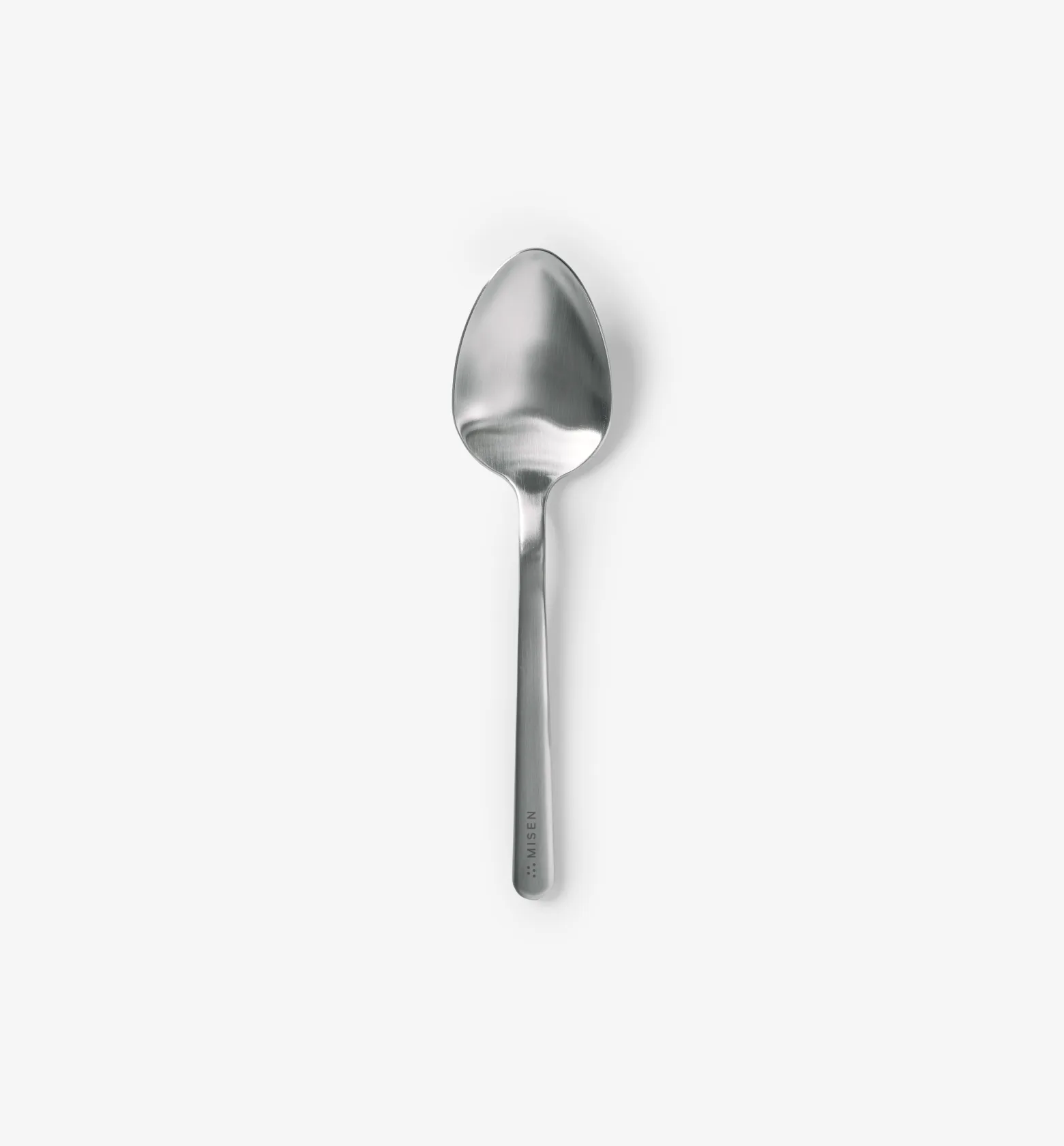
Plating Chef Spoon
Which Spoon Fits Your Kitchen?
Best for
- Home cooks who frequently cut and serve soft foods from the same pan
- Those who want to minimize the number of utensils used during cooking
Not for
- Serving from liquid-heavy dishes where draining is essential
- Precision plating tasks that require controlled sauce placement