Quick Answer
Reach for a paring knife for precise, small-scale tasks like peeling and mincing, and a serrated slicing knife for cutting through soft or crusty foods without crushing them.
Why blade shape matters more than you think
The shape of a blade determines how it interacts with food. A straight-edged paring knife gives you control for detailed cuts, while a serrated edge grips and tears through surfaces that would slip on a smooth blade. Understanding this difference helps you pick the right tool for the job and avoid frustrating, uneven cuts.
The trade-off: precision vs. grip
A paring knife excels at tasks that require a steady hand and a sharp point, like coring fruit or deveining shrimp. However, its straight edge struggles with crusty bread or ripe tomatoes, where it tends to crush rather than slice. A serrated knife, on the other hand, powers through tough exteriors and soft interiors with ease, but its scalloped edge makes fine, precise work like peeling an apple awkward and imprecise.
Serrated vs. Paring: Trade-Offs at a Glance
- Precision tasks: Use a paring knife for peeling, coring, seeding, and other intricate cuts where a sharp point and straight edge give you control. If you often work with small produce, a paring knife is your everyday essential.
- Crush-prone foods: Choose a serrated knife for slicing tomatoes, bread, cakes, and other items with a tough exterior and soft inside—the teeth grip the surface and cut without squashing. A serrated blade prevents the messy flattening you get with a straight edge.
- One-knife compromise: If you only want one knife, a paring knife handles more everyday tasks, but a serrated knife is better for bread and produce with delicate skins. Consider both to cover all bases. Building a small set with both knives saves you from making do with the wrong tool.
Our Place Knives at a Glance
-
Precise Paring Knife: The Precise Paring Knife features an ultra-sharp full-tang blade made from premium German steel and a grooved handle that guides your hand into the perfect grip. This design gives you the control and comfort needed for small, detailed tasks like peeling mangoes or mincing garlic.
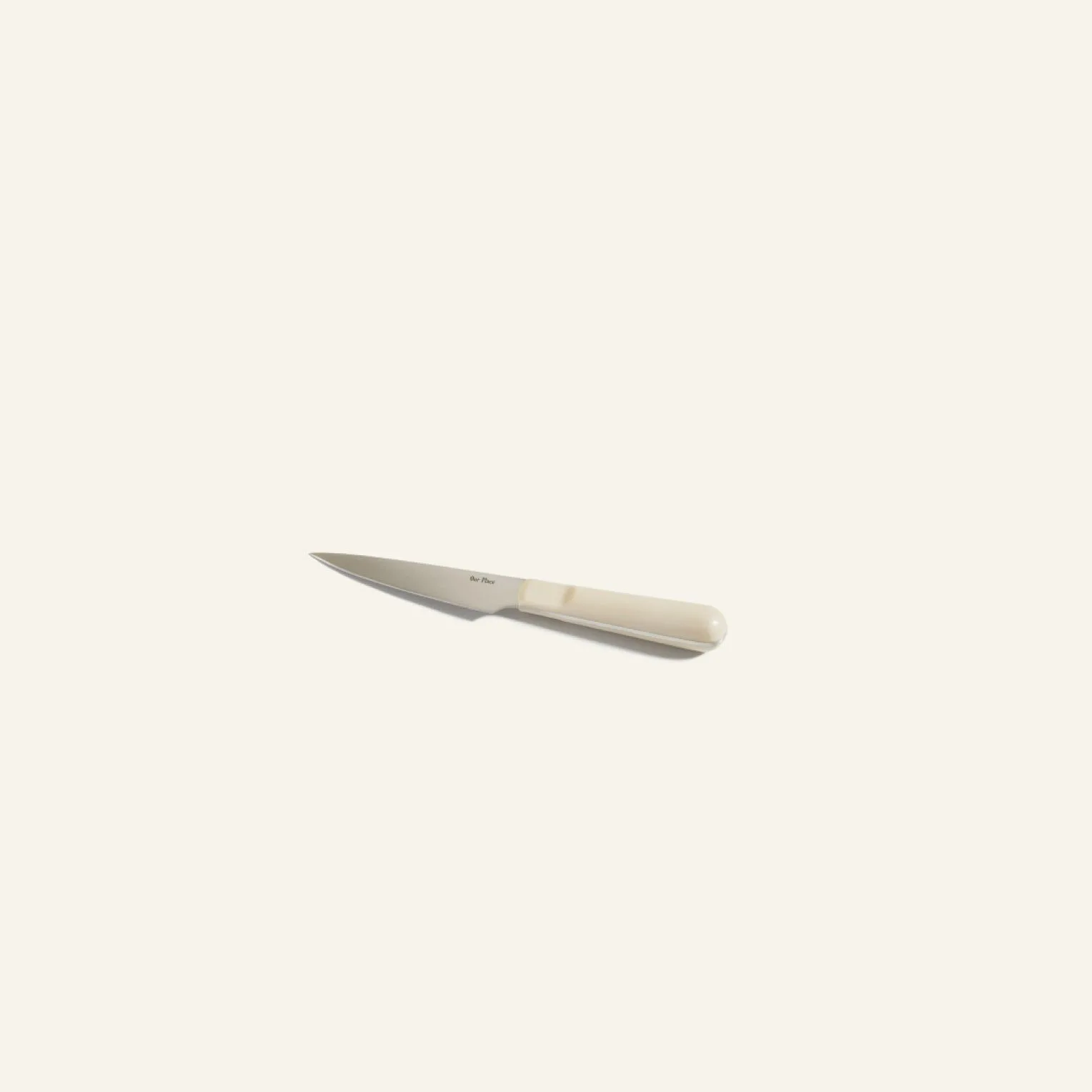
Precise Paring Knife
-
Serrated Slicing Knife: The Serrated Slicing Knife also uses premium German steel with a full-tang blade and a grooved handle for a balanced hold, designed for smooth slicing through soft or crusty foods. Its serrated edge lets you cut through crusty bread or ripe tomatoes cleanly without crushing the interior.
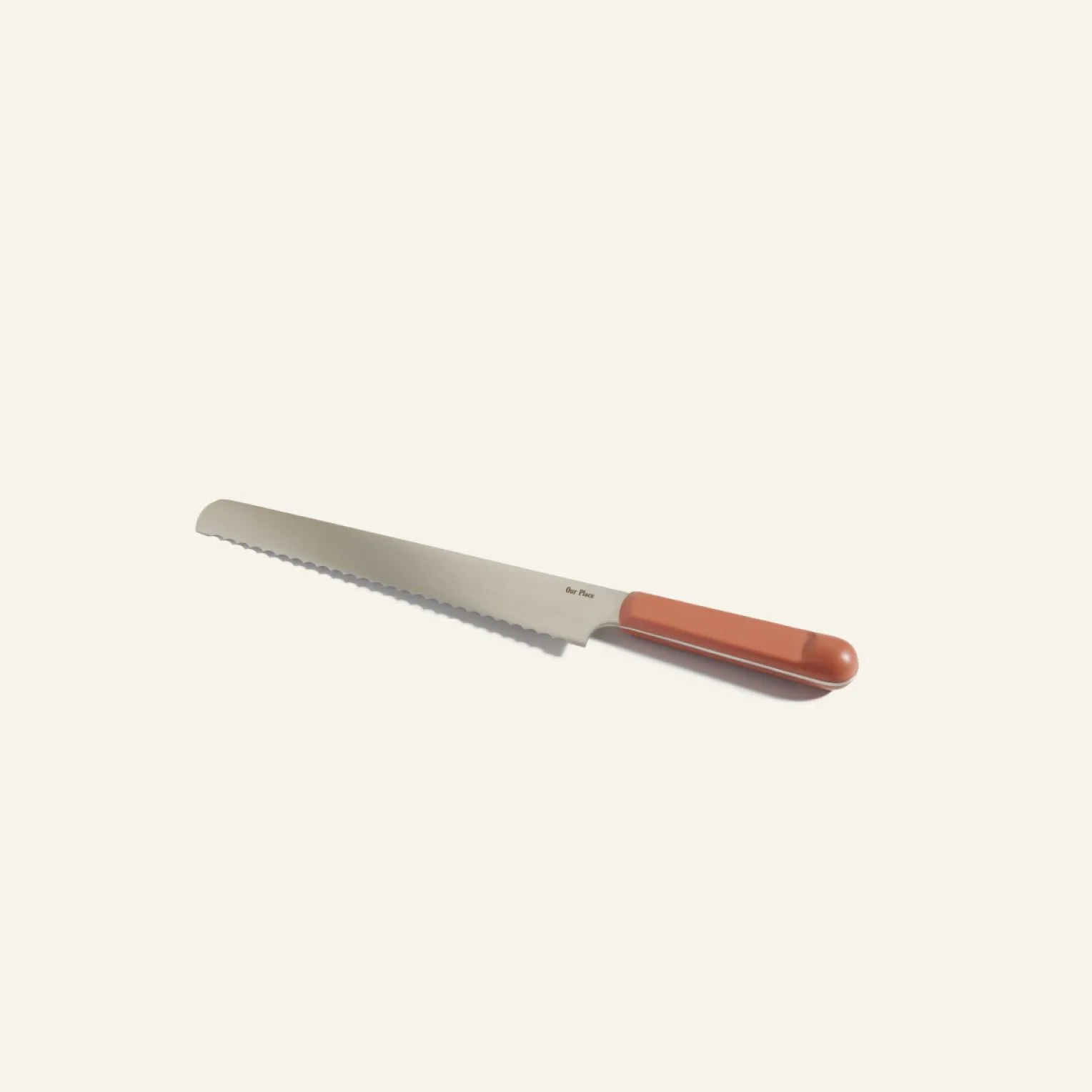
Serrated Slicing Knife
Which Knife Fits Your Kitchen?
Best for
- Home cooks who frequently peel, mince, and do detailed prep work
- Anyone who bakes bread or slices ripe tomatoes and wants clean cuts without crushing
Not for
- If you only do heavy chopping of large vegetables or meat, consider a chef's knife instead
- If you rarely do fine detail work, a paring knife may sit unused in your drawer