Quick Answer
Primer prepares your skin before makeup, while setting spray locks your look in place afterward. You need both for a long-lasting, flawless finish—though the order and choice depend on your skin type and makeup goals.
Why the order matters
Primer and setting spray serve different jobs at different stages of your makeup routine. Primer is applied after skincare and before foundation to smooth texture, minimize pores, and help makeup adhere. Setting spray is the final step—after all your makeup is applied—to lock everything in and reduce fading or transfer.
Skipping primer can make your base look uneven or fade quickly, especially on oily or textured skin. Skipping setting spray can leave your makeup vulnerable to smudging, especially in humid conditions or long days. Using both gives you the best of both worlds: a smooth canvas and a secure finish.
Choosing based on your makeup goals
If your main concern is that your foundation doesn't last or your skin looks uneven, focus on a primer that addresses your skin type—like a hydrating or glow-enhancing formula. If you already love your base but find it transfers or fades by midday, a setting spray is the missing piece.
You can also use a setting spray as a primer by spraying it before makeup, but this is less effective than a dedicated primer for smoothing or color-correcting. For most people, the best routine is to use both: primer to prep and setting spray to set.
How to decide: primer vs setting spray
- You have oily skin or large pores: Use a mattifying or pore-blurring primer before foundation to control shine and smooth texture. A setting spray can help too, but the primer does the heavy lifting. Choose a primer that targets oil control for best results.
- You want makeup to last all day: A setting spray is your go-to for locking in your look, reducing transfer, and extending wear—especially in heat or humidity. It's the final step after all makeup is applied. Apply setting spray after your makeup is complete, not before.
- You have dry skin or want a glow: Look for a hydrating primer to prep your skin and a dewy setting spray to add luminosity. The combination keeps your skin comfortable and your makeup fresh. Hydrating formulas are key to avoiding a cakey finish on dry skin.
Product facts to consider
-
CHARLOTTE’S MAGIC CREAM & SETTING SPRAY DUO - SKINCARE & MAKEUP KIT: This kit includes the legendary face cream and setting spray to hydrate, prime, and set—saving 15% off the usual price. It's a two-in-one option if you want hydration and setting power in one routine, ideal for dry or mature skin.
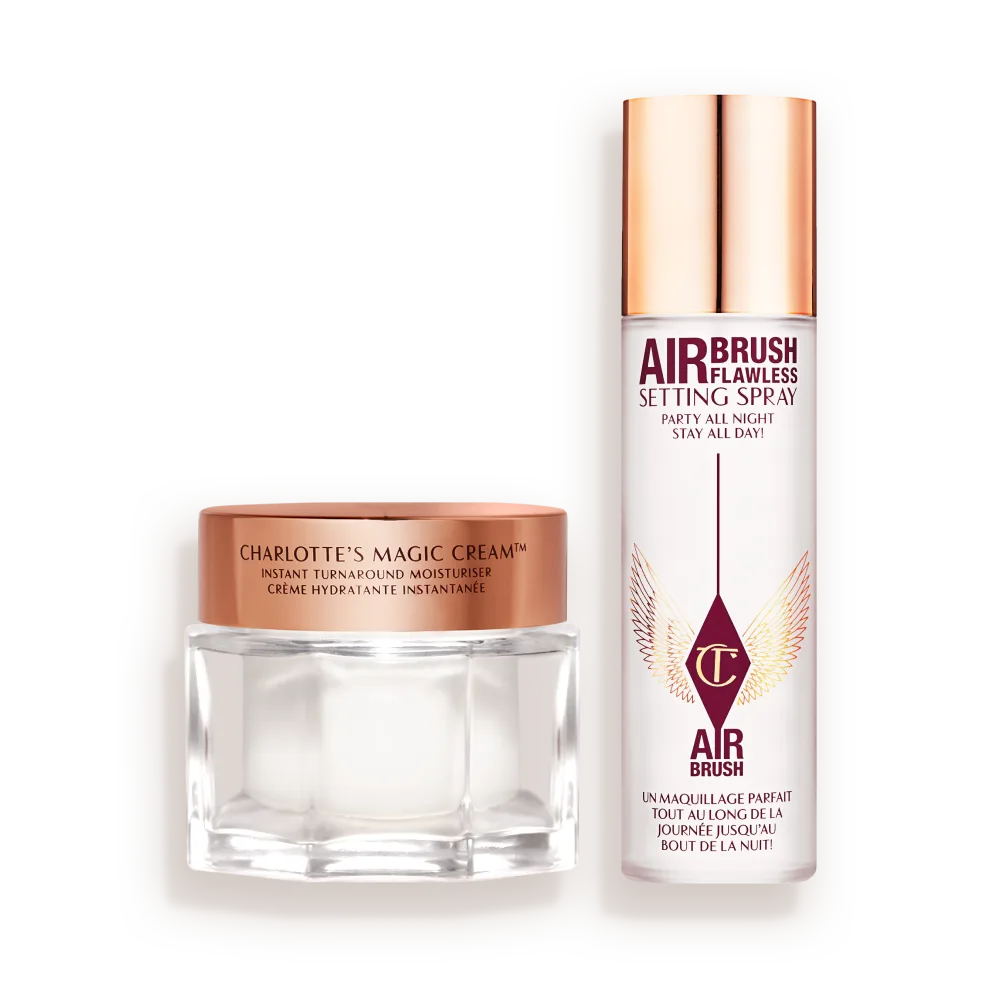
CHARLOTTE’S MAGIC CREAM & SETTING SPRAY DUO - SKINCARE & MAKEUP KIT
-
CHARLOTTE’S PRIME, SET & GLOW KIT - FACE KIT: This kit pairs a lightweight setting spray that helps prime and set makeup for up to 16 hours with an iconic glow primer. It gives you both primer and setting spray in one value set, perfect for achieving a luminous, long-lasting look.
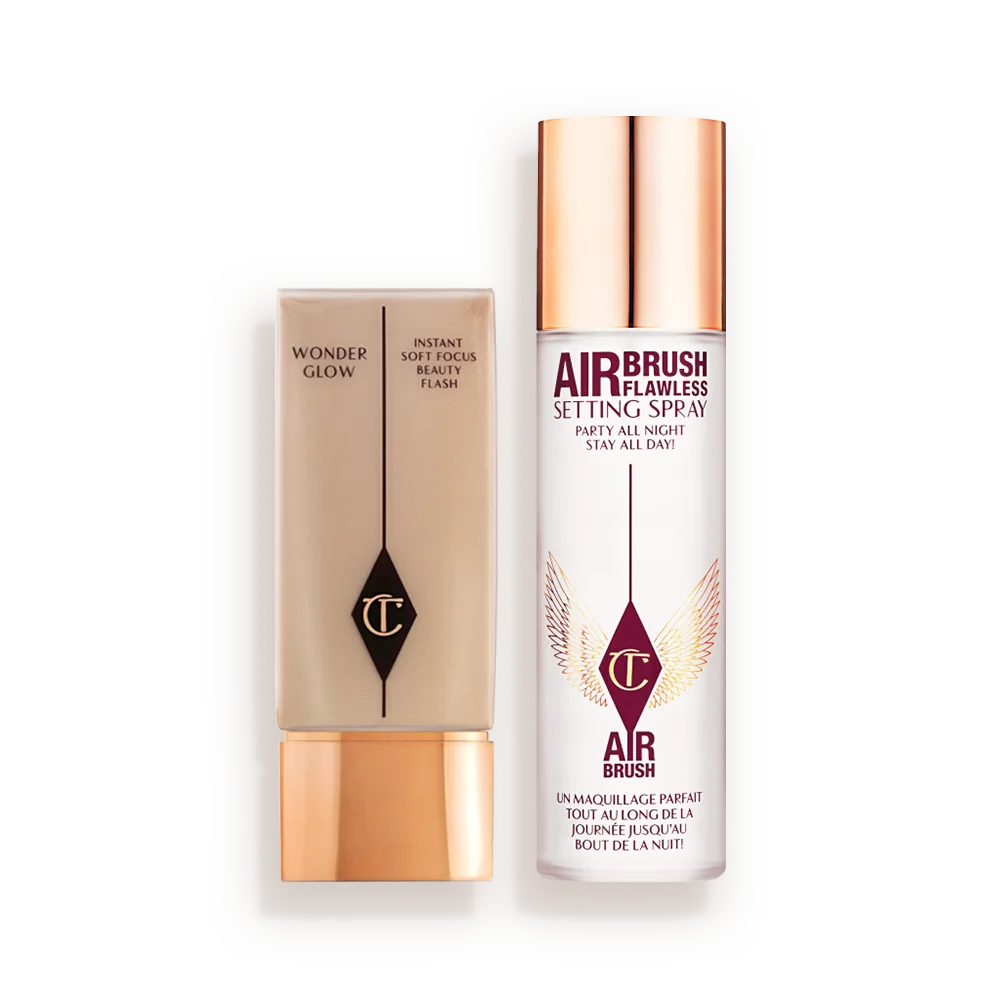
CHARLOTTE’S PRIME, SET & GLOW KIT - FACE KIT
Who should use which?
Best for
- Primer is best for anyone who wants a smooth, even base and needs help with texture, pores, or oil control.
- Setting spray is best for anyone who wants their makeup to last longer, resist transfer, or survive long days and special events.
Not for
- If you have very minimal makeup or prefer a bare-face look, you might skip primer and just use a setting spray for light refreshment.
- If you have extremely oily skin, a heavy moisturizing primer might not be ideal—look for a mattifying formula instead.