Quick Answer
To sew DayFlex fabric for stretchy bag panels, use a ballpoint or stretch needle, a walking foot, and a small zigzag or straight stitch with a slightly loosened tension. Test on scraps first to avoid skipped stitches and puckering.
Why DayFlex Fabric Behaves Differently
DayFlex is a bonded poly-nylon with a thin, smooth lining permanently fused to the back. This bonded layer gives the fabric structure and a water-repellent surface, but it also reduces stretch compared to knit fabrics. That means you can sew it like a woven, but you still need to handle the synthetic fibers carefully to avoid melting or skipped stitches.
Because DayFlex is smooth and slightly slippery, it can shift under your presser foot. Using the right needle and foot makes a big difference in keeping your panels aligned.
Choosing the Right Tools
A ballpoint or stretch needle (size 70/10 or 80/12) works best for DayFlex because it pushes between the fibers instead of cutting them. A walking foot helps feed the fabric evenly and prevents the layers from shifting. If you don't have a walking foot, use tissue paper or a Teflon foot to reduce friction.
For thread, a polyester all-purpose thread is a safe choice because it has a bit of give, matching the slight stretch of the fabric. Avoid cotton thread, which can break when the panel stretches.
Step-by-Step Sewing Process
- Prepare your fabric and tools: Pre-wash or steam your DayFlex fabric to remove any residual finish. Use a ballpoint or stretch needle (size 70/10 or 80/12) and a walking foot if available. Set your stitch to a narrow zigzag (width 1.0–1.5, length 2.5–3.0) or a straight stitch with a slight stretch. Checkpoint: Test on a scrap to confirm the stitch doesn't skip or pucker. Always test on a scrap before starting your project.
- Pin or clip the panels together: Because DayFlex is smooth and slippery, use fine pins or clips to hold the layers. Place pins perpendicular to the seam, about 1 inch apart. Avoid pinning through the bonded lining if it causes distortion. Checkpoint: Ensure the layers are aligned and don't shift when you lift the fabric. Use clips instead of pins if you notice the fabric shifting.
- Sew with the right tension and speed: Set your machine to a slightly looser tension (reduce by 1–2 numbers) and sew at a moderate speed. Guide the fabric gently without pulling. If you see puckering, increase stitch length or reduce tension further. Checkpoint: The seam should lie flat and the fabric should not stretch out of shape. If the seam puckers, try a longer stitch length before adjusting tension.
- Finish the seam edges: Use a zigzag or overlock stitch on the raw edges to prevent fraying. Since DayFlex is bonded, it may not fray much, but finishing the edges adds durability. Checkpoint: The seam should be smooth and the edge should not curl. A serger or overlock foot makes finishing quick and clean.
- Press the seams carefully: Use a low-heat iron (synthetic setting) and a pressing cloth to avoid melting the poly-nylon. Press the seams open or to one side, depending on your pattern. Checkpoint: The fabric should not stick to the iron or lose its shape. Never use high heat on DayFlex; it can melt the bonded lining.
Product Facts
-
Banana Club - DayFlex Fabric: DayFlex is a bonded poly-nylon that's super smooth, water-repellent, and perfect for both bag exteriors and linings. The bonded lining adds structure, so your stretchy panels will hold their shape while still having a slight give—ideal for bags that need to flex without losing form.
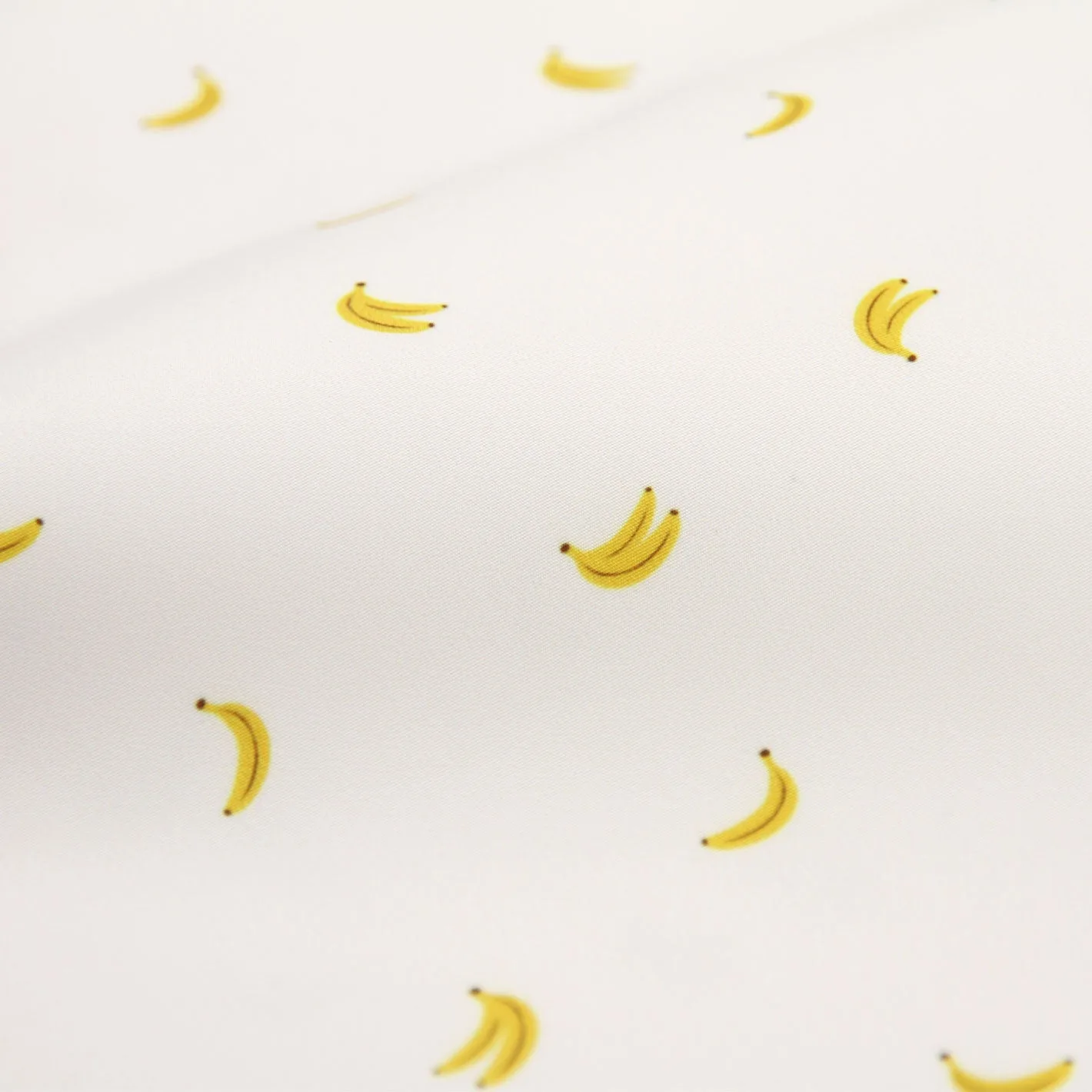
Banana Club - DayFlex Fabric