Quick answer
For quilts and baby items, choose soft organic cotton labels because they stay gentle against skin and survive repeated washing and drying. For garments and bags that get heavy wear, choose woven labels because the denser weave resists fraying and fading. Choose write-in labels when you need to record a name, date or care note on the spot. Many makers keep all three on hand and match the label to the project.
A sew-in label is the last thing you attach and often the first thing a recipient touches, so the material you choose matters more than the design on it. Organic cotton, woven and write-in labels each behave differently in the wash, against skin and under a needle.
This comparison looks at what each material actually does well, where it falls short, and which projects suit it. The goal is simple: help you stop guessing and pick a label that still looks good after the tenth wash.
How the three label materials differ
Organic cotton labels are soft, flexible and printed or woven on cotton fabric. They drape with the garment instead of sitting on top of it, which is why they work well on baby clothes, quilts and anything worn next to skin. The trade-off is that very fine cotton can fray if you cut it too close to the stitching line.
Woven labels use finer threads in a tighter weave, so the design is built into the fabric rather than printed on it. That makes them more resistant to fading and abrasion, which suits garments, bags and items that get handled constantly. They can feel slightly crisper than cotton until they soften with washing.
Write-in labels give you blank space to add a name, date or care instruction with a fabric pen. They are the most flexible option for quilts, charity projects and gifts where the recipient or occasion changes. The trade-off is that the writing, not the label, determines how long the information stays legible.
- Match the label weight to the fabric: lightweight cotton for quilts and baby items, tighter weave for bags and garments.
- If you cut woven labels down, leave at least a quarter inch beyond the woven edge to reduce fraying.
Softness and skin comfort
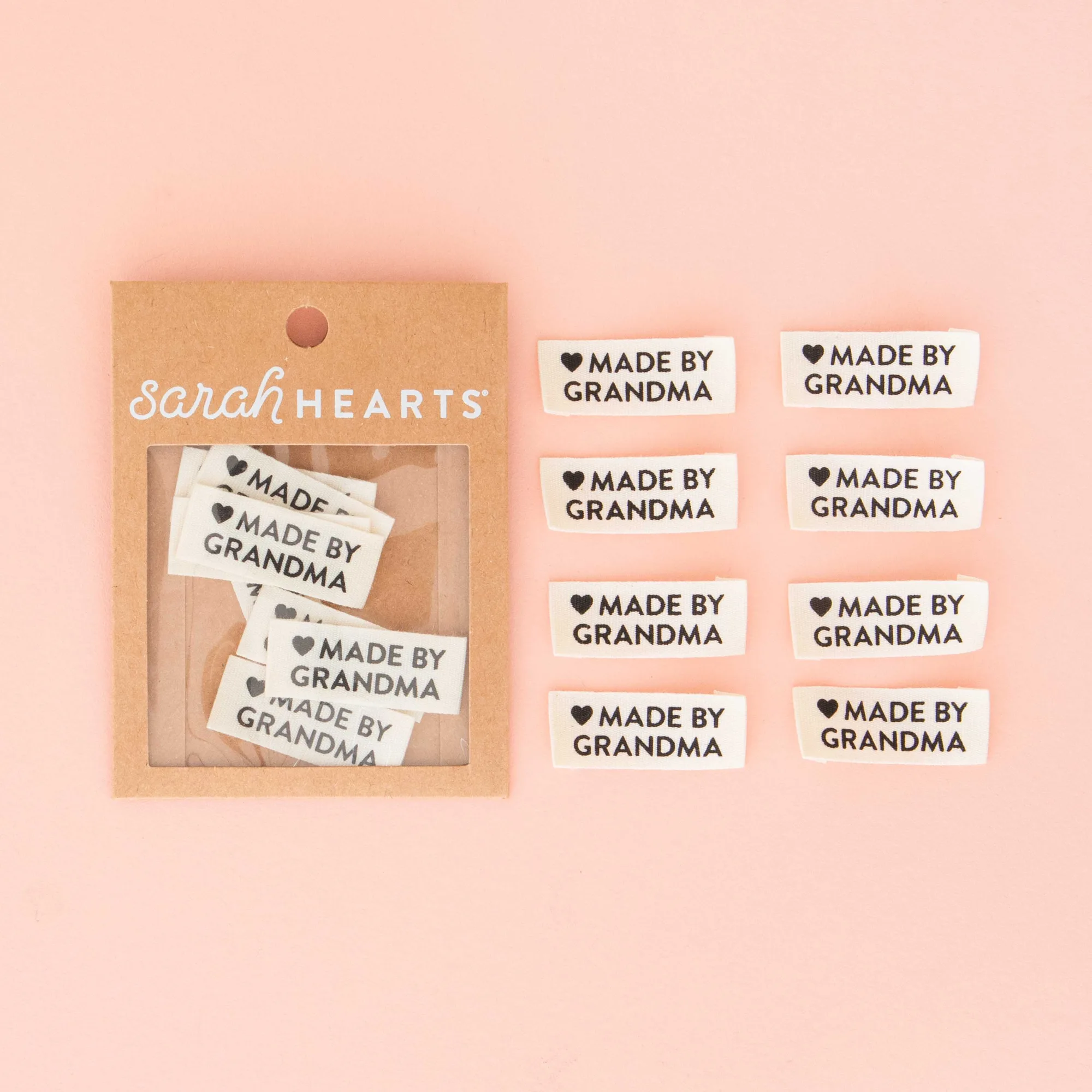
Softness is where organic cotton labels separate themselves. The Made by Grandma Organic Cotton Sewing Labels and Made by Mom Organic Cotton Sewing Labels are described as soft to the touch and never scratchy, which matters when a label sits against a baby's back or a quilt is used on a bed.
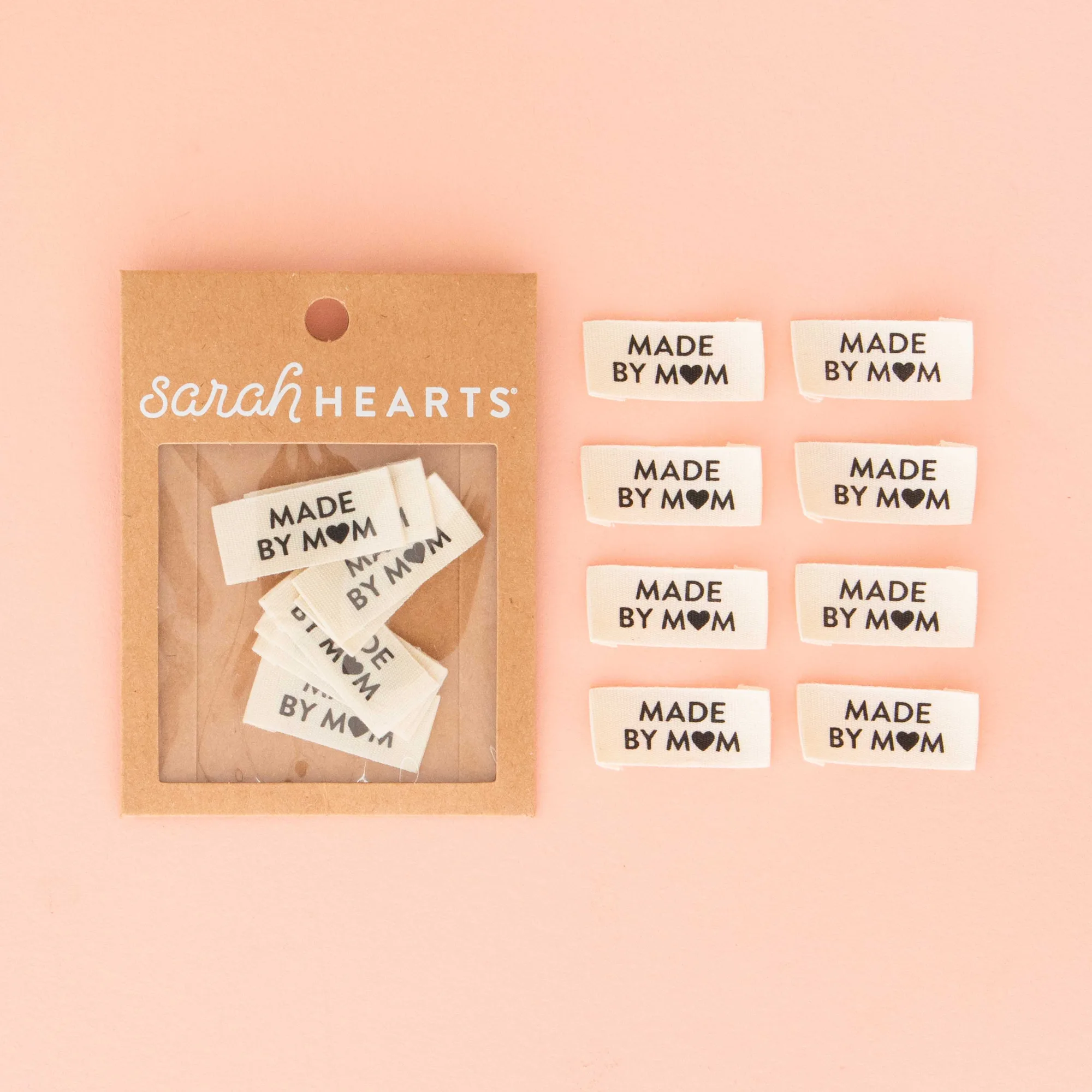
Made by Mom Organic Cotton Sewing Labels
Woven labels can also be soft, but the tighter construction means they start out with more body. The Red Heart Woven Sewing Labels are noted as super soft to the touch and never scratchy, so a well-made woven label is not automatically harsh. If skin sensitivity is the deciding factor, cotton is the safer default.
- Place labels on an outer seam or pocket edge when possible so they sit away from direct skin contact.
- For baby items, fold the label edge under before stitching to remove any exposed corner.
Washability and dryer heat
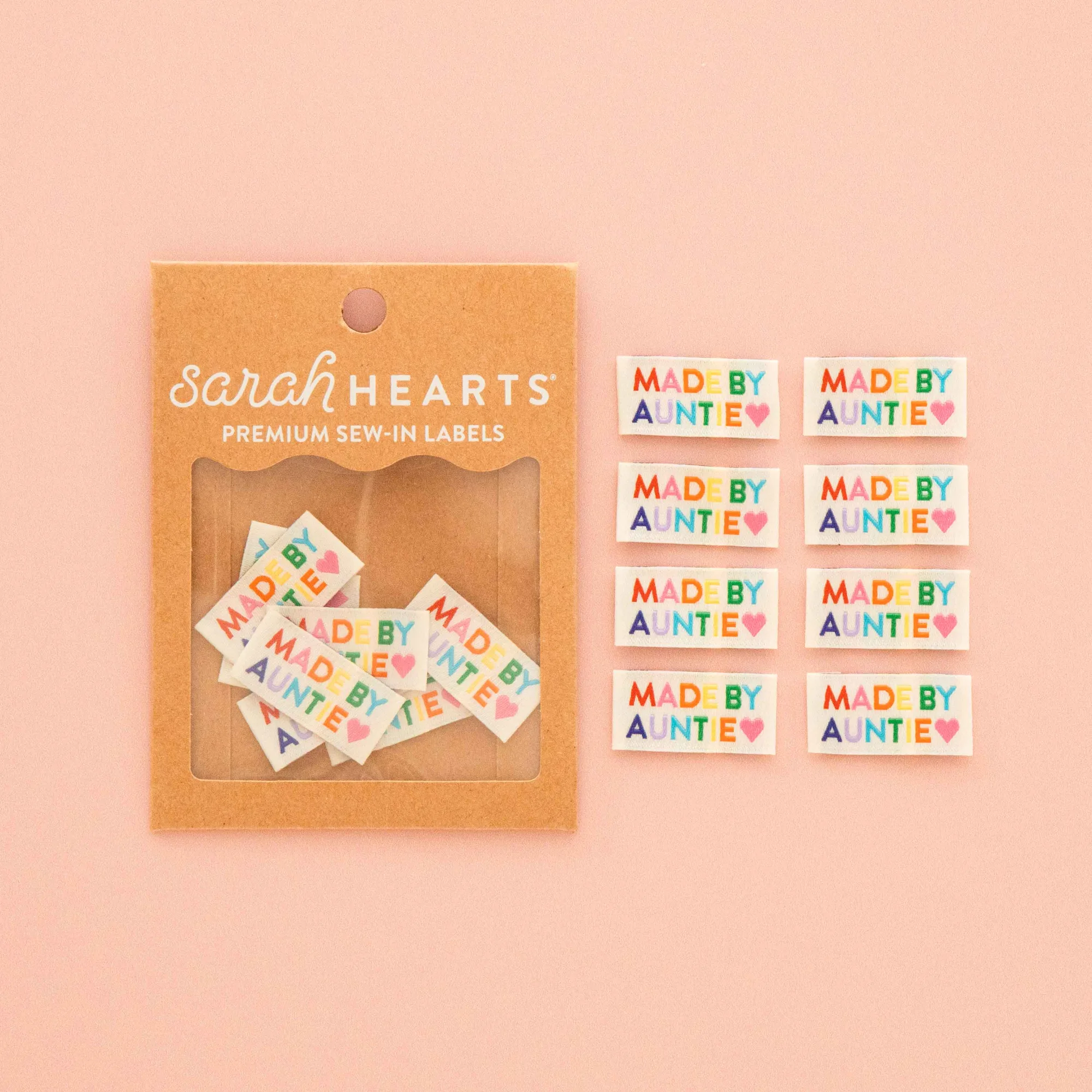
All three materials can be washed, but they tolerate heat differently. The Made by Grandma, Made by Mom and Made by Auntie Woven Sewing Labels Rainbow Colors labels are described as fully washable and able to handle the heat of the dryer. That is a real advantage for quilts and children's clothes that get washed often.
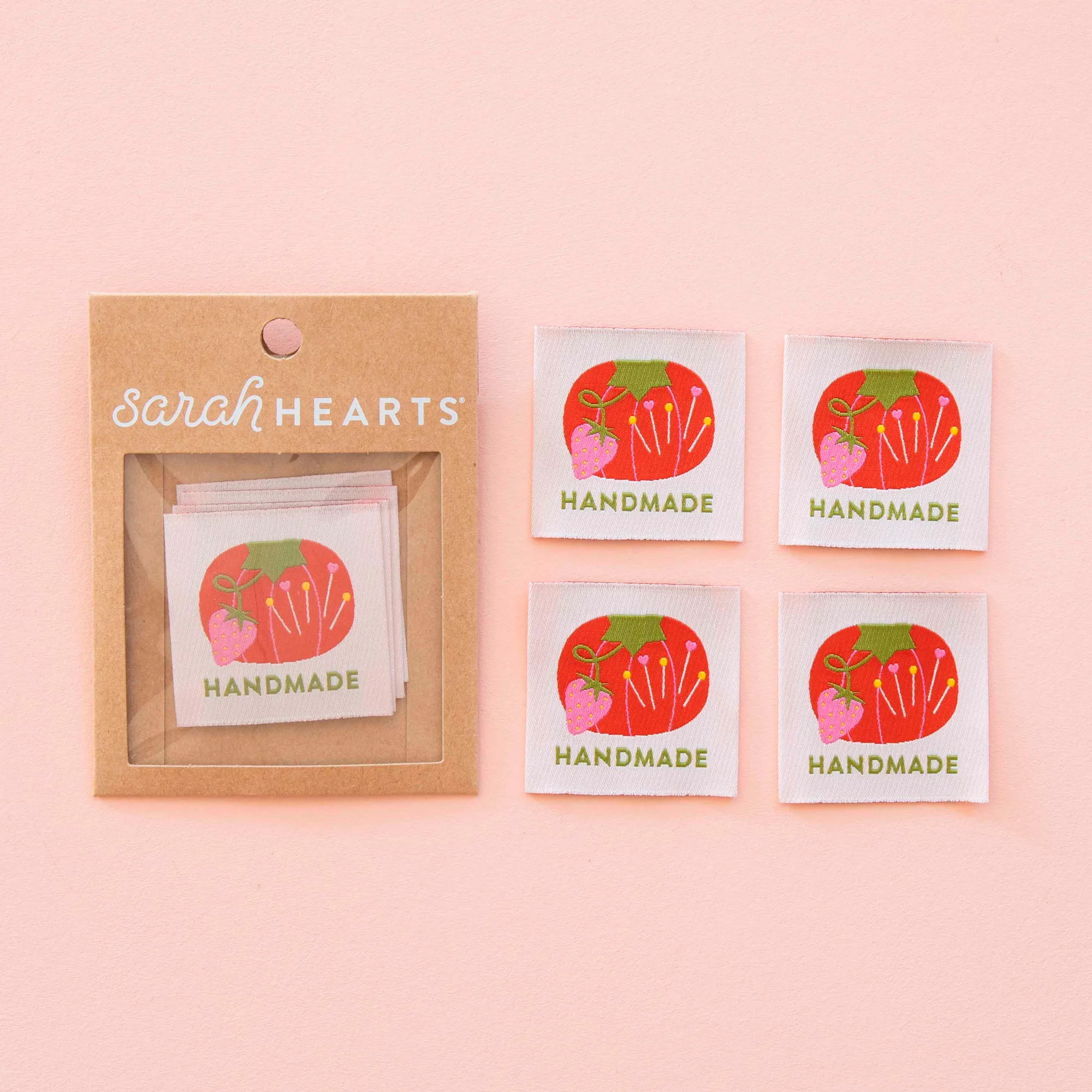
The Tomato Pincushion Handmade Large Woven Sewing Labels carry more specific care instructions: machine wash cold and tumble dry low. That is not a weakness, just a narrower window. Write-in labels depend on the ink you use, so test your fabric pen on a scrap label before committing a name or date to a finished quilt.
- Wash a test label with a scrap of your project fabric before attaching labels to a finished quilt.
- Heat-set fabric pen ink according to the pen manufacturer's instructions before washing.
Durability and long-term appearance
Woven labels generally hold their appearance longer because the design is part of the weave. The Tomato Pincushion Handmade Large Woven Sewing Labels are 100% polyester, a fiber that resists stretching and fading, and they use an end fold design that is easy to sew on. The Black Heart Organic Cotton Sewing Labels are screen printed on cream organic cotton and are 100% polyester, so they combine a cotton look with polyester durability.
Organic cotton labels stay soft but printed designs can soften or fade over years of heavy washing. Write-in labels last as long as the ink does. If the label needs to survive a decade of quilt washing, woven or polyester-based options are the more predictable choice.
- For heirloom quilts, choose a woven label and stitch it with a matching thread color to hide any future fraying.
- Keep a small stash of each material so you can match the label to the project instead of settling.
Size, fold and application differences
Label format affects how you attach it as much as material does. The Tomato Pincushion Handmade Large Woven Sewing Labels measure 4.5cm x 4.5cm and use an end fold, which means you fold the ends under and stitch through the folded edge. That is a clean finish for quilts, garments and bags.
Most of the other labels in this comparison are sold in packs of 8, while the Tomato Pincushion labels come in packs of 4. That difference matters if you are labeling a batch of quilts or a full season of kids' clothes. Check the pack count against your project list before ordering so you do not run short mid-project.
- End fold labels are easiest to attach by machine; flat labels can be hand-sewn with a slip stitch.
- Buy one extra pack beyond your project count to cover mistakes and future repairs.
Trade-offs to weigh before you buy
- Softness vs. durability: Organic cotton labels are the softest against skin, but woven and polyester-based labels hold their printed or woven design longer under heavy washing. Choose cotton for baby and quilt projects, woven for garments and bags.
- Care flexibility vs. specific instructions: Most labels here are fully washable and dryer-safe, but the Tomato Pincushion Handmade Large Woven Sewing Labels specify machine wash cold and tumble dry low. Read the care line before you commit a label to a quilt that will be washed hot.
- Pack count vs. project size: Most labels come in packs of 8, while the Tomato Pincushion labels come in packs of 4 at 4.5cm x 4.5cm. Count your projects first so a single pack covers the batch.
- Permanent wording vs. write-in flexibility: Pre-printed and woven labels commit to a message, while write-in labels let you add a name, date or care note later. Keep write-in labels for variable projects and pre-printed labels for signature makes.
Label options in this comparison
- Made by Grandma Organic Cotton Sewing Labels: Organic cotton, neutral colors, soft to the touch and never scratchy, fully washable and able to handle the heat of the dryer, sold in packs of 8, OEKO-TEX Standard 100 certified. A safe default for baby quilts and children's clothing where softness and frequent washing both matter.
- Made by Mom Organic Cotton Sewing Labels: Organic cotton, neutral colors, soft to the touch and never scratchy, fully washable and able to handle the heat of the dryer, sold in packs of 8, OEKO-TEX Standard 100 certified. Same softness and washability as the Grandma version, so the choice comes down to which wording fits the maker.
- Black Heart Organic Cotton Sewing Labels: Screen printed black hearts on a cream organic cotton label, soft feel and washability, sold in packs of 8, 100% polyester, OEKO-TEX Standard 100 certified. A decorative option for pockets, outer seams, quilts and gifts where a visible heart motif suits the project.
- Red Heart Woven Sewing Labels: Petite, double-sided red heart woven label with a red heart on a cream background on both front and back, super soft to the touch and never scratchy, fully washable and able to handle the heat of the dryer, sold in packs of 8. A woven label that stays soft, useful when you want a heart motif that reads from either side of a seam.
Which label material fits your project
Best for
- Quilts and baby items that need softness against skin and frequent washing
- Makers who want a consistent signature label across many projects
- Gift sewing where a heart, rainbow or family wording adds meaning
Not for
- Projects where you need to write a name or date after the fact, which calls for a write-in label
- Heavy-use bags and garments where you want the most abrasion-resistant option
- Makers who need a single pack to cover more than eight finished items
There is no single best sew-in label material, only the one that matches how the finished item will be used. Keep soft organic cotton labels for quilts and baby clothes, woven labels for garments and bags, and write-in labels for anything that needs a name or date added later. Match the material to the wear, and the label will outlast the project.