Quick answer
Buy accessories that solve a problem you already have: a foot for the fabric you sew most, a foot for the edge finish you repeat, and a foot that saves measurable time. For many sewists, that means one overlocker foot, one heavy-fabric foot, and one specialty foot tied to a specific technique. Skip multi-piece sets until you can name the project that will use each piece.
Start With the Fabric You Actually Sew
The fastest way to waste money on sewing machine accessories is to buy for the project you hope to make. Instead, list the fabrics in your last three finished projects. If denim, canvas, or leather appears more than once, a heavy-fabric foot moves to the top of your list. If you mostly sew garment seams and edge finishes, an overlocker foot matters more. The fabric list also tells you which feet will sit unused: a delicate-fabric foot rarely earns its place in a denim-heavy sewing room.
Match the Foot to the Machine, Not Just the Stitch
Presser feet are machine-specific. A foot that fits one brand's shank may not fit another, and the numbering systems differ between manufacturers. Before buying, confirm the foot number, the machine compatibility noted by the seller, and whether your machine uses a standard or specialized shank. If a product page does not list compatibility, treat that silence as a limitation: contact the seller or check your machine manual rather than guessing. This one check prevents most returns.
Prioritize Feet That Replace Hand Work
The accessories worth buying are the ones that replace a step you currently do slowly by hand. A double-cord foot that sews two parallel cords at once removes the need to position piping in multiple passes. An overlocker foot that guides raw edges cleanly replaces the stop-start of finishing seams with a standard foot. When you compare two accessories, estimate the minutes saved per project and multiply by the number of projects you finish in a year. That number is a better buying signal than a discount.
Build in This Order
If you are starting from nothing, buy in this sequence: a reliable everyday foot for straight and zigzag work, then an edge-finishing foot, then a heavy-fabric foot, then specialty feet for techniques you have already tried. This order keeps your spending tied to skills you have, not skills you plan to learn. It also means each new accessory has an immediate project waiting for it, which is the only real test of whether it was worth buying.
Decision Rules for Buying Sewing Accessories
- Buy the foot for your most common fabric: Count the fabrics in your last three projects. If heavy fabrics dominate, choose a heavy-fabric foot before any specialty foot. If midweight garment fabric dominates, choose an edge-finishing foot first. One foot that matches your real fabric list beats three feet bought for imagined projects.
- Choose the flexible version when fabric weights vary: Between two similar overlocker feet, the one rated for a wider range of fabric weights covers more of your sewing without a second purchase. Choose the standard version only if your fabric weight is consistent. Flexibility is worth paying for only when your projects actually vary.
- Verify machine compatibility before price: Check the foot number, the shank type, and any machine width requirement listed by the seller. A double-cord foot made for 9 mm machines will not work on a narrower machine regardless of price. An incompatible accessory at any discount is a return, not a bargain.
- Set a time-saved threshold: Estimate the minutes an accessory saves per project and multiply by your yearly project count. If the total is under an hour a year, wait until the technique becomes a regular part of your sewing. Buy accessories that change your routine, not ones that only change your drawer.
Accessories That Earn Their Place
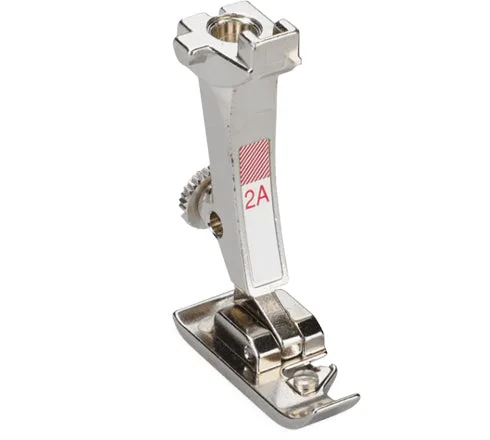
- #2A BERNINA Overlocker Foot: The BERNINA #2A Overlocker Foot is a variation of the #2, designed for overlock-style edge finishing on a wider range of fabric weights than the standard #2, and it helps guide fabric edges cleanly for a fray-free finish. If you sew a mix of light and midweight fabrics and want one edge-finishing foot to cover both, the #2A is the more flexible choice than the standard #2.
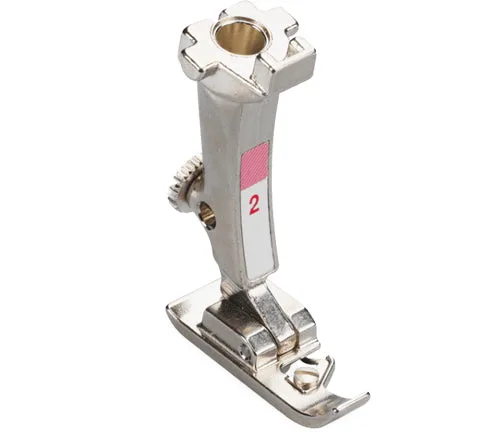
- #2 BERNINA Overlocker Foot: The BERNINA #2 Overlocker Foot is designed for overlock-style stitches that finish raw fabric edges cleanly and prevent fraying, and it is described as a practical essential for garment construction. If your sewing is mostly garment seams in consistent fabric weights, the standard #2 covers the job without paying for extra range you may not use.
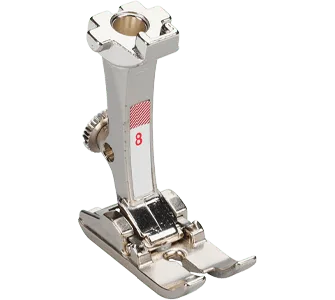
- #8 BERNINA Jeans Foot: The BERNINA #8 Jeans Foot is built for heavy, thick fabrics including denim, canvas, and leather, with sturdy construction and smooth glide to sew through multiple layers and bulky seams while reducing skipped stitches. This is the foot to buy when your standard foot struggles at thick seams, because the problem is usually the foot lifting or dragging, not the machine.
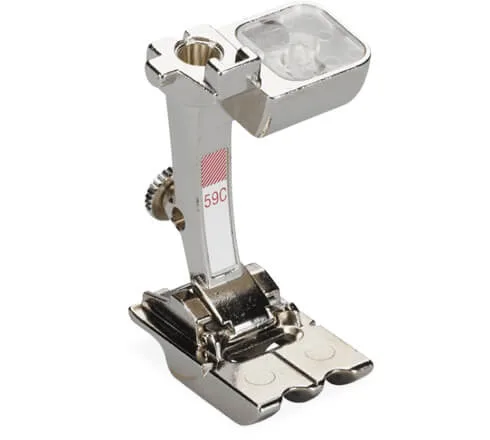
- #59C BERNINA Double-Cord Foot 4-6mm: The BERNINA #59C Double-Cord Foot 4-6mm sews two parallel cords simultaneously, works with cords 4-6 mm in diameter, is used for creating piping, and is made for 9 mm machines. If you make piping regularly, this replaces two positioning passes with one, but only if your machine has a 9 mm stitch width.
Who Should Buy These Accessories
Best for
- Sewists who finish garment seams and raw edges regularly and want a cleaner, fray-free result
- Sewers who work with denim, canvas, or leather and deal with bulky seams and skipped stitches
- Quilters and garment makers who already know which techniques they repeat and want to speed them up
Not for
- Shoppers who have not confirmed their machine's shank type and foot compatibility
- Sewists who have not yet used the technique the accessory supports and cannot name a project for it
- Owners of machines with a stitch width narrower than 9 mm considering the double-cord foot