Quick answer
Masters of Crime: Shadows is a cooperative mystery game where you plan a heist in Amsterdam. Success depends on careful team coordination, scouting, and adapting to story changes.
Why cooperative mystery games demand a different approach
Unlike competitive games, cooperative mystery games like Masters of Crime: Shadows require every player to share information and make decisions together. The game's story evolves based on your choices, so communication is key.
In Shadows, you must break into the Bachmann Gallery and steal a painting. This means scouting the gallery, inspecting building plans, hacking security systems, and assembling a team from Amsterdam's underworld. Every decision affects the narrative, so you can't rely on a single player to solve everything.
Trade-offs in cooperative mystery games
Cooperative mystery games trade individual glory for shared discovery. In Shadows, you won't have a winner—you either succeed together or fail together. This can be frustrating for players who prefer competitive scoring, but it creates a more immersive and collaborative experience.
Another trade-off is replayability. Because the story changes based on your decisions, you can play Shadows multiple times and get different outcomes. However, the lack of a fixed solution means you might miss clues or make suboptimal choices that lead to failure.
Trade-offs in cooperative mystery solving
- Shared information vs. hidden surprises: In Shadows, all players see the same information, but the story branches based on group decisions. This encourages discussion but can reduce the thrill of individual discovery. If you enjoy surprises, consider playing with a rotating 'lead detective' who makes the final call.
- Replayability vs. linear narrative: The game's branching story allows multiple playthroughs, but the lack of a fixed plot means you might encounter dead ends or repeat similar scenes. Keep notes of your choices to explore different paths in subsequent games.
- Teamwork vs. individual agency: Every decision is made collectively, so no single player can dominate. This fosters cooperation but may frustrate players who prefer to act independently. Assign each player a role (e.g., hacker, scout, planner) to give everyone a sense of ownership.
Product facts
-
Masters of Crime: Shadows: The game involves scouring Amsterdam's underworld for a team, scouting the gallery, inspecting building plans, hacking security systems, and planning your theft. This means you need to divide tasks among players and share findings to make informed decisions, rather than having one player lead the entire mission.
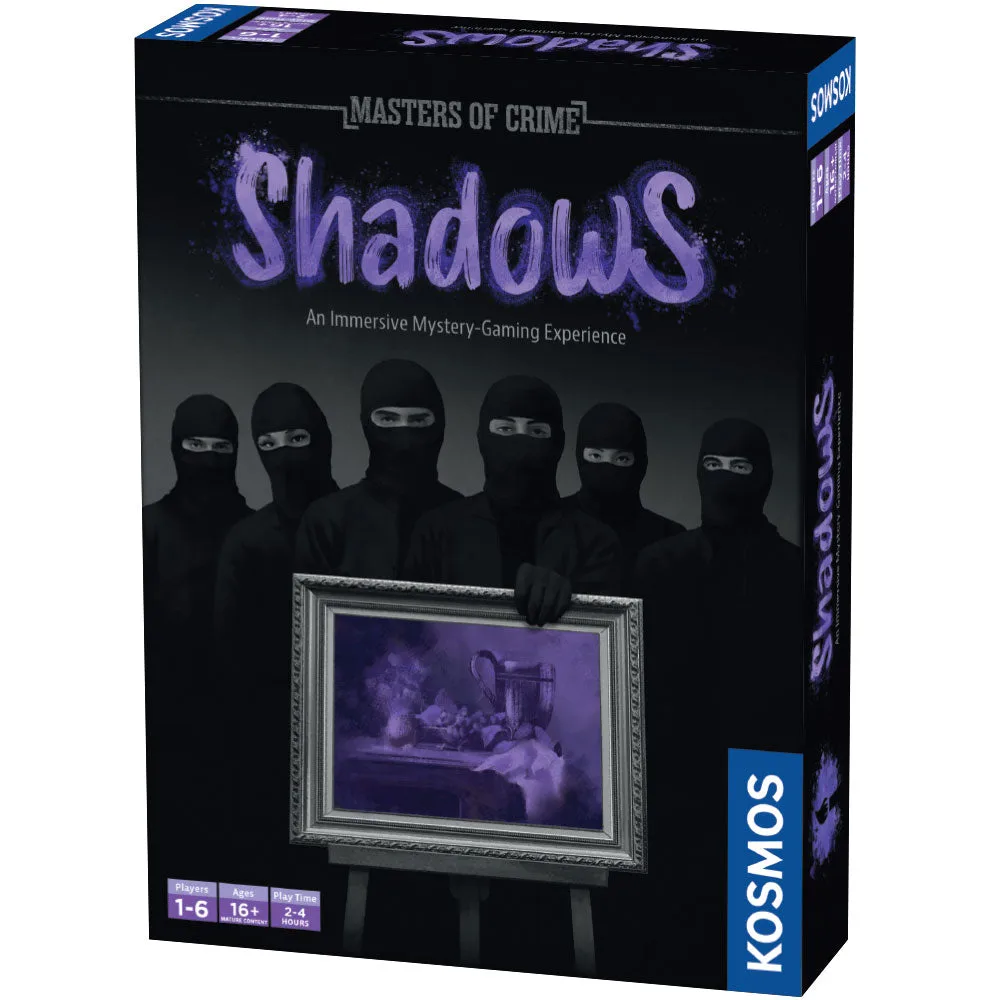
Masters of Crime: Shadows
Who should play Shadows?
Best for
- Groups who enjoy collaborative storytelling and puzzle-solving
- Players who want a replayable mystery game with multiple endings
Not for
- Competitive players who prefer scoring or winning individually
- Those who dislike open-ended narratives with no single correct solution