Quick answer
Shampoo bars are better for most people seeking a low-waste, travel-friendly routine with fewer synthetic ingredients. Liquid shampoos win when you need precise control over application or have very specific scalp needs. Choose based on your hair type and lifestyle.
If you've ever stood in the shampoo aisle wondering whether to grab a bottle or a bar, you're not alone. The shift to solid hair care is more than a trend—it's a practical response to plastic waste and ingredient transparency. But does a shampoo bar really clean as well as liquid? The answer depends on what you value: convenience, eco-impact, or hair feel.
In this comparison, we'll break down the real differences between shampoo bars and liquid shampoos—how they lather, what they contain, how they travel, and which hair types they serve best. We'll also look at specific products from Pretty Farm Girl to ground the discussion in real options.
What’s really different inside the bottle vs. the bar?
The biggest difference is water content. Liquid shampoos are mostly water, which means they need preservatives to stay fresh. Bars are concentrated formulas—no water means fewer preservatives and a smaller footprint. That concentration also means a little bar can last as long as two or three bottles, depending on how you store it.
Lather is another point of contrast. Some people expect a rich, foamy lather from any shampoo. A well-made bar can deliver that, but not all bars are equal. Look for bars with coconut-based cleansers that produce a creamy lather without stripping natural oils. If you've tried a bar that left your hair feeling waxy, it might have been a hard-water reaction or a formula with too much oil.
- Check the ingredient list: bars often skip sulfates and silicones that can weigh hair down.
- If you have hard water, try a chelating rinse or a bar with gentle surfactants.
Which one is gentler on your scalp and strands?
Liquid shampoos can contain sulfates that create big foam but may strip moisture. Bars vary widely—some are essentially soap, which can be alkaline and harsh. True shampoo bars use mild surfactants and are pH-balanced for hair. They can be a good choice for sensitive scalps because they often have shorter ingredient lists.
For those with oily hair, a bar's concentrated cleansers can help remove buildup without over-drying. For dry or damaged hair, look for bars with nourishing oils like shea or jojoba. If you color your hair, check whether the bar is sulfate-free to help preserve color.
- For oily hair, a bar with clarifying but gentle ingredients can reset your scalp.
- For colored hair, avoid bars with sulfates and look for color-safe claims.
Travel, storage, and everyday convenience
Shampoo bars are a traveler's dream: no liquid limits, no leaks, and they take up less space. They also eliminate the need for plastic bottles in your shower. The trade-off is storage—bars need to dry between uses to last longer. A draining dish or a sisal bag can help.
Liquid shampoos are easy to dispense and control, especially if you have very long or thick hair and need to target the scalp. They also come in a wider range of specialized formulas. But every bottle is plastic, and many are not recyclable curbside.
- Use a soap dish with drainage to extend your bar's life.
- For gym bags or carry-ons, a bar in a tin is foolproof.
Eco-impact: what’s the real cost?
Shampoo bars typically come in paper or cardboard packaging, cutting out plastic entirely. Because they're concentrated, they also reduce shipping weight and carbon footprint. Liquid shampoos require more packaging and energy to transport due to water weight.
But eco-impact isn't only about packaging. Consider how you use the product. If you let a bar dissolve in water or don't let it dry, you might waste product. Used mindfully, bars are generally the greener choice. If you prefer liquid, look for refill options or larger sizes to reduce waste.
- Pair your bar with a reusable tin for zero-waste travel.
- If you stick with liquid, choose brands with refill programs.
Trade-offs at a glance
- Water content: Liquid shampoos are mostly water, requiring preservatives. Bars are concentrated and often preservative-free. Choose bars for fewer additives.
- Lather experience: High-quality bars can lather richly, but some bars may not foam as much as sulfated liquids. Adjust your expectation. Look for coconut-based cleansers for a creamy lather.
- Travel and storage: Bars are TSA-friendly and leak-proof but need to dry between uses. Liquids are easy to dispense but bulky and plastic-heavy. Use a draining dish for bars; pick liquids only if you need precise dosing.
- Eco-impact: Bars use minimal packaging and reduce shipping weight. Liquids often come in plastic that may not be recyclable. If sustainability is a priority, bars win.
Real products to consider
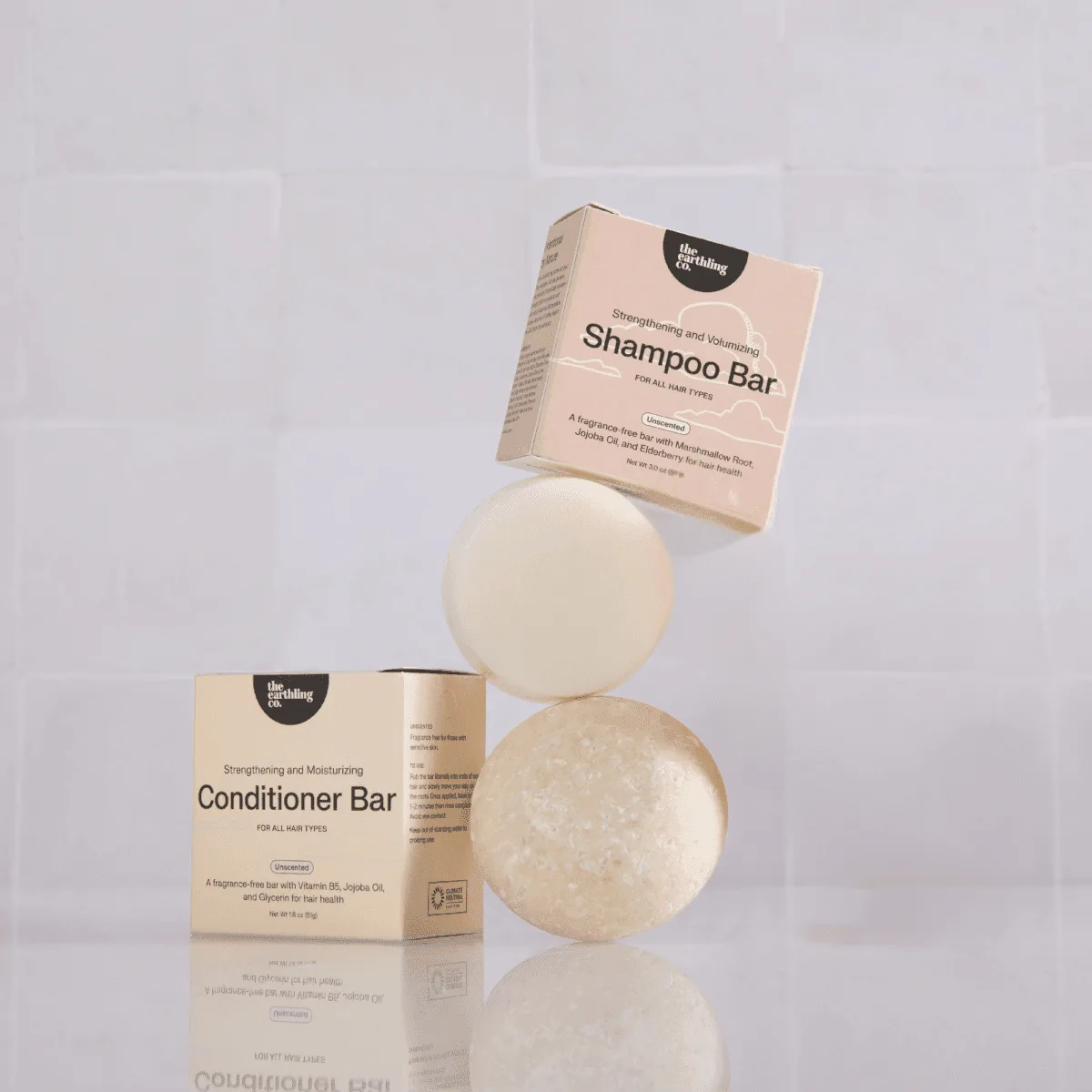
- Shampoo and Conditioner For Sensitive Skin: Unscented Shampoo and Conditioner That Soothes & Calms. A Shampoo Bar with a quick-building, luxurious lather that works like bottled shampoo to effectively cleanse oil, dirt, and build-up without stripping your hair and scalp’s natural moisture. Made with a balanced formula of nourishing, naturally derived ingredients that increase volume, reduce breakage, and promote stronger strands. This bar mimics the feel of liquid shampoo while staying fragrance-free—ideal if you have a sensitive scalp or prefer no scent.
- Growth Support Bundle for Thickness & Volume: Stronger, Thicker Hair Starts Here. A volumizing routine that gives instant lift and fullness for thick, healthy hair. Start your routine with our volumizing Shampoo Bar that quickly lathers to remove dirt, oil, and build-up while thickening your strands. The Conditioner Bar reinforces your strands with essential nutrients to improve moisturize without weighing it down. If you're worried that a bar won't give you enough volume or moisture, this bundle pairs a shampoo and conditioner bar designed specifically for thickness—a good middle ground.
Which should you choose?
Best for
- Eco-conscious shoppers who want to cut plastic waste.
- Travelers who need a leak-proof, compact hair care option.
- People with sensitive scalps who prefer fragrance-free, minimal-ingredient formulas.
Not for
- Those who need very specific medicated or prescription shampoos that only come in liquid form.
- People who dislike the ritual of storing and drying a bar between uses.
Ultimately, the best choice depends on your hair goals and daily habits. If you value simplicity, sustainability, and are willing to adapt your routine, a shampoo bar can deliver clean, healthy hair without the plastic. If you rely on specialized liquid formulas, at least consider a bar for travel or as a backup. Either way, reading ingredient labels and understanding your hair's needs will lead you to the right decision.