Quick answer
Choose a shaped anatomy puzzle like Dr. Livingston's if you want a piece that follows real organ contours and doubles as a study aid. Pick a traditional jigsaw if you prefer a classic rectangular format with more piece count and less structural constraint.
Why piece shape matters for anatomy puzzles
Shaped puzzles use die-cut pieces that follow the actual outline of the organ or body part. This means you assemble the brain, eye, or heart along its natural boundaries, not a generic grid. Traditional jigsaws cut every piece from a rectangular board, so the image is the only anatomical clue.
For learners, the shaped approach reinforces spatial relationships. You see where the optic nerve exits the eye because the puzzle edge matches the real structure. Traditional puzzles force you to rely entirely on printed details, which can be harder to internalize.
Piece count and difficulty trade-offs
Dr. Livingston's Human Head Anatomy puzzle has 441 pieces, while the Human Eye puzzle has 544 pieces. Both are relatively moderate counts compared to a 1000+ piece traditional jigsaw. The shaped cut adds a structural guide that can make assembly faster for some solvers, but the irregular edges can also be confusing if you expect straight borders.
Traditional jigsaws often offer higher piece counts and a uniform edge, which appeals to purists who enjoy sorting by shape. However, they lack the anatomical contour that makes a shaped puzzle a self-contained learning tool.
Trade-offs at a glance
- Learning reinforcement: Shaped puzzles teach anatomy by contour. Traditional puzzles teach only by image.
- Assembly difficulty: Shaped puzzles have irregular edges that can slow down sorting. Traditional jigsaws have straight borders that simplify the frame.
- Display value: A completed shaped puzzle looks like a cutout of the organ itself, making it a striking wall piece. Traditional jigsaws look like a printed poster.
Anatomy puzzle facts
-
Human Head Anatomy Jigsaw Puzzle | Dr Livingston's Unique Shaped Science Puzzles, Accurate Medical Illustrations of the Body, Organs, Brain, Skull: 441 pieces, die-cut to highlight real anatomy of the human head, brain, skull, eye, jaw, and spinal cord. The shaped cut lets you trace the actual outline of each structure, reinforcing anatomical boundaries as you assemble.
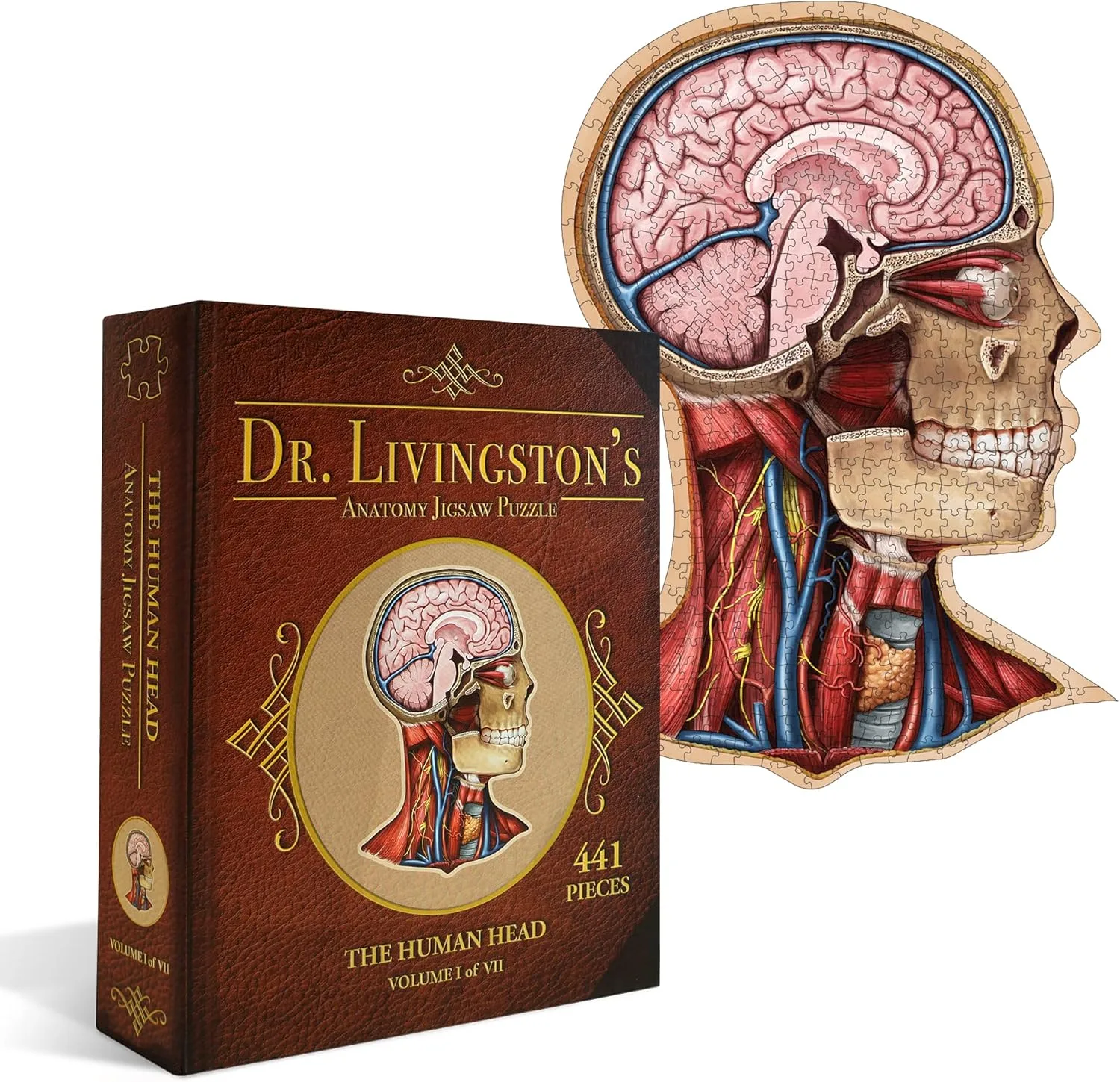
Human Head Anatomy Jigsaw Puzzle | Dr Livingston's Unique Shaped Science Puzzles, Accurate Medical Illustrations of the Body, Organs, Brain, Skull
-
Human Eye Anatomy Jigsaw Puzzle | Dr. Livingston's Unique Shaped Science Puzzles: 544 pieces, die-cut to highlight real anatomy of the human eye including cornea, iris, retina, and optic nerve. Higher piece count in a shaped format means more detail in the eye's internal structures, ideal for focused study of ocular anatomy.
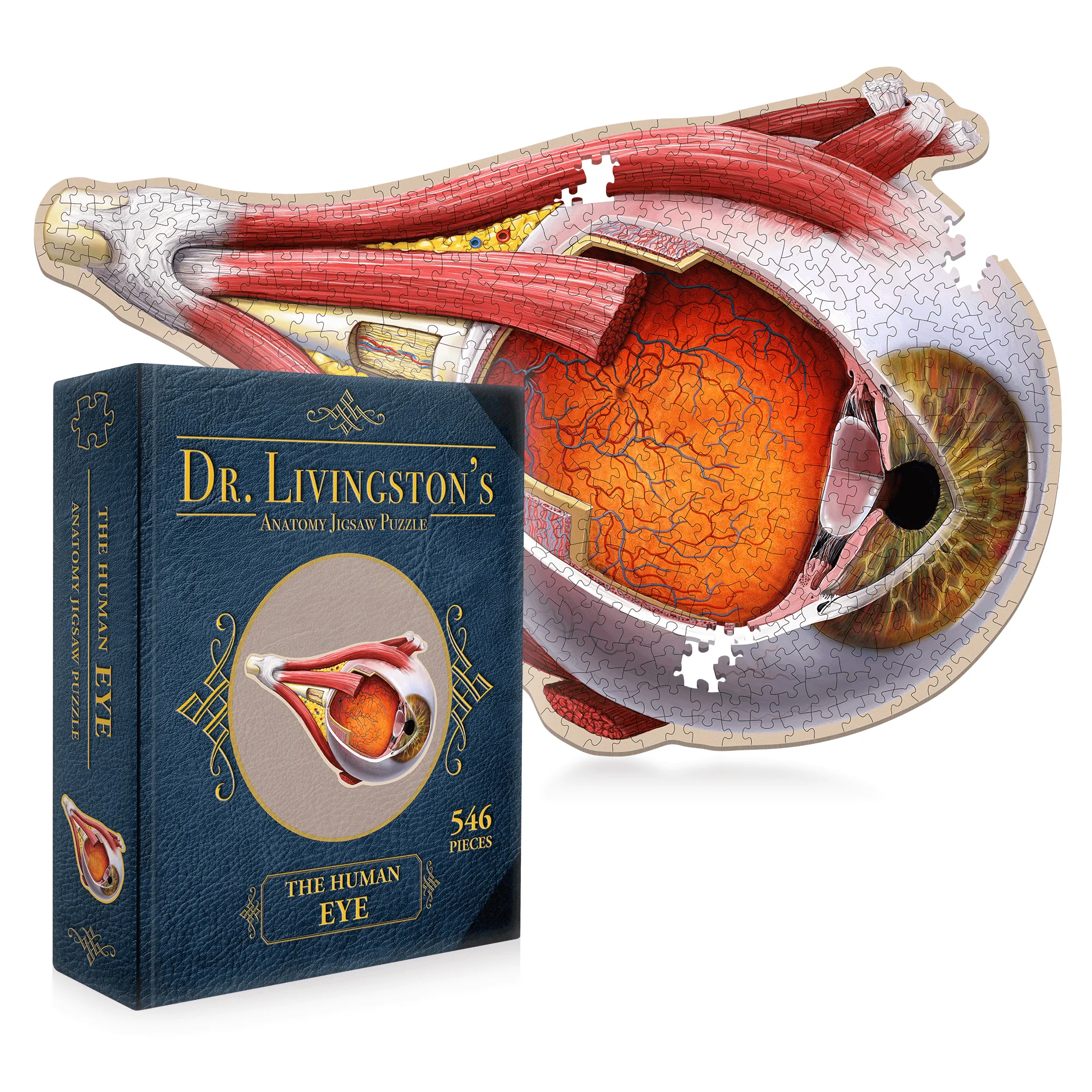
Human Eye Anatomy Jigsaw Puzzle | Dr. Livingston's Unique Shaped Science Puzzles
Which one fits you?
Best for
- Students or educators who want a hands-on anatomy study aid that doubles as a puzzle
- Solo puzzlers who enjoy a moderate challenge with built-in guidance from the shape
Not ideal for
- Puzzle purists who prefer high piece counts and traditional rectangular assembly
- Group activities where a standard border helps multiple people work together