Quick answer
Choose sheer tights in the 15–30 denier range for warm and mild weather, and switch to opaque tights at 100 denier when temperatures drop. For winter, 100 denier opaque tights give the most warmth and coverage, while 20 denier sheers keep legs looking lighter and work best in spring, summer, and early autumn. If you want one pair to cover the widest range of seasons, a 30 denier sheer stay-up is the most flexible middle ground.
What denier actually measures
Denier is the weight of the yarn, not the thickness of the fabric. A higher number means a denser, more opaque knit; a lower number means a finer, more transparent knit. That is why a 15 denier sheer and a 100 denier opaque can both fit the same leg yet feel completely different against the skin. Denier also affects how much warmth the tight holds and how visible the leg looks under clothing.
Sheer tights: 15–30 denier for warm and mild weather
Sheer tights are the lighter end of the scale. At 15 denier, the knit is fine enough to look almost invisible on the leg, which is why it suits warm days, indoor events, and occasions when you want a bare-leg effect with a little polish. At 20 denier, the leg is still transparent but the knit has slightly more body, so it holds its shape better and resists light snags more than the finest sheers. At 30 denier, you get a matte, semi-sheer look that bridges mild spring days and cooler autumn ones.
The trade-off is durability and warmth. Sheer yarns are more vulnerable to runs, and they do not insulate much, so they are a poor choice for a cold winter commute unless you layer them or choose a denser knit.
Opaque tights: 100 denier for cold weather
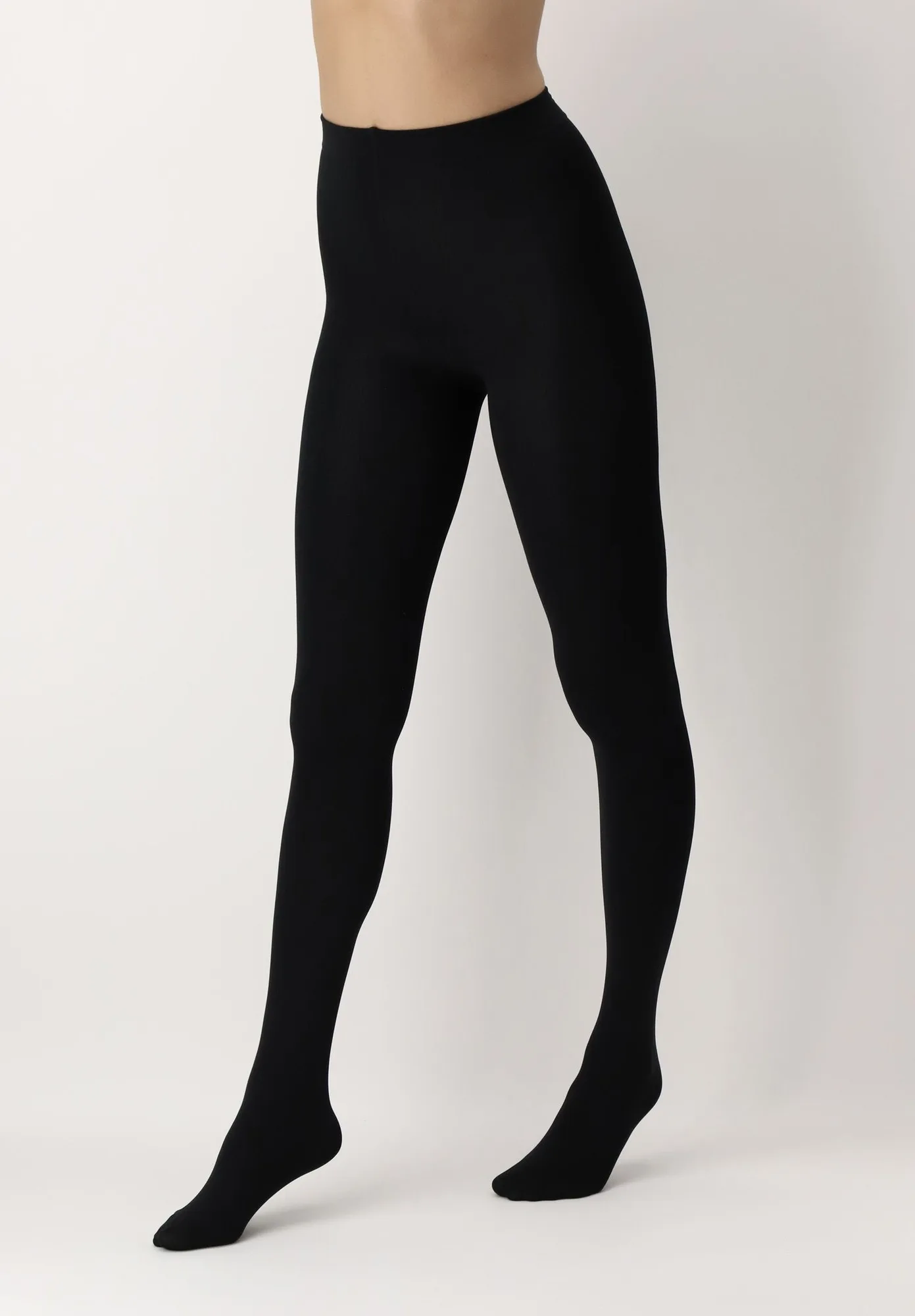
Opaque tights start where sheers stop being practical. A 100 denier tight is fully opaque, so it reads as a solid colour rather than a tinted leg, and the denser knit traps more air for warmth. That makes it the most reliable option for winter, especially when you are wearing skirts or dresses and want coverage without adding trousers. The trade-off is that opaques look heavier and more casual than sheers, and they are too warm for summer or heated indoor spaces.
20 denier vs 100 denier: the practical difference
If you are deciding between 20 denier and 100 denier, think about the temperature and the look you want. A 20 denier sheer is about visibility and lightness: it flatters the leg, works with open shoes in mild weather, and disappears under most outfits. A 100 denier opaque is about coverage and warmth: it hides skin tone and blemishes, pairs with boots and heavier fabrics, and keeps you comfortable when the air is cold.
There is no single winner. The right choice depends on whether you are dressing for a warm office, a mild autumn walk, or a freezing morning. Many people keep both weights in rotation and switch as the season changes.
Fit and sizing: what to check before you buy
Denier tells you about warmth and opacity, but fit determines whether the tight stays comfortable. Check the size chart for your height and weight rather than guessing, because a tight that is too small will pull at the waist and stress the knit, while one that is too large will sag. Look at the construction details too: a flat seam sits invisibly under clothing, a sheer bodice avoids a visible line where the opaque leg begins, and a semi-reinforced toe reduces the risk of stretch marks at the toe without making the toes fully opaque.
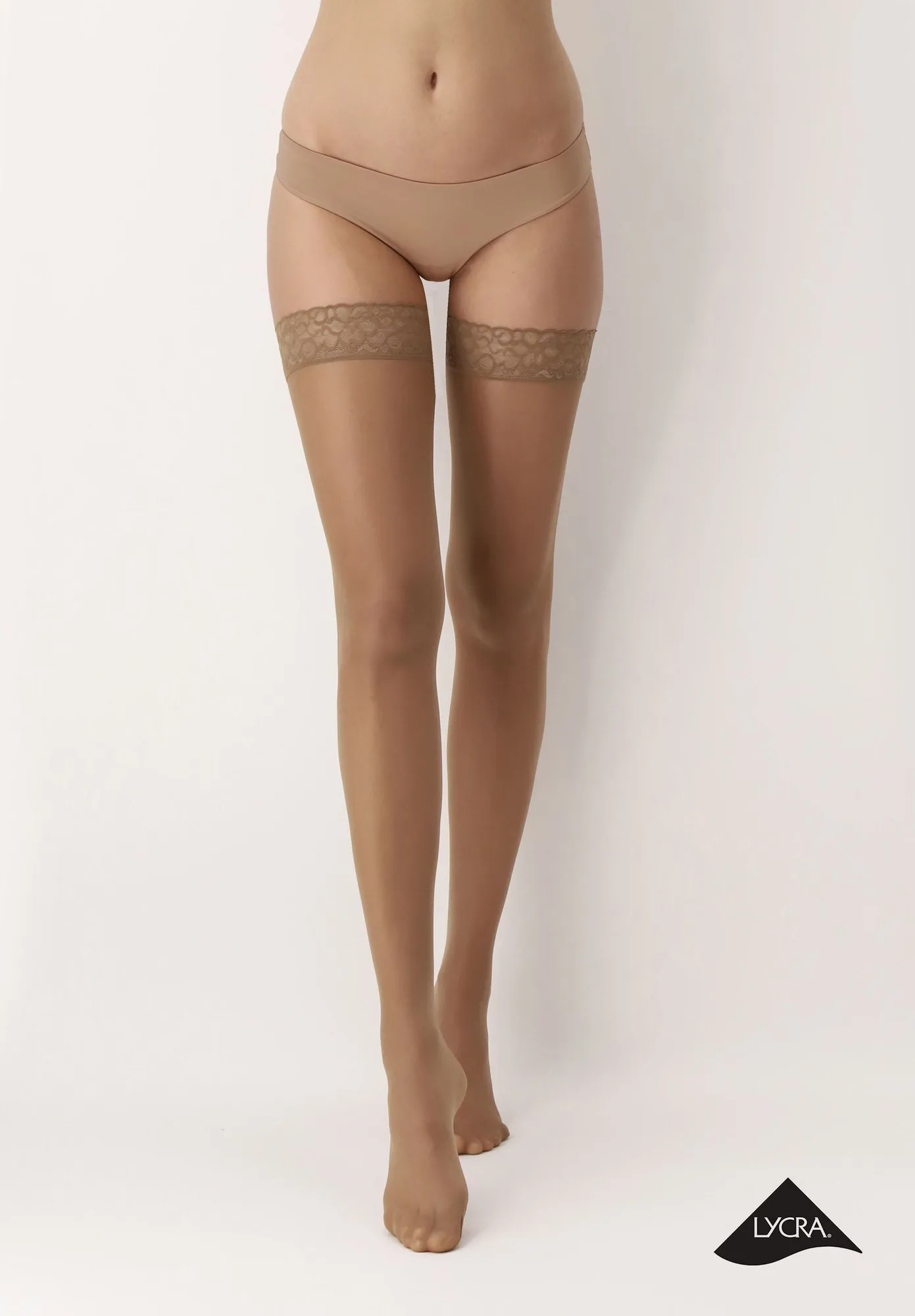
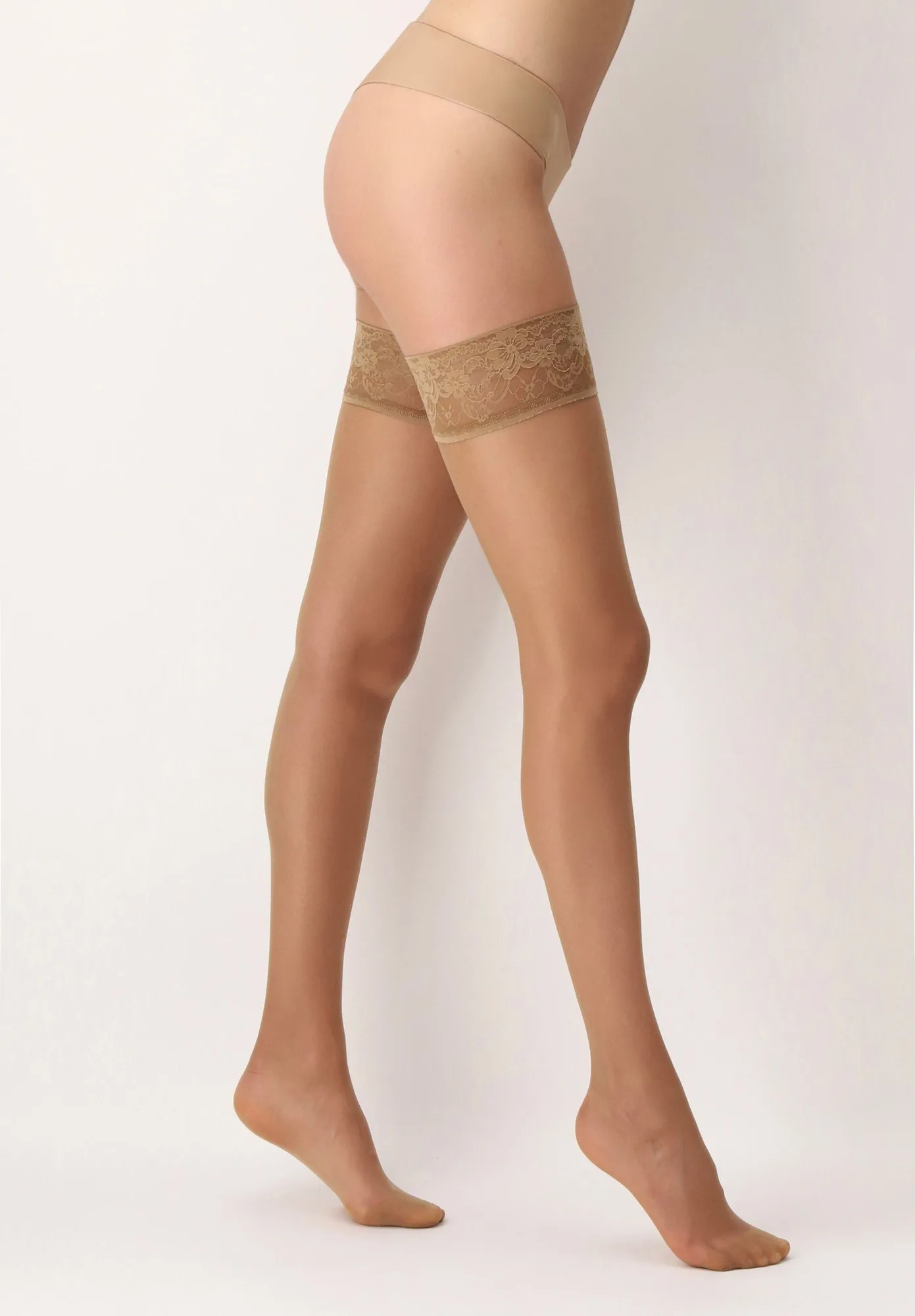
For stay-ups, the fit of the silicone band matters as much as the denier. A lace flounce with silicone strips holds better than a plain band, but it still needs to sit on the right part of the thigh to stay put.
Trade-offs at a glance
- Warmth vs lightness: Sheer tights at 15–30 denier keep the leg looking light but offer little insulation; 100 denier opaques are warmer but visually heavier. Match the denier to the temperature, not just the outfit.
- Durability vs delicacy: Fine sheers are more prone to runs and snags; denser opaques resist wear better but can feel bulkier under close-fitting clothes. If you snag tights often, choose a higher denier or a semi-reinforced toe.
- Stay-up vs waistband: Stay-ups remove the waistband but rely on silicone strips to hold; tights with a waistband stay put but add a line under clothing. Choose stay-ups for ease, tights for a smooth silhouette.
Options in the Oroblù range
- Warm and Soft 100 Opaque Tights - Black: Warm and Soft 100 Opaque Tights are thermal tights in 100 denier with an opaque appearance, a smooth compact jersey outside, and a soft fleece effect inside against the skin. This is the winter choice: fully opaque, warm, and comfortable for cold days when sheer tights would be too thin.
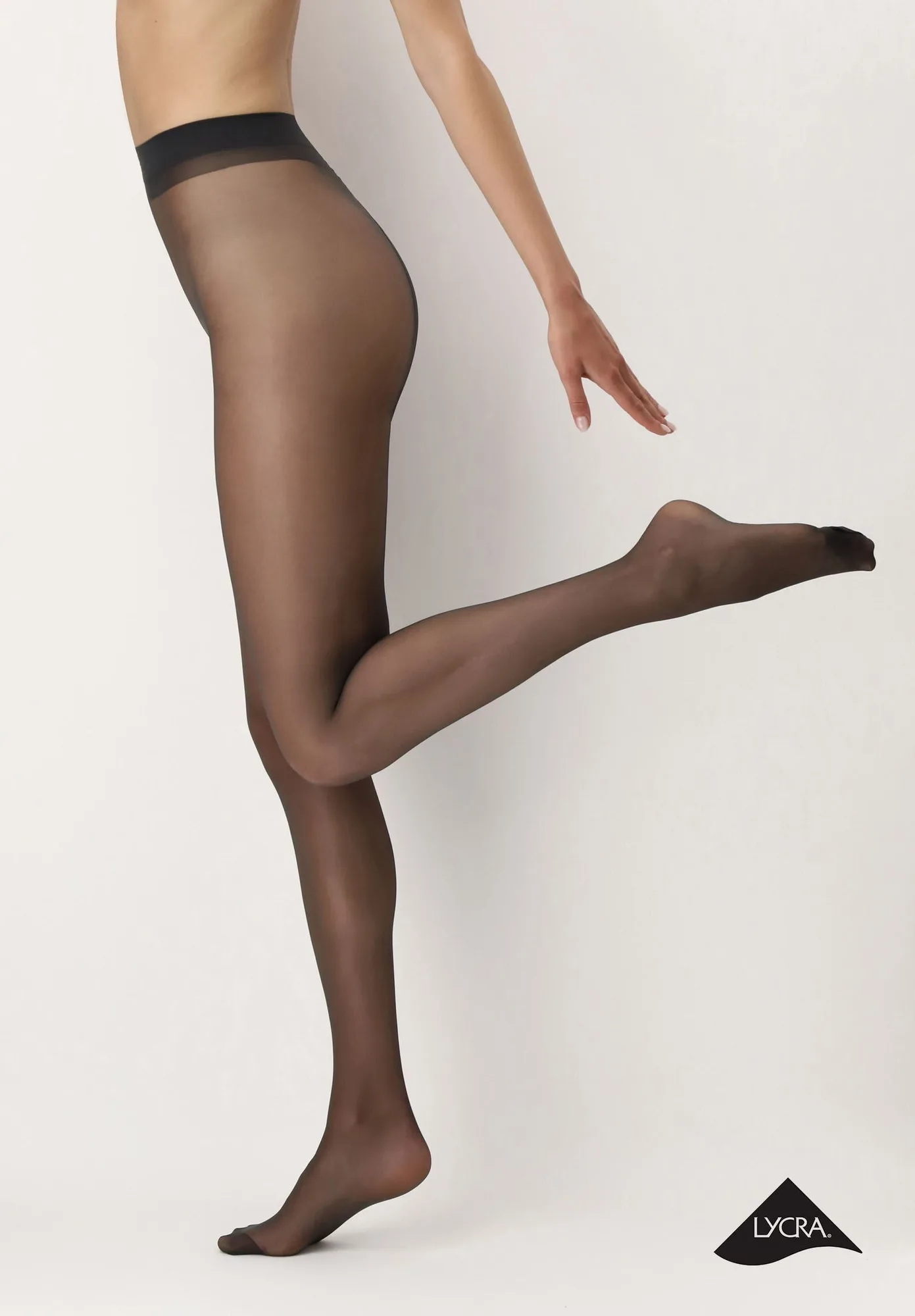
- Sheer Opaque Tights Sensuel 20 - Dark Grey: Sheer Opaque Tights Sensuel 20 are 20 denier, transparent in the leg with an opaque appearance, and have a sheer bodice so there is no thigh-high effect line. A good mild-weather option that lengthens and slims the leg while keeping a lighter look than full opaques.
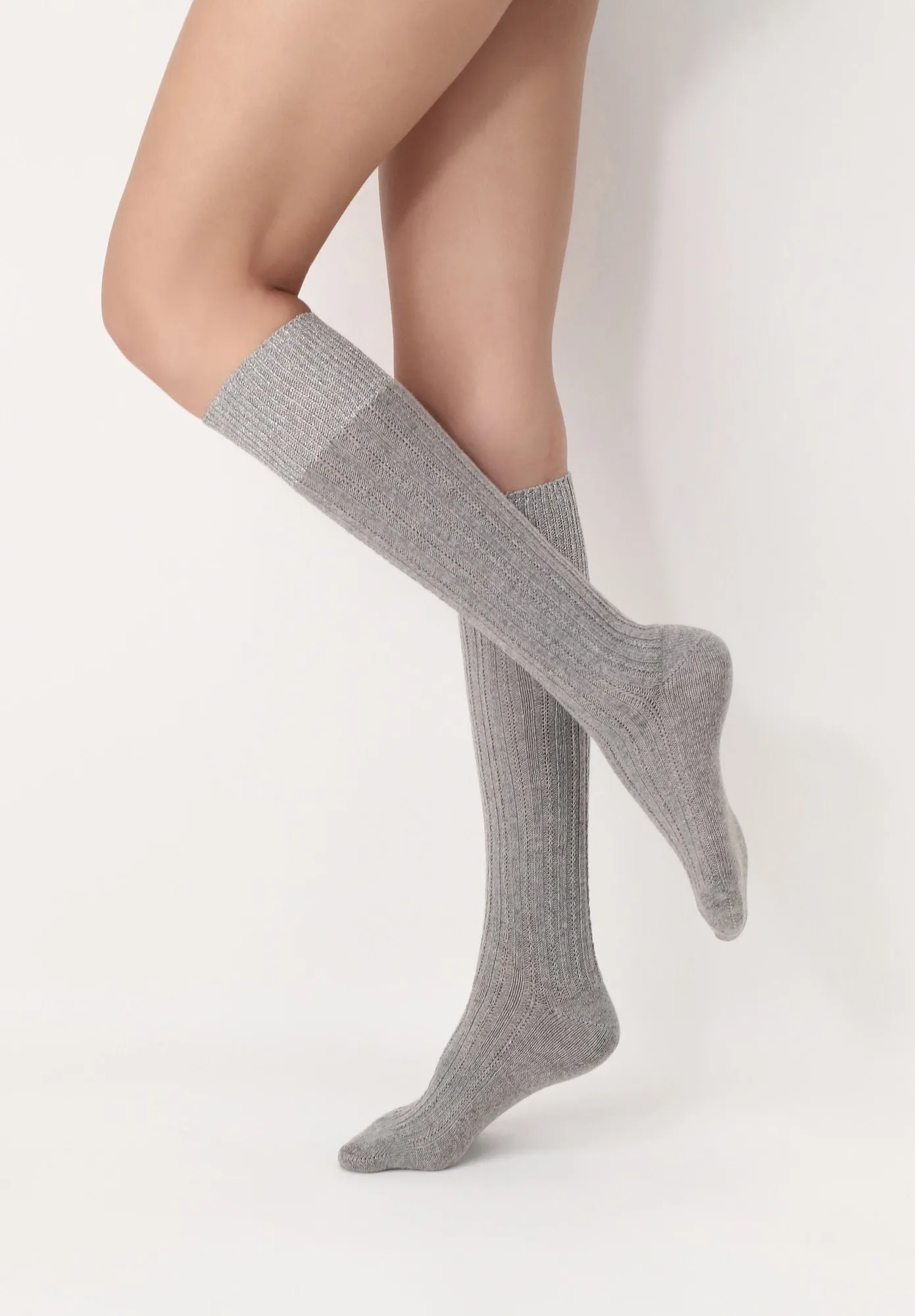
- Chic Up 30 Sheer Stay-Up - Sun: Chic Up 30 Sheer Stay-Up is a 30 denier sheer stay-up with a matte look, a 6 cm lace flounce, and two silicone strips inside for hold. A flexible middle weight for mild weather when you want the ease of a stay-up instead of a waistband.
- Soiree 15 Sheer Stay-Up - Sun: Soiree 15 Sheer Stay-Up is 15 denier, invisible on the leg with a matte appearance, and has a 7.5 cm lace flounce. The lightest option here, best for warm weather and occasions when you want a barely-there finish.
How to choose your denier
Best for
- Warm weather and indoor events: 15–20 denier sheers
- Mild spring and autumn days: 30 denier sheers or sheer stay-ups
- Cold winter days and outdoor wear: 100 denier opaques
Not for
- Freezing temperatures: 15–20 denier sheers unless layered
- Hot summer days: 100 denier opaques, which will feel too warm
- Anyone who prefers a bare-leg look in winter: opaques will read as fully covered