Quick answer
In a small playroom, store vertically: low open shelves for daily toys, a taller rack or wall-mounted unit for bulky items, and clear bins you can label. Keep the floor mostly empty so kids can move between climbing and quiet play. The goal is a room a child can reset in five minutes without adult help.
Measure the room and the traffic path first
Before buying any shelf or rack, walk the room and mark the path your child uses to reach the climbing area, the door, and the window. Storage should line the walls, not cut across the middle. Leave at least one clear stretch of floor wide enough for a crawling toddler or a child carrying a bin. If a shelf blocks the route to a climbing triangle, it will get pushed, climbed on, or ignored.
Match shelf height to the child, not the wall
The most useful shelf in a small playroom is one a four-year-old can reach without a stool. That usually means the top usable surface sits around chest height for the child, with heavier or less-used items above. Wall space above a low shelf can hold a picture, a hook, or a narrow rack, but avoid stacking tall units beside a climbing set where a child might try to scale both.
Choose open shelves for daily toys and closed bins for the rest
Open shelves work when each shelf holds one type of toy: blocks, animals, puzzles, art supplies. Bins on lower shelves let a child pull one out and push it back. For a small room, a mix of open cubbies and a few lidded bins on a top shelf keeps the room visually calm without hiding everything. Rotate toys monthly so the shelf never becomes a permanent pile.
Step-by-step small playroom storage setup
- Clear the floor and sort by use: Empty the room, then sort toys into three groups: used daily, used weekly, and seasonal or outgrown. Only the daily group stays in the playroom. Common mistake: keeping every toy on display because it fits a shelf. Checkpoint: if you cannot name the last time a toy was used, it moves to storage. A small playroom works best when it holds fewer toys, not more shelves.
- Place the low shelf along the longest wall: Put a low, open shelf on the longest uninterrupted wall, away from the door swing and the climbing zone. Load the bottom shelf with bins a child can lift, the middle with daily toys, and the top with light or supervised items. Common mistake: putting heavy bins above a child's shoulder height. Checkpoint: a child can reach the first two shelves while standing on the floor. Reach matters more than capacity in a small room.
- Add a rack or wall hooks for bulky gear: Use a wall-mounted rack or hooks for items that do not sit well on shelves: balance boards, cushions, dress-up clothes, or a folded mat. Keep hooks above the shelf line so they do not become climbing holds. Common mistake: hanging a rack so low that it becomes a step. Checkpoint: nothing on the wall should support a child's full weight. Racks free shelf space for small toys.
- Label bins with pictures, not just words: Use simple pictures or color dots on bins so a pre-reader can match toy to bin. Keep one bin per toy type. Common mistake: labeling by brand or category a child does not recognize. Checkpoint: a four-year-old can put three toys away correctly without asking. Labels are a reset tool, not decoration.
- Leave one empty shelf or bin: An empty slot gives the room room to breathe and gives your child a place for a current favorite or a new toy. Common mistake: filling every shelf to look tidy. Checkpoint: after a play session, the floor can be cleared in under five minutes. Empty space is part of the storage plan.
- Re-check the path to the climbing set: After loading shelves, walk the route from the door to the climbing area. Nothing should block it, and no shelf should sit within a fall zone. Common mistake: placing a shelf where a child lands after jumping off a slide or triangle. Checkpoint: there is a clear landing area on all open sides of the climbing equipment. Safety spacing matters as much as storage capacity.
- Reset the room together weekly: Once a week, spend ten minutes with your child returning stray toys and removing anything broken or outgrown. Common mistake: doing it alone so the child never learns the system. Checkpoint: the child can point to where each toy belongs. A storage system only works if the child can use it.
Storage-friendly pieces from the catalog
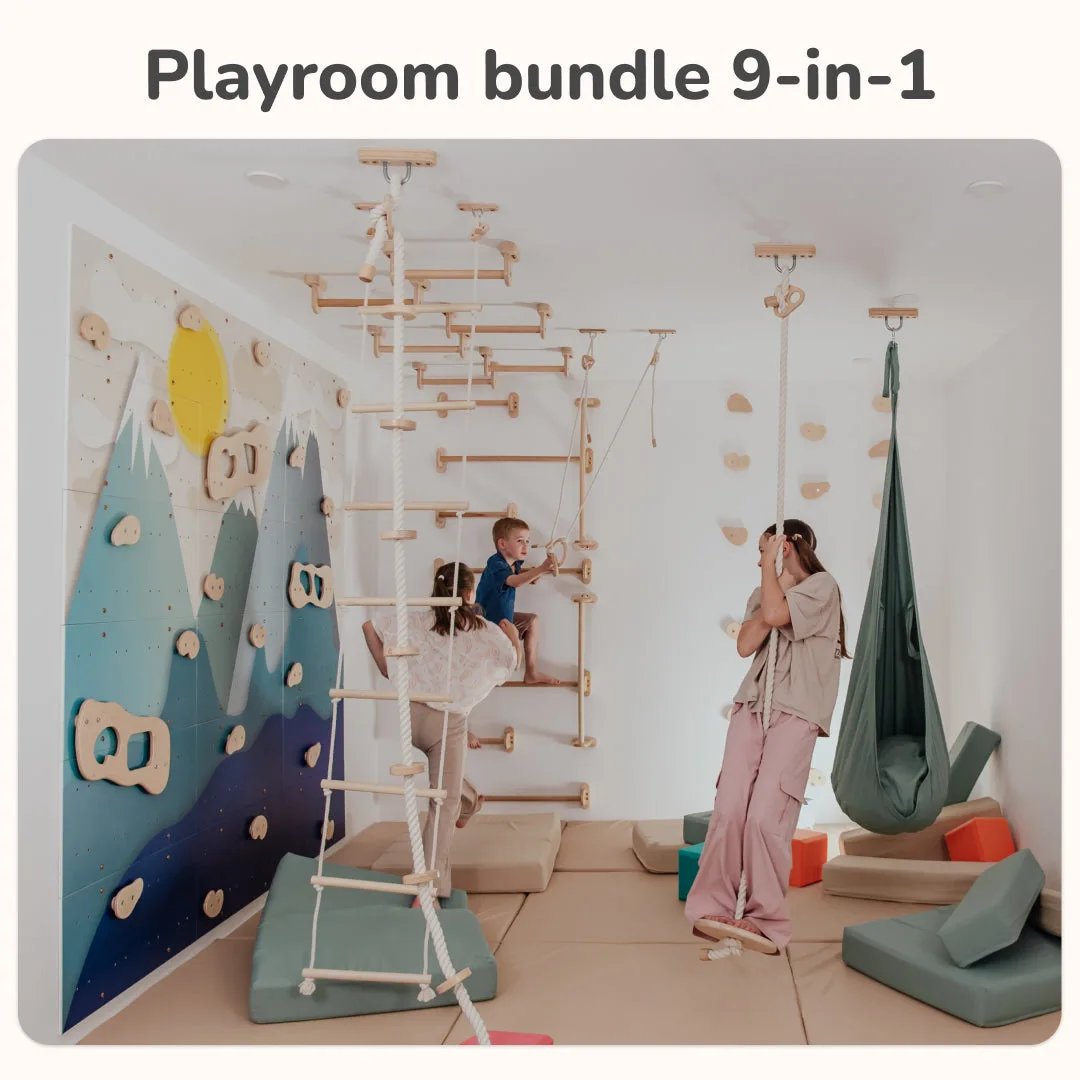
- All-in-One Kids Play Paradise, 9-in-1 Playroom Bundle: The All-in-One Kids Play Paradise, 9-in-1 Playroom Bundle is a full-scale activity set that combines climbing, swinging, building, and sensory play elements in one playroom solution. If one large set already covers movement and sensory play, your remaining storage can focus on smaller toys and accessories rather than a second play structure.
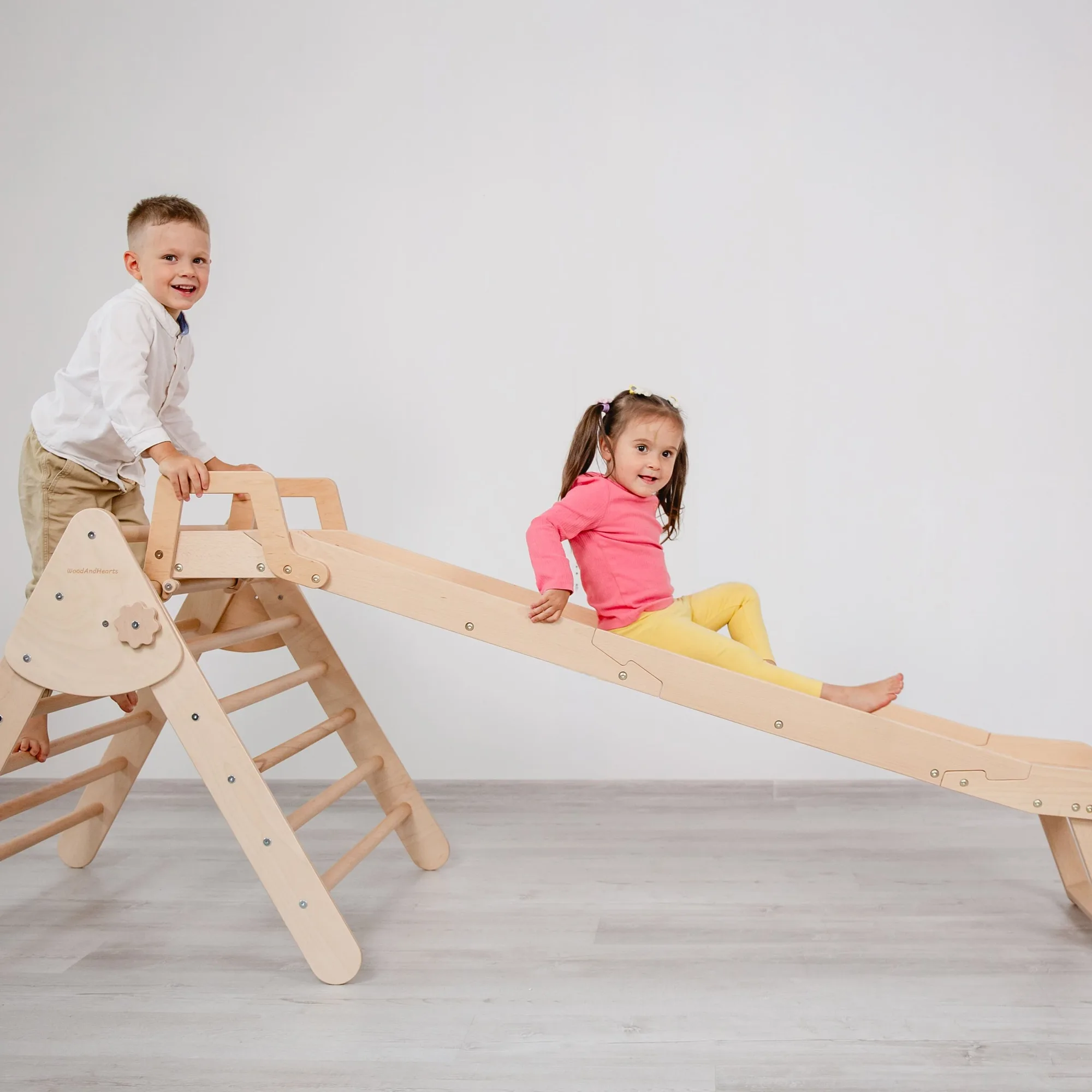
- Wooden Climbing Set: The Wooden Climbing Set is a 2-in-1 set that includes a large Montessori Triangle and a Slide, and it can transform a play space into an active environment. A climbing set with a slide takes floor space, so plan shelves along the wall it faces rather than beside the slide exit.