Quick answer
The Long Weekend 35mm film camera is a lightweight, reusable point-and-shoot that works best with ISO 200 or 400 film in bright outdoor conditions. Follow these five steps to avoid common travel photo mistakes.
What makes this camera a travel-friendly choice
The Long Weekend 35mm film camera weighs very little and fits in a jacket pocket or small bag. Its ABS plastic body can handle the bumps of a backpack without adding bulk. The fixed 31mm F9 lens gives a wide-ish view that works well for landscapes, street scenes, and group shots.
Because it lacks manual controls, you rely on the camera’s automatic settings. That is fine for sunny days, but in low light or high contrast scenes you need to work around the camera’s limitations.
Trade-off: fixed aperture and no flash control
The F9 aperture means the lens lets in less light than typical point-and-shoot cameras. You cannot open it wider for darker conditions. The built-in flash fires automatically when the camera thinks there is not enough light, but you cannot turn it off. This can lead to overexposed close-ups or unwanted flash in museums or evening scenes.
Your best workaround is to shoot outdoors in good daylight. If you must shoot indoors, position your subject near a window or use the flash creatively—expect a direct, slightly harsh look.
5 steps to better travel photos with the Long Weekend 35mm
- Load the film correctly: Open the back, drop in a 35mm cassette, pull the leader across to the take-up spool, and close the back. Advance until the frame counter shows 1. Check the rewind knob turns when you advance—if it doesn't, the film isn't loaded properly.
- Choose the right film speed: Use ISO 200 or 400 film. The camera expects these speeds and will set exposure accordingly. Avoid ISO 800 or 100 unless you are deliberately pushing the film (which requires lab instructions). ISO 400 gives you a bit more flexibility in overcast or late-afternoon light without much grain.
- Shoot with the sun behind you: The F9 lens needs direct light. Position your subject so the sun lights their face or the scene. Backlit subjects will come out as silhouettes unless you use flash. Cloudy or shaded areas can produce underexposed, muddy images—move into open light.
- Keep a steady hand: Because the shutter speed is slow in dim conditions, brace your elbows against your body or lean on a wall. Avoid shooting handheld below 1/60s—blur is common. If the viewfinder shows a red light, the camera is warning of low light—find a brighter spot or accept possible motion blur.
- Rewind before opening the back: Press the rewind button on the bottom and turn the rewind crank clockwise until you feel the tension release. Only then open the back to remove the cassette. Opening the back without rewinding will expose and ruin the entire roll—double-check the crank resistance.
Product highlights
-
Long Weekend 35mm Film Camera - Red: Optical Lens: 31mm, F9, 1 element optical grade acrylic lens The fixed wide-angle lens is great for travel scenes but the small maximum aperture means you need plenty of light to avoid blurry or dark photos.
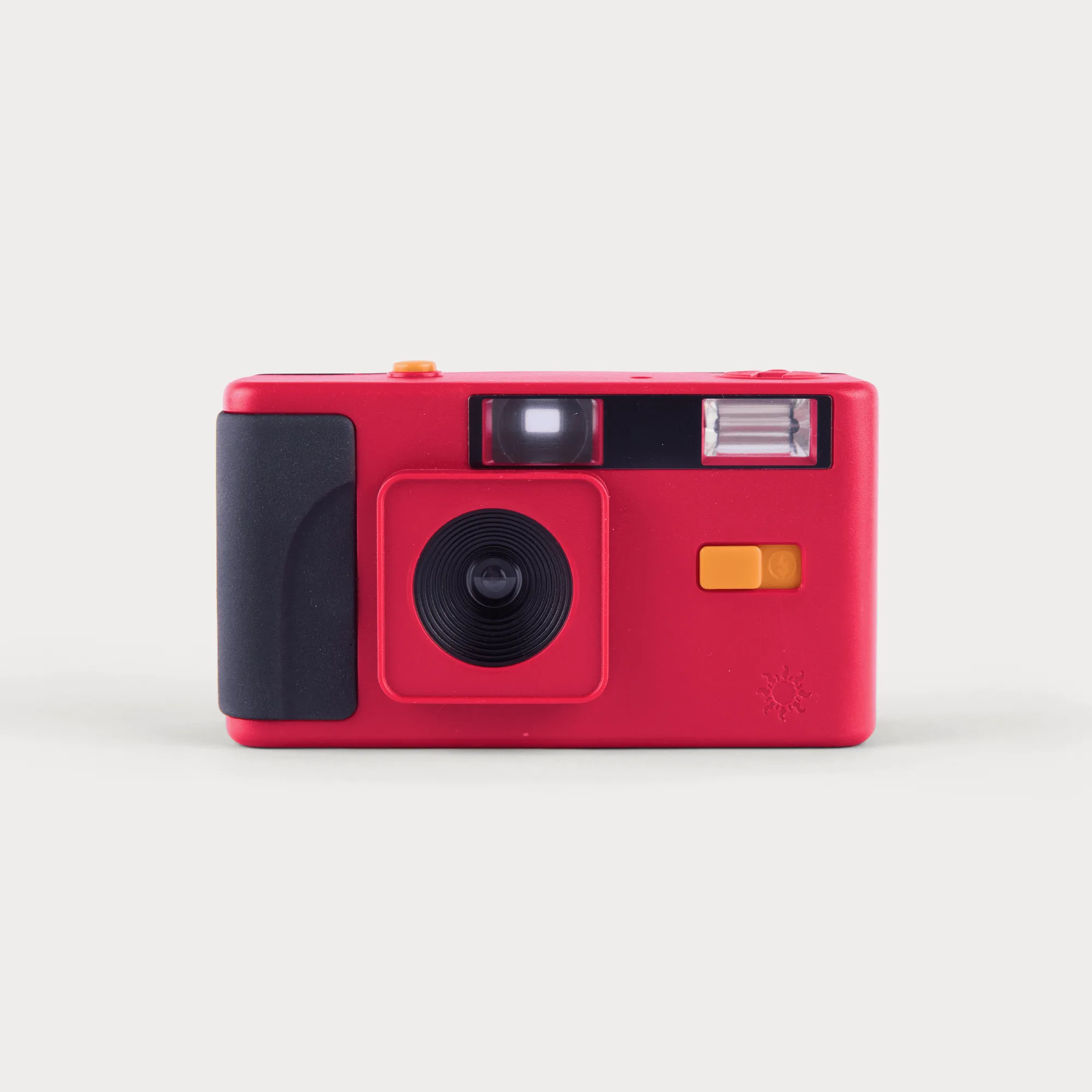
Long Weekend 35mm Film Camera - Red