Quick answer
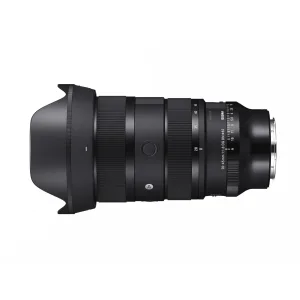
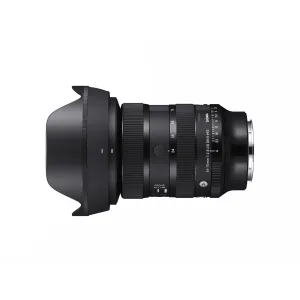
Choose the Sigma 28-45mm f/1.8 DG DN Art if you shoot Sony E mount and need the extra light of a constant f/1.8 zoom for low-light or video work where a tighter 28-45mm range is enough. Choose the Sigma 24-70mm f/2.8 DG DN II Art if you need a wider 24mm start, longer 70mm reach, and shoot Leica L mount. The trade-off is aperture versus range and mount.
Aperture vs reach: the core trade-off
The 28-45mm f/1.8 gives you a constant f/1.8 across its zoom range, which means more light for handheld shooting in dim venues and a shallower depth of field for subject separation. The 24-70mm f/2.8 DG DN II gives you a wider 24mm start and a longer 70mm end, so you can cover wider scenes and tighter portraits without changing lenses. Neither is universally better; the right pick depends on whether you value light gathering or focal flexibility more.
Mount and system compatibility
The 28-45mm f/1.8 is offered for Sony E mount, making it a direct fit for Sony full-frame mirrorless bodies. The 24-70mm f/2.8 DG DN II Art is offered for Leica L mount, so it suits L-mount cameras from Leica, Panasonic, and Sigma. If you shoot Sony E, the 28-45mm is the native option; if you shoot L mount, the 24-70mm is the native option. There is no crossover between these two specific versions, so your camera system effectively decides for you.
Video and low-light considerations
For video, a constant f/1.8 aperture can let you keep ISO lower in dim settings and maintain consistent exposure as you zoom. The 24-70mm f/2.8 DG DN II also offers a constant aperture, but at f/2.8 it gathers less light. If your work often involves available-light interiors, evening events, or shallow-depth-of-field interviews, the f/1.8 zoom has a practical edge. If you need to go from wide establishing shot to a tighter shot without moving the camera, the 24-70mm range is more flexible.
Size, weight, and handling
Neither lens is specified with weight or dimensions in the supplied catalog facts, so we cannot compare them on those points. In general, a faster maximum aperture often means a larger, heavier lens, but without confirmed figures you should check the manufacturer's specs for your specific mount. The 24-70mm f/2.8 DG DN II is described as having evolved in portability, which suggests Sigma prioritized a more compact design for that version, but the exact difference is not stated here.
Trade-offs at a glance
- Maximum aperture: The 28-45mm f/1.8 offers a constant f/1.8, while the 24-70mm f/2.8 DG DN II offers a constant f/2.8. The f/1.8 lens lets in more light and can blur backgrounds more easily. If you frequently shoot in dim light or want the shallowest depth of field, the f/1.8 zoom wins.
- Focal range: The 28-45mm covers a tighter range starting at 28mm, while the 24-70mm covers from 24mm to 70mm. The wider start and longer end give you more framing options without swapping lenses. If you need wide establishing shots or tighter portraits from the same position, the 24-70mm range is more versatile.
- Mount availability: The 28-45mm f/1.8 is available for Sony E mount, and the 24-70mm f/2.8 DG DN II is available for Leica L mount. Your camera system determines which one you can use natively. Check your mount first; if you shoot Sony E, the 28-45mm is the direct fit, and if you shoot L mount, the 24-70mm is the direct fit.
Key product facts
- SIGMA 28-45MM F1.8 DG DN ART Lens for Sony E: The SIGMA 28-45mm F1.8 DG DN Art Lens for Sony E is a full-frame mirrorless zoom lens with a constant F1.8 aperture. According to the manufacturer's description, it is the world's first zoom lens with a constant F1.8 aperture for full-frame mirrorless camera systems. This is the main reason to choose it over an f/2.8 zoom: more light and shallower depth of field at every focal length, which can be decisive for low-light and video work.
- SIGMA 24-70MM F2.8 DG DN II ART for Leica L Mount: The SIGMA 24-70MM F2.8 DG DN II ART is offered for Leica L Mount, part of Sigma's Art line. According to the product description, this lens has evolved on all levels, including rendering performance, functionality, and portability. It provides a wider and longer focal range than the 28-45mm, and its L-mount fit means it is the native choice for L-mount shooters who need a standard zoom.
Which should you choose?
Best for
- Sony E mount shooters who need a fast constant f/1.8 zoom for low-light events, indoor video, or shallow depth of field
- Video creators who want consistent exposure while zooming and often work in available light
Not for
- Photographers who need a wider 24mm start or longer 70mm reach from a single lens
- Leica L mount shooters, since the 28-45mm f/1.8 is not offered in that mount