Quick answer
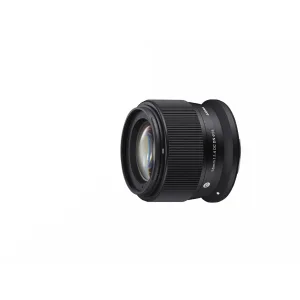
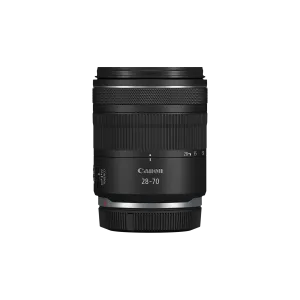
Choose the Sigma 56mm F1.4 DC DN Contemporary if you shoot portraits on an APS-C Canon RF body and want the brightest aperture and lowest price. Choose the Canon RF 28-70mm f/2.8 IS STM if you need one zoom that covers wide to short telephoto on full-frame or APS-C, especially for stills and video. The Sigma is a dedicated APS-C prime; the Canon is a full-frame-capable standard zoom.
Mount and sensor format decide compatibility first
The Sigma 56mm F1.4 DC DN Contemporary is built in a native mount for Canon RF Mount systems, and its DC DN designation indicates it is designed for APS-C sensor cameras. On a full-frame RF body it will not cover the full sensor area without an automatic crop mode. The Canon RF 28-70mm f/2.8 IS STM is an RF lens that covers the full-frame image circle, so it works on both full-frame and APS-C EOS R cameras. If you own an APS-C body such as an R50 or R10, both lenses are usable; if you own a full-frame body such as an R6 or R5, the Canon zoom is the safer primary lens.
Aperture and focal length shape your shooting style
The Sigma's F1.4 maximum aperture is two stops brighter than the Canon's f/2.8. That matters for low-light shooting and for shallow depth of field in portraits, where a 56mm lens on APS-C gives an angle of view similar to roughly 90mm on full frame. The Canon zoom covers 28-70mm, so you can go from wide environmental shots to short telephoto portraits without changing lenses. The trade-off is clear: the Sigma gives you more light and more background blur at one focal length, while the Canon gives you framing flexibility at a slower aperture.
Price and value in the current catalog
At the time of writing, the Sigma 56mm F1.4 DC DN Contemporary is listed at USD 317.80, compared with a catalog comparison price of USD 454.00. The Canon RF 28-70mm f/2.8 IS STM is listed at USD 765.77, compared with USD 1049.00. The Sigma costs less than half as much, which makes it an easier first prime for portrait shooters. The Canon costs more because it is a full-frame standard zoom with image stabilization, a more complex optical design, and broader coverage. Neither price includes any additional accessories or options, which were not supplied in the catalog data.
Video, stabilization, and handling
The Canon RF 28-70mm f/2.8 IS STM includes IS in its name, indicating optical image stabilization, which helps with handheld video and slow shutter speeds. The Sigma 56mm F1.4 DC DN Contemporary does not list stabilization in the supplied catalog facts, so on a body without in-body IS you would rely on the fast aperture to keep shutter speeds up. For video creators who zoom while recording, the Canon's zoom range is more flexible. For interviews or portraits where you can set one focal length, the Sigma's bright aperture can produce a more separated background.
Trade-offs at a glance
- Maximum aperture: Sigma 56mm F1.4 vs Canon RF 28-70mm f/2.8: the Sigma is two stops faster, so it gathers more light and blurs backgrounds more at its single focal length. Pick the Sigma for low-light portraits; pick the Canon for flexibility in good light.
- Focal range: The Canon covers 28-70mm, letting you change framing without swapping lenses. The Sigma is fixed at 56mm, which on APS-C behaves like a short portrait telephoto. If you shoot a mix of wide and tight shots in one session, the zoom saves time.
- Sensor coverage: The Sigma is designed for APS-C sensors, while the Canon RF 28-70mm f/2.8 IS STM covers full frame. On a full-frame body, the Sigma would force a crop. Full-frame owners should treat the Canon as the primary lens and the Sigma as an APS-C option.
- Price: At USD 317.80, the Sigma costs far less than the Canon at USD 765.77. The Canon's higher price reflects its full-frame coverage, zoom range, and stabilization. Budget portrait shooters can put the savings toward a second lens or lighting.
Product facts
- Canon RF 28-70mm f/2.8 IS STM Lens: The RF28-70mm F2.8 IS STM lens is Canon's new lens that is perfect for both still and video content creators who may have a smaller budget but want high quality. It is positioned as a versatile, budget-conscious standard zoom for hybrid shooters who need both stills and video from one lens.
- SIGMA 56mm F1.4 DC DN Contemporary for Canon RF: The SIGMA 56mm F1.4 DC DN Contemporary is a high-performance, high-quality Sigma prime lens built in a native mount for Canon RF Mount systems. It offers a bright F1.4 maximum aperture in a compact prime design, making it a practical choice for Canon RF shooters who want a fast, dedicated lens. A native RF mount means no adapter, and the F1.4 aperture gives low-light and shallow depth-of-field advantages that the f/2.8 zoom cannot match.
Which lens fits your kit
Best for
- APS-C Canon RF shooters who want a fast, affordable portrait prime
- Low-light and shallow depth-of-field work at a single focal length
- Photographers who want a compact, native RF mount prime without an adapter
Not for
- Full-frame RF shooters who need full sensor coverage from every lens
- Shooters who need to zoom from wide to short telephoto without changing lenses
- Handheld video work that depends on optical image stabilization in the lens