Quick answer
For most families with toddlers, a silicone sensory placemat offers better mess control, portability, and engagement than a regular placemat. Choose a regular placemat only if you prefer disposable options or need a very lightweight, low-cost solution for occasional use.
Mess control and cleanup
Regular placemats—whether cloth, vinyl, or paper—often shift during meals and can absorb spills or harbor bacteria. Cloth versions need frequent washing, and paper ones tear easily. Silicone placemats with raised edges catch food and spills, keeping the table cleaner and reducing the chance of messes reaching the floor. The nonslip suction feature keeps the mat in place, so toddlers can’t easily toss it aside.
Portability and storage
Regular placemats are usually flat and easy to pack, but they may not stay put on restaurant tables or high chairs. Silicone sensory placemats roll up for compact storage, making them convenient for eating out. They are lightweight and can be wiped clean, so you don’t need to carry extra supplies. However, they are bulkier than a flat paper placemat when rolled, which might be a consideration for minimalist packing.
Engagement and sensory benefits
Toddlers learn through touch and exploration. Silicone sensory placemats often feature textures, bumps, or patterns that provide tactile stimulation, which can keep little ones engaged during meals. This can be especially helpful for picky eaters who need distraction or sensory input. Regular placemats, especially flat ones, offer less sensory engagement, though some vinyl or fabric mats have printed designs that might capture attention.
Durability and eco-friendliness
Silicone placemats are reusable and durable, making them an eco-friendly alternative to paper or plastic disposables. They can withstand repeated use and are easy to sanitize. Regular placemats, especially disposable ones, create more waste and may need frequent replacement. However, if you prefer a biodegradable option, paper placemats might be more aligned with your environmental values, despite their shorter lifespan.
Trade-offs at a glance
- Mess protection: Silicone sensory placemats have raised edges that catch food and spills, reducing table and floor mess. Regular placemats, especially flat ones, offer little to no containment. If your toddler is a messy eater, prioritize a silicone mat with raised edges.
- Portability: Silicone mats roll up for easy storage and are lightweight, making them great for travel. Regular placemats are flatter but may not stay put on unfamiliar surfaces. For on-the-go meals, consider how the mat will stay in place on restaurant tables or high chairs.
- Sensory engagement: Silicone sensory placemats often have textures that engage toddlers, which can help with focus during meals. Regular placemats may be less stimulating. If your child needs extra sensory input, a textured silicone mat may be more beneficial.
- Cost and durability: Silicone mats are reusable and durable, offering long-term value despite a higher upfront cost. Regular placemats, especially disposable ones, are cheaper but need frequent replacement. Consider the long-term cost of replacing regular placemats versus the initial investment in a silicone mat.
Product spotlight
-
Silicone Sensory Placemat: Sage: The Bumkins Silicone Sensory Placemat is designed to keep surfaces clean and little ones engaged during mealtime at home or on the go. It is lightweight, nonslip, and suctions to most tables, and it rolls up for easy storage when eating out. This means you can use it at home or in restaurants without worrying about it sliding or taking up much space, and the suction keeps it in place during active toddler meals.
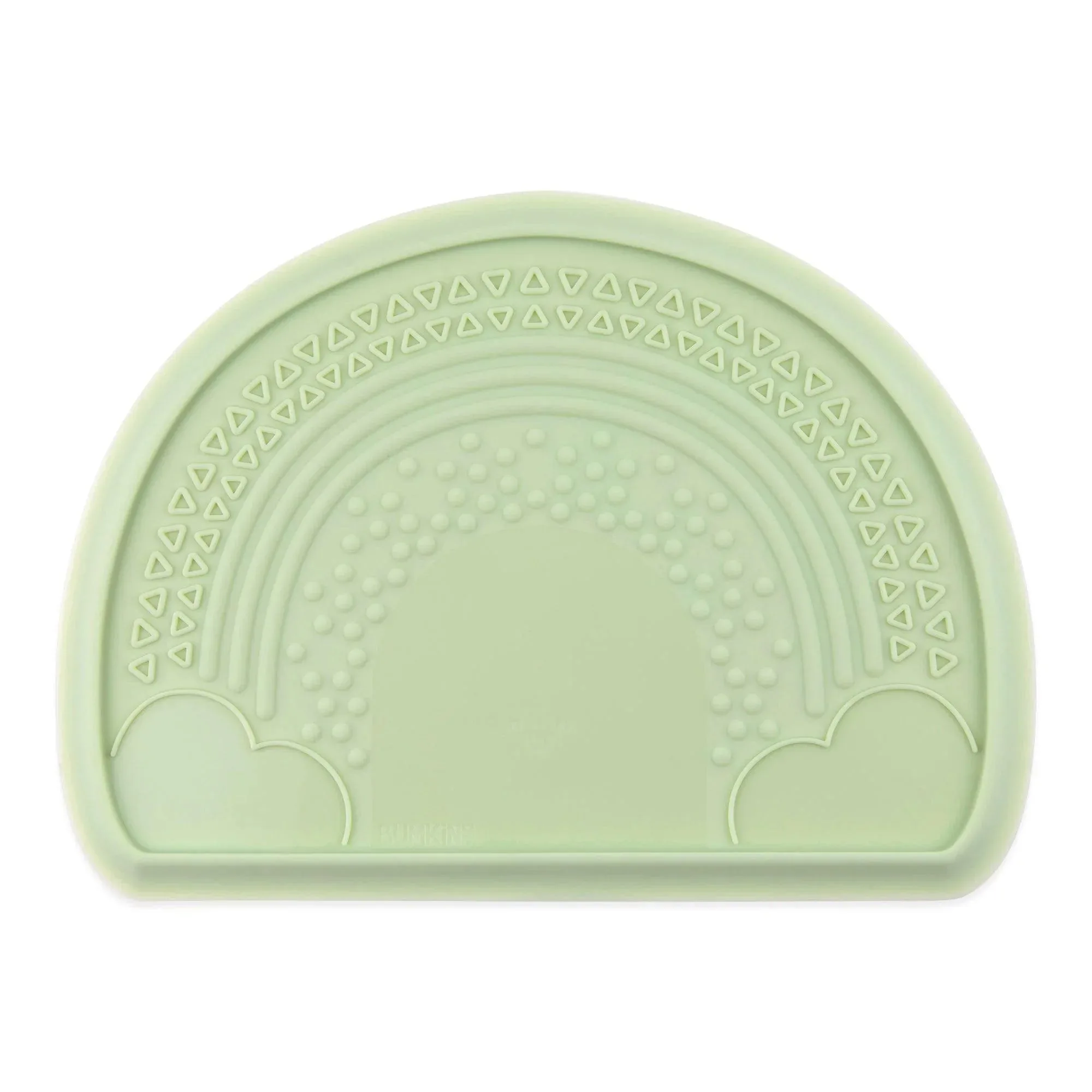
Silicone Sensory Placemat: Sage
Which should you choose?
Best for
- Families with toddlers who are messy eaters and need better mess containment
- Parents who want a portable, reusable placemat for dining out or travel
- Caregivers looking to add sensory engagement to mealtime for picky eaters
Not for
- Those who prefer disposable, single-use placemats for quick cleanup
- Families on a very tight budget who need the lowest upfront cost